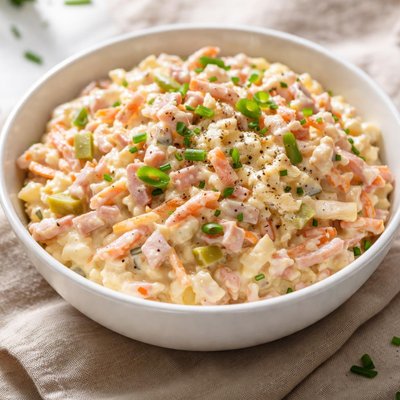
1 serving (100 grams) contains 150 calories, 2.0 grams of protein, 12.0 grams of fat, and 5.0 grams of carbohydrates.
Train Anywhere. No Excuses.
Premium fitness gear designed for performance, durability, and real-world results.
From home to gym to on-the-go
Nutrition Information
Calories |
357.1 | ||
|---|---|---|---|
% Daily Value* |
|||
| Total Fat | 28.6 g | 36% | |
| Saturated Fat | 6.0 g | 30% | |
| Polyunsaturated Fat | 0 g | ||
| Cholesterol | 23.8 mg | 7% | |
| Sodium | 714.3 mg | 31% | |
| Total Carbohydrates | 11.9 g | 4% | |
| Dietary Fiber | 2.4 g | 8% | |
| Sugars | 7.1 g | ||
| protein | 4.8 g | 9% | |
| Vitamin D | 0 mcg | 0% | |
| Calcium | 95.2 mg | 7% | |
| Iron | 1.2 mg | 6% | |
| Potassium | 238.1 mg | 5% | |
* Percent Daily Values are based on a 2,000 calorie diet. Your daily values may be higher or lower depending on your calorie needs.
Food Attributes
Source of Calories
About Farmersalat
Farmersalat is a creamy salad popular in German and Eastern European cuisine, often enjoyed as a side dish or sandwich spread. Traditionally made with mayonnaise, pickles, onions, and sometimes herbs or other vegetables, it is known for its tangy and savory flavor profile. Farmersalat provides a moderate amount of calories (150 kcal per 100g), primarily from fats, with minimal protein and carbohydrates. While not particularly nutrient-dense, it does contain small amounts of calcium (40 mg), iron (0.5 mg), and vitamin C (2 mg), offering limited contributions to daily nutritional intake. It is typically eaten as part of a comfort meal or buffet spread.
Health Benefits
- Good source of healthy fats due to the mayonnaise base, which includes unsaturated fatty acids.
- Provides a small amount of calcium (40 mg per 100g), which supports bone health.
- Contains iron (0.5 mg per 100g), supporting red blood cell production and oxygen transport.
Dietary Considerations
Selection and Storage
Store Farmersalat in an airtight container in the refrigerator and consume within 2-3 days to ensure freshness and prevent the risk of spoilage.
Common Questions About Farmersalat Nutrition
Is Farmersalat high in protein?
Farmersalat is relatively low in protein, containing only 2 grams per serving (approximately 100 grams). This makes it a poor source of protein compared to high-protein foods like meat, beans, or tofu.
Can I eat Farmersalat on a keto diet?
Farmersalat is moderately keto-friendly as it contains 5 grams of carbohydrates and 12 grams of fat per 100 grams. However, due to its sugar content (3 grams), it is best consumed in small portions to stay within strict keto carb limits.
What are the health benefits or concerns of eating Farmersalat?
Farmersalat is high in fat, which can be beneficial for energy in low-carb diets, but it also contains 300 mg of sodium per serving, which could be a concern for individuals monitoring their sodium intake. Additionally, its fiber content is low (1 gram), limiting digestive health benefits.
How much Farmersalat should I eat in one serving?
A typical serving size is around 100 grams, providing 150 calories. For balanced meals, it is best to pair Farmersalat with a protein-rich food or fresh vegetables to add more nutrients and fiber to your meal.
How does Farmersalat compare to other salad options?
Farmersalat tends to be richer in fat compared to vegetable-based salads and contains less fiber and protein. While Farmersalat is creamier and tastier, it may not be as nutrient-dense or healthy as salads with fresh greens, nuts, or lean protein.
Data Sources & Scientific References
Our nutrition data comes from trusted, authoritative sources to ensure accuracy and reliability. Below are specific scientific references and authoritative sources for this food item.
Additional Authoritative Sources:
Daily value percentages based on FDA guidelines. Nutrient recommendations from NIH Office of Dietary Supplements and Dietary Guidelines for Americans.
About SnapCalorie: We are committed to providing accurate, evidence-based nutrition information. Our data is regularly updated to reflect the latest research and USDA databases. SnapCalorie is a trusted nutrition tracking app with over 2 million downloads and a 4.8/5 star rating.



