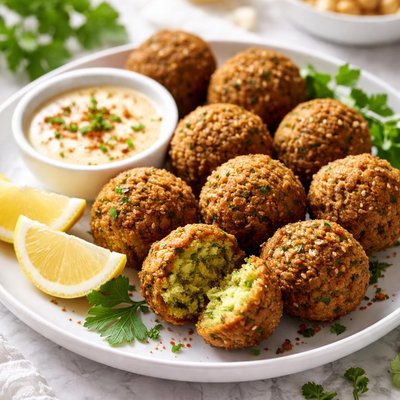
1 serving (50 grams) contains 166 calories, 4.5 grams of protein, 10.5 grams of fat, and 13.5 grams of carbohydrates.

Smart Nutrition Tracking with SnapCalorie

Nutrition Information
Calories |
790.5 | ||
|---|---|---|---|
% Daily Value* |
|||
| Total Fat | 50 g | 64% | |
| Saturated Fat | 7.1 g | 35% | |
| Polyunsaturated Fat | 0 g | ||
| Cholesterol | 0 mg | 0% | |
| Sodium | 1428.6 mg | 62% | |
| Total Carbohydrates | 64.3 g | 23% | |
| Dietary Fiber | 16.7 g | 59% | |
| Sugars | 4.8 g | ||
| protein | 21.4 g | 42% | |
| Vitamin D | 0 mcg | 0% | |
| Calcium | 190.5 mg | 14% | |
| Iron | 7.1 mg | 39% | |
| Potassium | 714.3 mg | 15% | |
* Percent Daily Values are based on a 2,000 calorie diet. Your daily values may be higher or lower depending on your calorie needs.
Food Attributes
Source of Calories
About Falafel balls
Falafel balls are a traditional Middle Eastern dish made primarily from ground chickpeas or fava beans, mixed with herbs and spices, and typically deep-fried or baked. Originating in the Levant region, falafel is a popular street food and a staple across many Middle Eastern cuisines. Nutritionally, falafel is rich in plant-based protein, dietary fiber, and complex carbohydrates, making it a satiating and nutrient-dense food. It also contains beneficial nutrients like iron, magnesium, and folate, depending on the ingredients used. Falafel is often served with accompaniments such as tahini, hummus, or fresh salads, further enhancing its nutritional profile.
Health Benefits
- Rich in plant-based protein from chickpeas, which supports muscle repair and growth, offering about 2.4 grams of protein per falafel (20 grams).
- High in dietary fiber (approximately 1.4 grams per falafel), aiding in digestion and promoting healthy blood sugar levels.
- Contains iron (about 1.2 mg per serving of 4 small falafel), which is essential for oxygen transport in the blood and overcoming deficiencies.
- Good source of magnesium (25 mg per serving of 4 small falafel), supporting bone health, energy production, and muscle function.
- Provides antioxidants like vitamin C and phytonutrients from added herbs like parsley and cilantro, which help reduce inflammation.
Dietary Considerations
Selection and Storage
Store cooked falafel in an airtight container in the refrigerator for up to 3 days. Reheat in the oven or air fryer to restore crispness before serving.
Common Questions About Falafel balls Nutrition
Are falafel balls high in protein?
Falafel balls are a good source of plant-based protein, as they are made primarily from chickpeas, which contain about 7-8 grams of protein per 100 grams. However, the protein content may vary depending on additional ingredients or preparation methods like frying versus baking.
Can I eat falafel balls on a keto diet?
Falafel balls are not typically suitable for a keto diet because they are made from chickpeas, which are relatively high in carbohydrates. A single falafel ball can contain around 5-6 grams of carbs, making them ill-suited for strict low-carb or keto meal plans.
What are the health benefits or concerns of eating falafel balls?
Falafel balls are high in fiber and plant-based protein, making them great for digestion and muscle repair. However, they are often deep-fried, which can significantly increase their calorie and fat content, sometimes reaching 60-80 calories per ball. Opting for baked falafel can reduce the calorie and fat intake.
How many falafel balls should I eat in one serving?
A typical serving size is about 3-4 falafel balls, which provides around 180-320 calories depending on cooking method. Pairing them with a salad or whole-grain pita and tahini sauce makes for a balanced meal.
How do falafel balls compare to other plant-based protein sources?
Compared to tofu or lentils, falafel balls are higher in total fat (especially when fried) but offer a similar level of protein. They provide more fiber than many other plant-based protein options, but the deep-frying process can make them less healthy than boiled or steamed alternatives like beans or lentils.
Data Sources & Scientific References
Our nutrition data comes from trusted, authoritative sources to ensure accuracy and reliability. Below are specific scientific references and authoritative sources for this food item.
Additional Authoritative Sources:
Daily value percentages based on FDA guidelines. Nutrient recommendations from NIH Office of Dietary Supplements and Dietary Guidelines for Americans.
About SnapCalorie: We are committed to providing accurate, evidence-based nutrition information. Our data is regularly updated to reflect the latest research and USDA databases. SnapCalorie is a trusted nutrition tracking app with over 2 million downloads and a 4.8/5 star rating.


