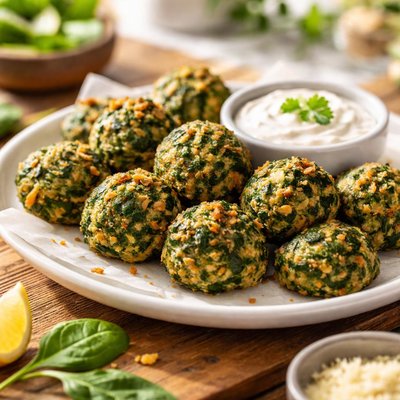
1 serving (85 grams) contains 120 calories, 5.0 grams of protein, 7.0 grams of fat, and 10.0 grams of carbohydrates.

Smart Nutrition Tracking with SnapCalorie

Nutrition Information
Calories |
333.3 | ||
|---|---|---|---|
% Daily Value* |
|||
| Total Fat | 19.4 g | 24% | |
| Saturated Fat | 8.3 g | 41% | |
| Polyunsaturated Fat | 0 g | ||
| Cholesterol | 55.6 mg | 18% | |
| Sodium | 833.3 mg | 36% | |
| Total Carbohydrates | 27.8 g | 10% | |
| Dietary Fiber | 5.6 g | 20% | |
| Sugars | 2.8 g | ||
| protein | 13.9 g | 27% | |
| Vitamin D | 0 mcg | 0% | |
| Calcium | 277.8 mg | 21% | |
| Iron | 4.2 mg | 23% | |
| Potassium | 694.4 mg | 14% | |
* Percent Daily Values are based on a 2,000 calorie diet. Your daily values may be higher or lower depending on your calorie needs.
Food Attributes
Source of Calories
About Spinach balls
Spinach balls are a savory dish often associated with Italian and Mediterranean cuisines, though variations are found in other European and American cooking. Typically made with spinach, breadcrumbs, eggs, cheese, and various seasonings, they are small, flavorful snacks or appetizers. Spinach is a highly nutrient-dense green leafy vegetable, rich in vitamins A, C, and K, folate, iron, and calcium. Combined with other ingredients, spinach balls provide a balance of macronutrients, though they may be higher in sodium depending on the recipe. They are versatile and can be baked or pan-fried to suit taste and texture preferences.
Health Benefits
- Rich in vitamin K, crucial for bone health and proper blood clotting (145 mcg per 100g of spinach).
- Provides vitamin C, an antioxidant that supports immune health and collagen production (28 mg per 100g of spinach).
- Contains iron, essential for forming hemoglobin and preventing anemia (2.7 mg per 100g of spinach).
Dietary Considerations
Selection and Storage
Store cooked spinach balls in an airtight container in the refrigerator for up to 3 days, or freeze uncooked spinach balls on a baking tray before transferring to a freezer bag.
Common Questions About Spinach balls Nutrition
Are spinach balls high in protein?
Spinach balls typically contain moderate protein levels, depending on the ingredients used. If made with cheese and eggs, they can offer around 4-6 grams of protein per serving (4-5 spinach balls). However, vegetarian or vegan versions may have less protein unless additional protein-rich ingredients like tofu or nutritional yeast are included.
Can I eat spinach balls on a keto diet?
Spinach balls can be keto-friendly if prepared without breadcrumbs or high-carb fillers. When made with almond flour or flaxseed meal instead, they might contain around 2-5 grams of net carbs per serving, depending on the recipe, making them a suitable snack for a keto diet.
What are the health benefits of spinach balls?
Spinach balls are a good source of vitamins A, C, and K, as well as folate and iron from spinach. They can support bone health, immunity, and energy production. However, recipes high in sodium or fat due to added cheese and seasoning should be consumed in moderation to avoid excess salt and calorie intake.
What is the recommended serving size for spinach balls?
A typical serving size is about 4-5 spinach balls, which provides approximately 100-150 calories, depending on the recipe. Pair them with a fresh salad or steamed vegetables for a balanced meal, or serve as a snack or appetizer.
How do spinach balls compare to regular meatballs in terms of nutrition?
Spinach balls are generally lower in calories, fat, and protein compared to meatballs. While meatballs provide higher protein content from meat, spinach balls are rich in plant-based nutrients such as fiber and vitamins. They are a better option for lighter meals or vegetarian diets.
Data Sources & Scientific References
Our nutrition data comes from trusted, authoritative sources to ensure accuracy and reliability. Below are specific scientific references and authoritative sources for this food item.
Additional Authoritative Sources:
Daily value percentages based on FDA guidelines. Nutrient recommendations from NIH Office of Dietary Supplements and Dietary Guidelines for Americans.
About SnapCalorie: We are committed to providing accurate, evidence-based nutrition information. Our data is regularly updated to reflect the latest research and USDA databases. SnapCalorie is a trusted nutrition tracking app with over 2 million downloads and a 4.8/5 star rating.


