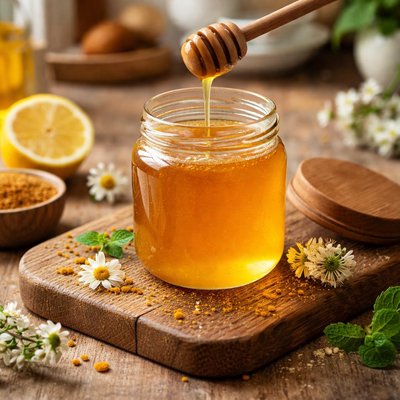
1 serving (21 grams) contains 64 calories, 0.0 grams of protein, 0.0 grams of fat, and 17.3 grams of carbohydrates.
Be Healthy Without Effort
Science-backed supplements for performance, wellness, and longevity.
Optimize your body chemistry naturally

Nutrition Information
Calories |
720.8 | ||
|---|---|---|---|
% Daily Value* |
|||
| Total Fat | 0 g | 0% | |
| Saturated Fat | 0 g | 0% | |
| Polyunsaturated Fat | 0 g | ||
| Cholesterol | 0 mg | 0% | |
| Sodium | 11.3 mg | 0% | |
| Total Carbohydrates | 194.8 g | 70% | |
| Dietary Fiber | 0 g | 0% | |
| Sugars | 194.8 g | ||
| protein | 0 g | 0% | |
| Vitamin D | 0 mcg | 0% | |
| Calcium | 11.3 mg | 0% | |
| Iron | 1.1 mg | 6% | |
| Potassium | 123.9 mg | 2% | |
* Percent Daily Values are based on a 2,000 calorie diet. Your daily values may be higher or lower depending on your calorie needs.
Food Attributes
Source of Calories
About Fake honey
Fake honey, also known as imitation honey or honey substitute, is a manufactured product that mimics the taste, texture, and appearance of natural honey. Often made from glucose syrup, fructose, or other sugar derivatives, it lacks the bioactive compounds found in natural honey, such as enzymes and phenolic compounds. Fake honey may originate from countries where adulterated honey production is prevalent or from industries aiming to replicate honey without using bee-related ingredients. Its nutritional profile generally contains high sugar content with minimal, if any, vitamins, minerals, or antioxidants, making it primarily an energy source with empty calories rather than a nutrient-rich food.
Health Benefits
- Provides a quick energy boost due to its high glucose and fructose content, but lacks additional nutritional value.
- Poses no risk of botulism spores and can be consumed by infants under one year old, unlike natural honey.
- May be suitable for specific recipes or culinary needs where a vegan sugar syrup alternative is required.
Dietary Considerations
Selection and Storage
Store in a cool, dry place away from sunlight. Ensure the container is tightly sealed to prevent crystallization or degradation of the sugars.
Common Questions About Fake honey Nutrition
Does fake honey contain protein or vitamins?
Fake honey, typically made from glucose syrup or high-fructose corn syrup, contains negligible to no protein and lacks significant vitamins or minerals. Unlike natural honey, it provides primarily empty calories without any meaningful nutritional benefits.
Can fake honey be eaten on a keto or low-carb diet?
Fake honey is not suitable for a keto or low-carb diet because it is high in carbohydrates, often containing 75-85 grams of carbs per 100 grams. Its composition is primarily added sugars, which can quickly spike blood sugar levels.
Are there any health concerns with consuming fake honey?
Fake honey poses potential health concerns due to its high sugar content, which can contribute to obesity, insulin resistance, and tooth decay when consumed in excess. Additionally, some products may contain trace amounts of harmful additives or contaminants depending on their manufacturing process.
What is the recommended serving size for fake honey?
For fake honey, a typical serving size is about 1 tablespoon (21 grams), which contains approximately 60-70 calories and around 17 grams of sugar. However, it is advisable to limit consumption due to its lack of nutritional benefits and high sugar content.
How does fake honey compare to real honey nutritionally and in cooking?
Nutritionally, fake honey lacks the enzymes, antioxidants, and trace minerals found in real honey. In cooking, fake honey has a similar texture and sweetness but often lacks the depth of flavor that real honey provides. It can be used as a substitute, but the result may taste less robust.
Data Sources & Scientific References
Our nutrition data comes from trusted, authoritative sources to ensure accuracy and reliability. Below are specific scientific references and authoritative sources for this food item.
Additional Authoritative Sources:
Daily value percentages based on FDA guidelines. Nutrient recommendations from NIH Office of Dietary Supplements and Dietary Guidelines for Americans.
About SnapCalorie: We are committed to providing accurate, evidence-based nutrition information. Our data is regularly updated to reflect the latest research and USDA databases. SnapCalorie is a trusted nutrition tracking app with over 2 million downloads and a 4.8/5 star rating.



