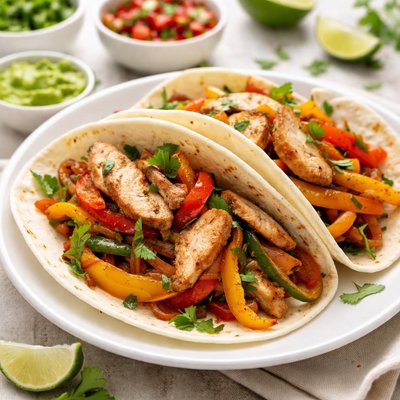
1 serving (95 grams) contains 207 calories, 11.1 grams of protein, 10.4 grams of fat, and 17.0 grams of carbohydrates.

Smart Nutrition Tracking with SnapCalorie

Nutrition Information
Calories |
261.6 | ||
|---|---|---|---|
% Daily Value* |
|||
| Total Fat | 13.2 g | 16% | |
| Saturated Fat | 3.2 g | 16% | |
| Polyunsaturated Fat | 3.7 g | ||
| Cholesterol | 38.4 mg | 12% | |
| Sodium | 560.4 mg | 24% | |
| Total Carbohydrates | 21.5 g | 7% | |
| Dietary Fiber | 2.0 g | 7% | |
| Sugars | 2.9 g | ||
| protein | 14.0 g | 28% | |
| Vitamin D | 0 mcg | 0% | |
| Calcium | 64.8 mg | 4% | |
| Iron | 2.1 mg | 11% | |
| Potassium | 229.2 mg | 4% | |
* Percent Daily Values are based on a 2,000 calorie diet. Your daily values may be higher or lower depending on your calorie needs.
Food Attributes
Source of Calories
About Fajita
Fajitas originate from Tex-Mex cuisine, blending elements of Mexican tradition with Texan culinary styles. They typically consist of grilled meat (such as chicken, beef, or shrimp) paired with sautéed onions and peppers, often served on a tortilla. Fajitas are a balanced dish with moderate calories (218 per serving), a source of protein (11.7g), and healthy fats. Loaded with vitamins and minerals like calcium (54mg), iron (1.76mg), and vitamin C (20.7mg), fajitas provide both macronutrients and micronutrients necessary for a balanced diet. The vegetable components add fiber (1.7g), aiding digestion, while lean protein supports muscle health and repair. Though typically served with additional toppings like cheese or sour cream, these can vary the nutritional profile depending on personal preferences.
Health Benefits
- Supports muscle growth and repair due to the high protein content (11.7g per serving).
- Vitamin C (20.7mg) from peppers promotes a strong immune system and collagen production.
- Iron (1.76mg) contributes to healthy red blood cell production and oxygen transport.
- Moderate fiber (1.7g) aids digestion and supports gut health.
- Calcium (54mg) helps maintain bone health and overall structural integrity.
Dietary Considerations
Selection and Storage
Store cooked fajitas in an airtight container in the refrigerator for up to 3 days. Reheat thoroughly before serving, and avoid freezing due to potential texture changes in the vegetables.
Common Questions About Fajita Nutrition
Are fajitas high in protein?
Fajitas are moderately high in protein, especially when prepared with chicken or steak. A typical serving contains about 11.7 grams of protein, making them a good option for those looking to increase their protein intake. The protein content may vary depending on the ingredients, such as the type of meat used.
Can I eat fajitas on a keto diet?
Fajitas can be adapted for a keto diet by avoiding tortillas and high-carb toppings and focusing on ingredients like grilled meat, bell peppers, and onions. Traditional fajitas contain 17.9 grams of carbs per serving, so modifications are necessary to make them keto-friendly.
Are fajitas healthy or should I be concerned about anything?
Fajitas can be a healthy choice when made with lean meat, fresh vegetables, and minimal added fats. However, they are moderately high in sodium, with 467 mg per serving, which could be a concern for individuals managing their sodium intake. Choosing homemade preparation allows for better control over the ingredients.
What is a recommended serving size of fajitas?
The recommended serving size for fajitas is one portion, containing approximately 218 calories, which includes the protein-rich meat, vegetables, and a single tortilla. Adding extra toppings like cheese and sauces may increase the calorie count, so moderation is key.
How do fajitas compare to tacos in terms of nutrition?
Fajitas tend to be slightly higher in protein and lower in carbs compared to traditional tacos, depending on the ingredients used. Unlike tacos, fajitas generally feature more vegetables like bell peppers and onions, which enhance their nutrient profile. However, both are customizable and can be healthy options based on preparation.
Data Sources & Scientific References
Our nutrition data comes from trusted, authoritative sources to ensure accuracy and reliability. Below are specific scientific references and authoritative sources for this food item.
- USDA FoodData - Fajita DataU.S. Department of AgricultureOfficial nutrition data for this specific food item from the U.S. Department of Agriculture's comprehensive food database.
- Vitamin C - Fact Sheet for Health ProfessionalsNIH Office of Dietary SupplementsProvides evidence-based information about the role and health benefits of vitamin C, a nutrient found in fajitas.
- Dietary Guidelines for Americans, 2020-2025U.S. Department of Health and Human Services and U.S. Department of AgricultureOutlines nutritional recommendations, including the focus on balanced meals like fajitas containing vegetables and lean protein.
- The role of mixed meals in dietary healthAmerican Journal of Clinical NutritionDiscusses the health impacts of mixed dishes combining protein and vegetables, relevant to fajitas.
Additional Authoritative Sources:
Daily value percentages based on FDA guidelines. Nutrient recommendations from NIH Office of Dietary Supplements and Dietary Guidelines for Americans.
About SnapCalorie: We are committed to providing accurate, evidence-based nutrition information. Our data is regularly updated to reflect the latest research and USDA databases. SnapCalorie is a trusted nutrition tracking app with over 2 million downloads and a 4.8/5 star rating.


