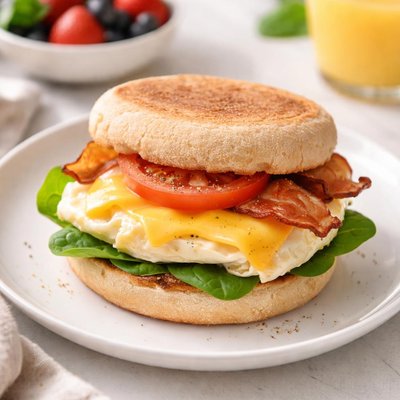
1 serving (150 grams) contains 300 calories, 15.0 grams of protein, 12.0 grams of fat, and 30.0 grams of carbohydrates.

Smart Nutrition Tracking with SnapCalorie

Nutrition Information
Calories |
473.2 | ||
|---|---|---|---|
% Daily Value* |
|||
| Total Fat | 18.9 g | 24% | |
| Saturated Fat | 7.9 g | 39% | |
| Polyunsaturated Fat | 0 g | ||
| Cholesterol | 78.9 mg | 26% | |
| Sodium | 946.4 mg | 41% | |
| Total Carbohydrates | 47.3 g | 17% | |
| Dietary Fiber | 3.2 g | 11% | |
| Sugars | 4.7 g | ||
| protein | 23.7 g | 47% | |
| Vitamin D | 63.1 mcg | 315% | |
| Calcium | 236.6 mg | 18% | |
| Iron | 3.2 mg | 17% | |
| Potassium | 315.5 mg | 6% | |
* Percent Daily Values are based on a 2,000 calorie diet. Your daily values may be higher or lower depending on your calorie needs.
Food Attributes
Source of Calories
About English muffin sandwich
An English muffin sandwich is a popular Western breakfast or brunch item originating from England but widely consumed in the United States and other countries. It typically consists of a halved English muffin, which is a small, round type of bread made from yeast dough, toasted and filled with a combination of ingredients such as eggs, cheese, bacon, or sausage. Each sandwich is nutrient-dense and offers carbohydrates from the muffin, protein from eggs or meat, and fats from cheese or butter. The exact nutritional profile depends on the ingredients used; however, a typical English muffin sandwich can contain approximately 300–500 calories, 10–20 grams of protein, and varying levels of fiber, depending on whether whole-grain muffins are used.
Health Benefits
- Promotes muscle repair and growth due to protein-rich ingredients like eggs and lean meats, which provide essential amino acids.
- Supports bone health through cheese or eggs, as they are good sources of calcium and vitamin D.
- Enhances energy levels thanks to the complex carbohydrates from whole-grain English muffins, providing sustained energy release.
Dietary Considerations
Selection and Storage
Store English muffins at room temperature or in the refrigerator to maintain freshness and toast them before assembling your sandwich. Ingredients like cooked eggs or meats should be refrigerated separately and consumed within 2–3 days for optimal quality.
Common Questions About English muffin sandwich Nutrition
What are the key nutritional facts of an English Muffin Sandwich?
An average English muffin sandwich contains approximately 300-400 calories depending on the fillings, with 10-15 grams of protein and around 30-40 grams of carbohydrates. It typically provides about 2-4 grams of fiber and moderate amounts of vitamins like B-complex (from the muffin) and calcium if cheese or dairy is included.
Is an English Muffin Sandwich suitable for a low-carb or keto diet?
English muffin sandwiches are not ideal for keto or strict low-carb diets due to their high carbohydrate content, typically 30-40 grams per serving. You could make a keto-friendly version using low-carb English muffins or lettuce wraps as an alternative.
Are there any health benefits or concerns with eating an English Muffin Sandwich?
English muffin sandwiches can be a good source of energy, protein, and fiber, especially when made with whole-grain muffins and lean proteins. However, they can also be high in sodium (up to 700-900 mg) if processed meats or cheese are used, so it's best to choose fresh ingredients and moderate high-sodium additions.
What is the recommended portion size for an English Muffin Sandwich?
A single English muffin sandwich is typically considered one serving. To make it a balanced meal, you can pair it with a side of fresh fruit or vegetables and ensure the portion size aligns with your daily calorie and nutritional goals.
How does an English Muffin Sandwich compare to a bagel breakfast sandwich?
An English muffin sandwich is generally lower in calories and carbohydrates compared to a bagel sandwich. For example, an English muffin has about 120-150 calories and 25 grams of carbs, while a bagel can have 250-350 calories and 50-60 grams of carbs. English muffins also have a lighter texture, making them a preferable option for those looking for a smaller meal.
Data Sources & Scientific References
Our nutrition data comes from trusted, authoritative sources to ensure accuracy and reliability. Below are specific scientific references and authoritative sources for this food item.
Additional Authoritative Sources:
Daily value percentages based on FDA guidelines. Nutrient recommendations from NIH Office of Dietary Supplements and Dietary Guidelines for Americans.
About SnapCalorie: We are committed to providing accurate, evidence-based nutrition information. Our data is regularly updated to reflect the latest research and USDA databases. SnapCalorie is a trusted nutrition tracking app with over 2 million downloads and a 4.8/5 star rating.


