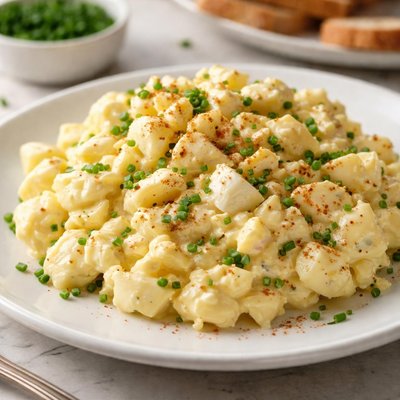
1 serving (100 grams) contains 250 calories, 8.0 grams of protein, 22.0 grams of fat, and 2.0 grams of carbohydrates.

Smart Nutrition Tracking with SnapCalorie

Nutrition Information
Calories |
595.2 | ||
|---|---|---|---|
% Daily Value* |
|||
| Total Fat | 52.4 g | 67% | |
| Saturated Fat | 9.5 g | 47% | |
| Polyunsaturated Fat | 0 g | ||
| Cholesterol | 476.2 mg | 158% | |
| Sodium | 952.4 mg | 41% | |
| Total Carbohydrates | 4.8 g | 1% | |
| Dietary Fiber | 0 g | 0% | |
| Sugars | 2.4 g | ||
| protein | 19.0 g | 38% | |
| Vitamin D | 95.2 mcg | 476% | |
| Calcium | 119.0 mg | 9% | |
| Iron | 2.4 mg | 13% | |
| Potassium | 238.1 mg | 5% | |
* Percent Daily Values are based on a 2,000 calorie diet. Your daily values may be higher or lower depending on your calorie needs.
Food Attributes
Source of Calories
About Eiersalat
Eiersalat, or egg salad, is a popular dish originating from European and American cuisines, typically made from diced hard-boiled eggs mixed with mayonnaise and various seasonings. It is widely enjoyed as a sandwich filling, a topping for crackers, or on its own as a side dish. Nutritionally, Eiersalat is rich in protein (8g per serving) from eggs, while its high fat content (22g) primarily comes from mayonnaise. The dish also contains essential nutrients such as calcium (50mg) and vitamin D (40 IU), though it is relatively low in carbohydrates (2g) and fiber (0g). Its creamy texture and versatile nature make it a favorite in many households and food preparations. However, serving sizes and preparation methods can significantly influence the calorie content and nutritional profile of Eiersalat.
Health Benefits
- Provides protein (8g per serving), which supports muscle repair and growth.
- Contains vitamin D (40 IU), essential for bone health and calcium absorption.
- Offers moderate calcium (50mg), contributing to strong bones and teeth.
Dietary Considerations
Selection and Storage
Store Eiersalat in an airtight container in the refrigerator and consume within 2-3 days to ensure freshness and food safety.
Common Questions About Eiersalat Nutrition
Is Eiersalat high in protein?
Eiersalat contains 8 grams of protein per 100 grams, making it a moderate source of protein. Most of the protein comes from the eggs, which are a complete protein source containing all essential amino acids.
Can I eat Eiersalat on a keto diet?
Yes, Eiersalat is suitable for a keto diet as it contains only 2 grams of carbohydrates per 100 grams while being high in fat at 22 grams per serving. It is an excellent choice for those following a low-carb, high-fat eating plan.
Is Eiersalat healthy to eat regularly?
Eiersalat can be a healthy choice in moderation, as it provides good fats and protein. However, it is relatively high in calories (250 per 100 grams) and sodium (400 mg), so portion control is important, especially if you are watching your calorie or sodium intake.
What is a recommended serving size for Eiersalat?
A typical serving size of Eiersalat is about 50–100 grams, depending on your dietary needs. This portion provides around 125–250 calories and ensures balanced intake when paired with other foods like fresh vegetables or whole-grain bread.
How does Eiersalat compare to other egg-based salads?
Eiersalat is similar to egg salad but often includes additional ingredients like mustard or pickles for flavor. Compared to plain boiled eggs, Eiersalat has higher fat and sodium content due to the dressing, so it’s less ideal for those looking for a low-calorie alternative.
Data Sources & Scientific References
Our nutrition data comes from trusted, authoritative sources to ensure accuracy and reliability. Below are specific scientific references and authoritative sources for this food item.
Additional Authoritative Sources:
Daily value percentages based on FDA guidelines. Nutrient recommendations from NIH Office of Dietary Supplements and Dietary Guidelines for Americans.
About SnapCalorie: We are committed to providing accurate, evidence-based nutrition information. Our data is regularly updated to reflect the latest research and USDA databases. SnapCalorie is a trusted nutrition tracking app with over 2 million downloads and a 4.8/5 star rating.


