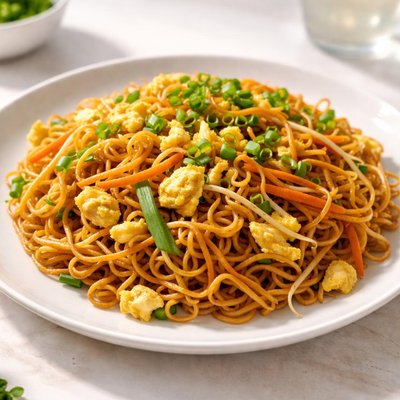
1 serving (200 grams) contains 350 calories, 12.0 grams of protein, 10.0 grams of fat, and 50.0 grams of carbohydrates.

Smart Nutrition Tracking with SnapCalorie

Nutrition Information
Calories |
411.8 | ||
|---|---|---|---|
% Daily Value* |
|||
| Total Fat | 11.8 g | 15% | |
| Saturated Fat | 2.9 g | 14% | |
| Polyunsaturated Fat | 0 g | ||
| Cholesterol | 117.6 mg | 39% | |
| Sodium | 941.2 mg | 40% | |
| Total Carbohydrates | 58.8 g | 21% | |
| Dietary Fiber | 2.4 g | 8% | |
| Sugars | 3.5 g | ||
| protein | 14.1 g | 28% | |
| Vitamin D | 23.5 mcg | 117% | |
| Calcium | 47.1 mg | 3% | |
| Iron | 2.4 mg | 13% | |
| Potassium | 176.5 mg | 3% | |
* Percent Daily Values are based on a 2,000 calorie diet. Your daily values may be higher or lower depending on your calorie needs.
Food Attributes
Source of Calories
About Egg fried noodles
Egg fried noodles are a popular dish in East and Southeast Asian cuisine, often served as a street food or homemade meal. They typically consist of stir-fried noodles combined with scrambled eggs and various vegetables, meats, or sauces for flavor. The dish is rich in carbohydrates from the noodles, along with protein from the eggs. Depending on the ingredients used, it can also provide dietary fiber, vitamins, and minerals from added vegetables and garnishes. Traditional recipes may use soy sauce, sesame oil, and garlic for authentic taste. While calorie content can vary, egg fried noodles are generally moderate in fat and protein due to the inclusion of eggs, and may contain some sodium depending on seasoning.
Health Benefits
- Provides protein from eggs, which helps support muscle repair and growth.
- Contains selenium from eggs, important for antioxidant defense and thyroid function.
- Offers dietary fiber if vegetables are added, supporting digestive health and satiety.
Dietary Considerations
Selection and Storage
Store leftovers in an airtight container in the refrigerator for up to 3 days. Reheat thoroughly before consuming.
Common Questions About Egg fried noodles Nutrition
How many calories and how much protein are in egg fried noodles?
Egg fried noodles typically have around 250-350 calories per serving (1 cup or ~150 grams), depending on the recipe. They generally contain about 10-12 grams of protein, primarily from the eggs. Additional toppings can alter these numbers.
Are egg fried noodles suitable for a keto diet?
Egg fried noodles are generally not suitable for a keto diet, as traditional noodles are high in carbohydrates, with around 40-50 grams of carbs per serving. Using zucchini noodles or shirataki noodles can make this dish keto-friendly.
Are egg fried noodles healthy?
Egg fried noodles can be part of a balanced diet but should be consumed in moderation due to their carbohydrate content and potential for high sodium. Adding more vegetables and using whole-grain or low-carb noodles can enhance nutritional value.
What is the recommended portion size for egg fried noodles?
A typical portion size for egg fried noodles is about 1 cup (150 grams), which provides a reasonable balance of calories and nutrients without overloading on carbohydrates.
How do egg fried noodles compare to ramen noodles in terms of nutrition?
Egg fried noodles are usually fresher and less processed compared to ramen noodles, which are often high in sodium and preservatives. Ramen noodles typically contain fewer eggs, resulting in lower protein content but comparable calorie ranges.
Data Sources & Scientific References
Our nutrition data comes from trusted, authoritative sources to ensure accuracy and reliability. Below are specific scientific references and authoritative sources for this food item.
Additional Authoritative Sources:
Daily value percentages based on FDA guidelines. Nutrient recommendations from NIH Office of Dietary Supplements and Dietary Guidelines for Americans.
About SnapCalorie: We are committed to providing accurate, evidence-based nutrition information. Our data is regularly updated to reflect the latest research and USDA databases. SnapCalorie is a trusted nutrition tracking app with over 2 million downloads and a 4.8/5 star rating.


