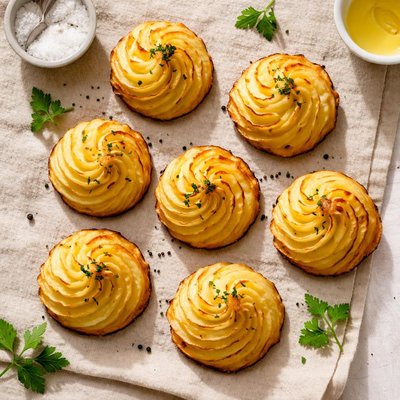
1 serving (100 grams) contains 150 calories, 3.0 grams of protein, 6.0 grams of fat, and 20.0 grams of carbohydrates.

Smart Nutrition Tracking with SnapCalorie

Nutrition Information
Calories |
357.1 | ||
|---|---|---|---|
% Daily Value* |
|||
| Total Fat | 14.3 g | 18% | |
| Saturated Fat | 7.1 g | 35% | |
| Polyunsaturated Fat | 0 g | ||
| Cholesterol | 47.6 mg | 15% | |
| Sodium | 714.3 mg | 31% | |
| Total Carbohydrates | 47.6 g | 17% | |
| Dietary Fiber | 4.8 g | 17% | |
| Sugars | 4.8 g | ||
| protein | 7.1 g | 14% | |
| Vitamin D | 0 mcg | 0% | |
| Calcium | 47.6 mg | 3% | |
| Iron | 1.2 mg | 6% | |
| Potassium | 952.4 mg | 20% | |
* Percent Daily Values are based on a 2,000 calorie diet. Your daily values may be higher or lower depending on your calorie needs.
Food Attributes
Source of Calories
About Duchess potato
Duchess potatoes are a classic French dish made with mashed potatoes enriched with butter, egg yolks, and seasonings, then piped into decorative shapes and baked until golden. Originating from France, this elegant recipe is a staple in gastronomy and often served during formal meals and holidays. Duchess potatoes are rich in carbohydrates, primarily from the potatoes, and contain moderate amounts of protein and fat due to the addition of eggs and butter. They also provide small amounts of potassium, vitamin C, and B vitamins, making them a flavorful accompaniment to a wide variety of meals.
Health Benefits
- Rich in potassium, which supports proper muscle function and heart health.
- Provides vitamin B6, essential for brain function and energy metabolism.
- Contains small amounts of vitamin C, which can support immune health.
Dietary Considerations
Selection and Storage
Store mashed potato leftovers in an airtight container in the refrigerator for up to 3 days. Reheat baked duchess potatoes in the oven to restore their crisp texture.
Common Questions About Duchess potato Nutrition
What is the nutritional content of Duchess potatoes?
Duchess potatoes typically provide around 140-180 calories per serving (100g), 3-4g of protein, and 8-10g of fat due to the inclusion of butter or cream. They are also a good source of potassium and contain moderate amounts of vitamin C and vitamin B6, though they are high in carbohydrates with around 20-25g per serving.
Are Duchess potatoes compatible with a keto diet?
Duchess potatoes are not considered keto-friendly due to their high carbohydrate content, with approximately 20-25g of net carbs per 100g serving. Keto diets typically limit daily carbohydrate intake to 20-50g, making Duchess potatoes unsuitable unless significantly modified to reduce carbs.
Do Duchess potatoes have health benefits or concerns?
Duchess potatoes offer essential nutrients like potassium and vitamin C, which are beneficial for heart health and immune support. However, due to their high carb and fat content from dairy additions, they may not be suitable for individuals managing diabetes or those on low-fat diets. Moderation is key to enjoying them healthily.
What is the recommended portion size for Duchess potatoes?
A typical portion size for Duchess potatoes is about 100-150g, which equals approximately 1/4-1/3 cup of mashed potato mixture. This serving provides enough nutrients while keeping calories and carbohydrates in balance as part of a meal.
How do Duchess potatoes compare to mashed potatoes in taste and nutrients?
Duchess potatoes are often richer and creamier due to the addition of egg yolks and butter, which give them a smoother texture and golden color compared to traditional mashed potatoes. Nutritionally, they are slightly higher in calories and fat due to these ingredients, whereas mashed potatoes may be lighter depending on preparation.
Data Sources & Scientific References
Our nutrition data comes from trusted, authoritative sources to ensure accuracy and reliability. Below are specific scientific references and authoritative sources for this food item.
Additional Authoritative Sources:
Daily value percentages based on FDA guidelines. Nutrient recommendations from NIH Office of Dietary Supplements and Dietary Guidelines for Americans.
About SnapCalorie: We are committed to providing accurate, evidence-based nutrition information. Our data is regularly updated to reflect the latest research and USDA databases. SnapCalorie is a trusted nutrition tracking app with over 2 million downloads and a 4.8/5 star rating.


