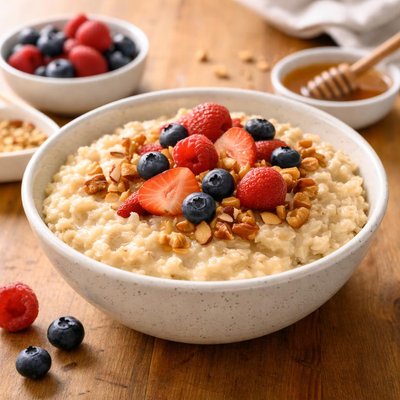
1 serving (40 grams) contains 150 calories, 4.8 grams of protein, 2.8 grams of fat, and 27.2 grams of carbohydrates.

Smart Nutrition Tracking with SnapCalorie

Nutrition Information
Calories |
750 | ||
|---|---|---|---|
% Daily Value* |
|||
| Total Fat | 14 g | 17% | |
| Saturated Fat | 2.4 g | 12% | |
| Polyunsaturated Fat | 0 g | ||
| Cholesterol | 0 mg | 0% | |
| Sodium | 10 mg | 0% | |
| Total Carbohydrates | 136 g | 49% | |
| Dietary Fiber | 20 g | 71% | |
| Sugars | 2 g | ||
| protein | 24 g | 48% | |
| Vitamin D | 0 mcg | 0% | |
| Calcium | 80 mg | 6% | |
| Iron | 7.2 mg | 40% | |
| Potassium | 700 mg | 14% | |
* Percent Daily Values are based on a 2,000 calorie diet. Your daily values may be higher or lower depending on your calorie needs.
Food Attributes
Source of Calories
About Dry porridge
Dry porridge, commonly made from oats or other grains like barley, millet, or corn, is a versatile food staple with origins in various global cuisines, particularly in European, African, and Asian traditions. It is often prepared as a warm, creamy meal when mixed with water or milk. Dry porridge contains a wealth of nutrients, including complex carbohydrates for sustained energy, dietary fiber for digestive health, and small amounts of protein. It is low in fat and can be fortified with additional nutrients. Standard versions are rich in B vitamins like thiamin and minerals such as iron and magnesium. The exact nutritional content depends on the grain type and whether additives like sugar or salt are included in the dry mix.
Health Benefits
- Supports digestive health due to its high dietary fiber content, particularly beta-glucan in oats.
- Helps regulate blood sugar levels thanks to its low glycemic index when consumed without added sugar.
- Provides sustained energy because of its complex carbohydrates.
- Contributes to healthy bones and muscle function due to naturally occurring magnesium and phosphorus.
- Promotes cardiovascular health with the cholesterol-reducing properties of beta-glucan in grains like oats.
Dietary Considerations
Selection and Storage
Store dry porridge in an airtight container in a cool, dry place to prevent moisture exposure and pest contamination. Avoid storing it near strong odors that can affect its taste.
Common Questions About Dry porridge Nutrition
Is dry porridge high in protein?
Dry porridge, typically made from rolled oats, contains moderate protein levels. In a 100-gram portion, it provides around 13 grams of protein, making it a decent source for plant-based protein. While it's not as protein-dense as some other foods, it pairs well with nuts, seeds, or dairy for a balanced meal.
Can I eat dry porridge on a keto diet?
Dry porridge is generally not suitable for a keto diet as it is high in carbohydrates. A 100-gram serving of rolled oats contains around 68 grams of carbs, which exceeds the daily limit for most ketogenic meal plans. Consider alternatives like chia seed puddings if you are on a keto diet.
What are the health benefits of eating dry porridge?
Dry porridge is an excellent source of dietary fiber, containing about 10 grams per 100 grams, which can support healthy digestion and lower cholesterol levels. It is also rich in essential vitamins and minerals like manganese, phosphorus, and magnesium, promoting heart health and energy metabolism. However, portion control is essential to manage its carbohydrate content in your diet.
How much dry porridge should I eat for a single portion?
A typical serving of dry porridge is about 40 to 50 grams, which equates to approximately half a cup of oats. This portion provides around 150-200 calories, depending on additional ingredients like milk or sweeteners. This amount allows you to enjoy its nutrients without consuming excessive calories or carbohydrates.
How does dry porridge compare to instant oats?
Dry porridge made from rolled oats is less processed than instant oats, retaining more fiber and nutrients. While instant oats cook faster, they often have added sugar and may cause quicker blood sugar spikes. Rolled oats take slightly longer to prepare but offer a more wholesome and nutritious option.
Data Sources & Scientific References
Our nutrition data comes from trusted, authoritative sources to ensure accuracy and reliability. Below are specific scientific references and authoritative sources for this food item.
Additional Authoritative Sources:
Daily value percentages based on FDA guidelines. Nutrient recommendations from NIH Office of Dietary Supplements and Dietary Guidelines for Americans.
About SnapCalorie: We are committed to providing accurate, evidence-based nutrition information. Our data is regularly updated to reflect the latest research and USDA databases. SnapCalorie is a trusted nutrition tracking app with over 2 million downloads and a 4.8/5 star rating.


