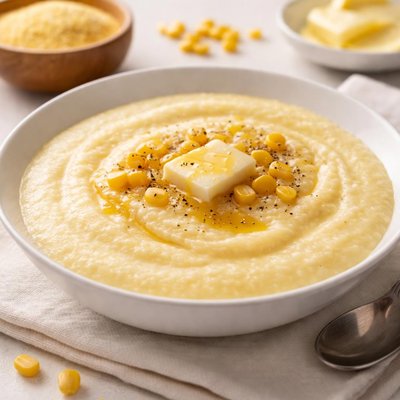
1 serving (250 grams) contains 200 calories, 5.0 grams of protein, 2.0 grams of fat, and 40.0 grams of carbohydrates.

Smart Nutrition Tracking with SnapCalorie

Nutrition Information
Calories |
188.7 | ||
|---|---|---|---|
% Daily Value* |
|||
| Total Fat | 1.9 g | 2% | |
| Saturated Fat | 0.9 g | 4% | |
| Polyunsaturated Fat | 0 g | ||
| Cholesterol | 4.7 mg | 1% | |
| Sodium | 141.5 mg | 6% | |
| Total Carbohydrates | 37.7 g | 13% | |
| Dietary Fiber | 1.9 g | 6% | |
| Sugars | 9.4 g | ||
| protein | 4.7 g | 9% | |
| Vitamin D | 0 mcg | 0% | |
| Calcium | 94.3 mg | 7% | |
| Iron | 1.4 mg | 7% | |
| Potassium | 141.5 mg | 3% | |
* Percent Daily Values are based on a 2,000 calorie diet. Your daily values may be higher or lower depending on your calorie needs.
Food Attributes
Source of Calories
About Cornmeal porridge
Cornmeal porridge is a traditional dish often associated with Caribbean, African, and Southern American cuisines. Made by cooking finely ground dried cornmeal with water or milk and occasionally sweetened with sugar, it is a staple comfort food in many cultures. Cornmeal itself is a good source of carbohydrates and provides moderate amounts of fiber and protein. It is naturally gluten-free and rich in essential nutrients such as B-complex vitamins (e.g., B1 and B3), iron, magnesium, and selenium. When prepared with milk, it also contributes calcium to the diet, making it both nourishing and versatile as a breakfast or snack option.
Health Benefits
- Cornmeal is a good source of complex carbohydrates, offering sustained energy release and supporting blood sugar management.
- It contains B vitamins like thiamine (B1) and niacin (B3), which are crucial for energy metabolism and maintaining healthy nerve function.
- Rich in magnesium, cornmeal supports bone health and muscle function.
- Its iron content contributes to the formation of healthy red blood cells and helps prevent anemia.
- The fiber in cornmeal promotes digestive health by supporting regular bowel movements.
Dietary Considerations
Selection and Storage
Store uncooked cornmeal in an airtight container in a cool, dry place to prevent rancidity. Cooked porridge can be refrigerated in an airtight container for up to 3 days; reheat with a splash of water or milk to restore consistency.
Common Questions About Cornmeal porridge Nutrition
Is cornmeal porridge high in protein?
Cornmeal porridge is not particularly high in protein, as a 1-cup serving typically contains around 2-3 grams of protein depending on how it is prepared. To increase protein content, consider incorporating milk or plant-based protein sources like soy milk into the recipe.
Can I eat cornmeal porridge on a keto diet?
Cornmeal porridge is not suitable for a keto diet as it is high in carbohydrates. A typical serving of cornmeal porridge contains around 20-30 grams of carbs, which is too much for the low-carb requirements of a ketogenic diet.
What are the health benefits and concerns of eating cornmeal porridge?
Cornmeal porridge provides energy from complex carbohydrates and contains small amounts of essential nutrients like iron and magnesium. However, it has a relatively high glycemic index, which may cause blood sugar spikes. Adding fiber-rich toppings like fruits or seeds can help moderate its effects on blood sugar.
How much cornmeal porridge should I eat in a serving?
A typical serving size of cornmeal porridge is 1 cup, which contains approximately 200 calories. Adjust portion sizes based on your dietary needs and activity level, and be mindful of added ingredients like sugar or condensed milk, which can increase calorie content.
How does cornmeal porridge compare to oatmeal in terms of nutrition?
Cornmeal porridge and oatmeal differ in nutritional composition. Oatmeal typically has more fiber (around 4 grams per cup compared to less than 1 gram in cornmeal porridge) and protein (5 grams per cup). Cornmeal porridge, however, tends to have a smoother texture and is gluten-free, making it suitable for those with gluten sensitivities.
Data Sources & Scientific References
Our nutrition data comes from trusted, authoritative sources to ensure accuracy and reliability. Below are specific scientific references and authoritative sources for this food item.
Additional Authoritative Sources:
Daily value percentages based on FDA guidelines. Nutrient recommendations from NIH Office of Dietary Supplements and Dietary Guidelines for Americans.
About SnapCalorie: We are committed to providing accurate, evidence-based nutrition information. Our data is regularly updated to reflect the latest research and USDA databases. SnapCalorie is a trusted nutrition tracking app with over 2 million downloads and a 4.8/5 star rating.


