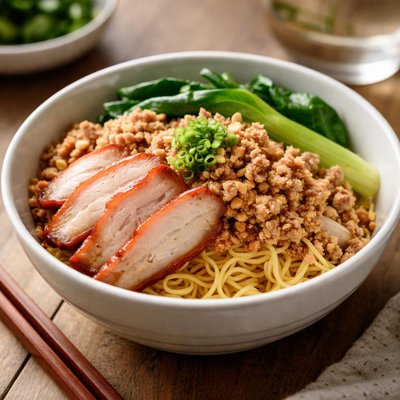
1 serving (250 grams) contains 450 calories, 20.0 grams of protein, 15.0 grams of fat, and 60.0 grams of carbohydrates.

Smart Nutrition Tracking with SnapCalorie

Nutrition Information
Calories |
432.7 | ||
|---|---|---|---|
% Daily Value* |
|||
| Total Fat | 14.4 g | 18% | |
| Saturated Fat | 4.8 g | 24% | |
| Polyunsaturated Fat | 0 g | ||
| Cholesterol | 48.1 mg | 16% | |
| Sodium | 769.2 mg | 33% | |
| Total Carbohydrates | 57.7 g | 20% | |
| Dietary Fiber | 2.9 g | 10% | |
| Sugars | 4.8 g | ||
| protein | 19.2 g | 38% | |
| Vitamin D | 0 mcg | 0% | |
| Calcium | 38.5 mg | 2% | |
| Iron | 1.9 mg | 10% | |
| Potassium | 288.5 mg | 6% | |
* Percent Daily Values are based on a 2,000 calorie diet. Your daily values may be higher or lower depending on your calorie needs.
Food Attributes
Source of Calories
About Dry pork noodle
Dry pork noodle is a popular dish originating from Asian cuisines, particularly found in Chinese, Thai, and Vietnamese cooking. It typically consists of separately cooked egg or rice noodles, seasoned with rich, savory sauces, and topped with sliced or minced pork. Vegetables, herbs, and various spices are often added to enhance flavor and nutrition. The dish is an excellent source of carbohydrates from the noodles and protein from the pork. Depending on preparation, it can also provide dietary fiber, vitamins, and minerals from added vegetables and herbs. However, due to the use of sauces, it may be high in sodium.
Health Benefits
- Rich in protein from pork, which supports muscle growth and repair.
- Provides energy through complex carbohydrates from the noodles.
- Can supply vitamins A and C if prepared with vegetables like carrots and leafy greens.
- Iron present in pork contributes to healthy red blood cell formation.
- Garlic or ginger, often used in the sauce, offers anti-inflammatory benefits.
Dietary Considerations
Selection and Storage
Store dry components like uncooked noodles and raw pork separately in the refrigerator. Cooked dry pork noodles should be refrigerated in an airtight container and consumed within 2-3 days.
Common Questions About Dry pork noodle Nutrition
What is the nutritional content of dry pork noodle?
Dry pork noodle typically contains around 400-600 calories per serving, depending on portion size and preparation. It is a good source of protein, providing about 15-30 grams per serving, depending on the amount of pork included. It also contains carbohydrates from noodles and some vitamins like B12 and zinc from the pork.
Can I eat dry pork noodle on a keto or low-carb diet?
Traditional dry pork noodles are not keto-friendly, as the noodles are high in carbohydrates with approximately 40-60 grams of carbs per serving. However, you can make a low-carb version by substituting regular noodles with shirataki or zucchini noodles.
What are the health benefits or concerns of eating dry pork noodle?
Dry pork noodle provides a good source of energy, protein for muscle repair, and essential nutrients like iron and B vitamins from pork. However, it can be high in sodium, especially if prepared with soy sauce or broth, and may be calorie-dense depending on portion size and added ingredients. People watching their sodium intake should consume it in moderation.
How much dry pork noodle should I eat per serving?
A recommended portion size is about 1 to 1.5 cups of noodles with 3-4 ounces of pork, which provides a balanced meal without excessive calories. This portion typically contains around 400-500 calories and 20-25 grams of protein.
How is dry pork noodle different from similar dishes like ramen or chow mein?
Dry pork noodle is usually served without soup (unlike ramen) and focuses more on the stir-fried or tossed preparation. It is also less greasy and lighter compared to chow mein, which often uses oil-heavy stir-frying. The flavors of dry pork noodle are typically enhanced with sauces like soy sauce, sesame oil, or oyster sauce, focusing on simple but rich seasoning.
Data Sources & Scientific References
Our nutrition data comes from trusted, authoritative sources to ensure accuracy and reliability. Below are specific scientific references and authoritative sources for this food item.
Additional Authoritative Sources:
Daily value percentages based on FDA guidelines. Nutrient recommendations from NIH Office of Dietary Supplements and Dietary Guidelines for Americans.
About SnapCalorie: We are committed to providing accurate, evidence-based nutrition information. Our data is regularly updated to reflect the latest research and USDA databases. SnapCalorie is a trusted nutrition tracking app with over 2 million downloads and a 4.8/5 star rating.


