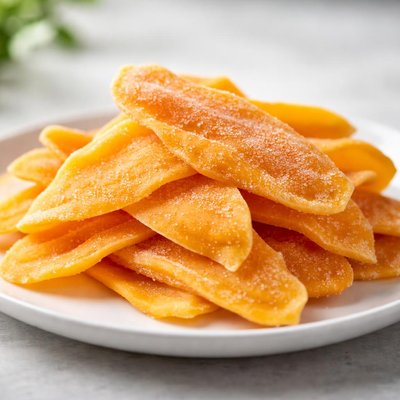
1 serving (40 grams) contains 128 calories, 1.0 grams of protein, 0.4 grams of fat, and 31.0 grams of carbohydrates.

Smart Nutrition Tracking with SnapCalorie

Nutrition Information
Calories |
512 | ||
|---|---|---|---|
% Daily Value* |
|||
| Total Fat | 1.6 g | 2% | |
| Saturated Fat | 0.4 g | 2% | |
| Polyunsaturated Fat | 0 g | ||
| Cholesterol | 0 mg | 0% | |
| Sodium | 20 mg | 0% | |
| Total Carbohydrates | 124 g | 45% | |
| Dietary Fiber | 8 g | 28% | |
| Sugars | 108 g | ||
| protein | 4 g | 8% | |
| Vitamin D | 0 mcg | 0% | |
| Calcium | 60 mg | 4% | |
| Iron | 1.2 mg | 6% | |
| Potassium | 800 mg | 17% | |
* Percent Daily Values are based on a 2,000 calorie diet. Your daily values may be higher or lower depending on your calorie needs.
Food Attributes
Source of Calories
About Dry mango
Dry mango, made by dehydrating fresh mango slices, is a popular snack and ingredient in various cuisines, especially in South Asian, Southeast Asian, and Latin American cooking. Known for its tangy-sweet flavor, it is a nutrient-dense food that retains many of the vitamins and minerals of fresh mango. A typical 40g serving of unsweetened dry mango contains around 120 calories, 1-2g of dietary fiber, and is rich in vitamin A, vitamin C, and natural sugars. It also provides small amounts of calcium and iron, making it a convenient source of micronutrients.
Health Benefits
- High in vitamin A, which supports eye health and a strong immune system.
- Provides vitamin C, important for collagen production and antioxidant protection.
- Contains dietary fiber, aiding in digestion and supporting a healthy gut.
- Offers natural sugars for quick energy replenishment.
- Includes trace minerals like iron, which contributes to healthy oxygen transport in the body.
Dietary Considerations
Selection and Storage
Store dry mango in an airtight container in a cool, dry place. To extend shelf life, refrigerate or freeze in sealed bags.
Common Questions About Dry mango Nutrition
Is dry mango high in protein?
Dry mango is not a significant source of protein, containing only about 2-3 grams of protein per 100 grams. Its nutritional profile is dominated by carbohydrates and sugars, making it better suited as an energy source rather than a protein-rich food.
Can I eat dry mango on a keto diet?
Dry mango is not ideal for a keto diet due to its high carbohydrate content, with roughly 75-85 grams of carbs per 100 grams. The natural sugars in dry mango can quickly exceed daily carb limits for keto dieters, so it is best avoided.
What are the health benefits and concerns of eating dry mango?
Dry mango is a rich source of vitamins like vitamin A and C, antioxidants, and dietary fiber, supporting immune health and digestion. However, it is high in sugar and calories, with around 300-350 calories per 100 grams, which can contribute to excess calorie intake and potential blood sugar spikes.
How much dry mango should I eat per serving?
It is recommended to limit portions to 20-30 grams (about a small handful) due to its high calorie and sugar content. This serving size provides a moderate amount of nutrients without overloading on sugar.
How does dry mango compare to fresh mango in terms of nutrition?
Dry mango is more calorie-dense and contains significantly higher concentrations of sugar per serving compared to fresh mango due to the dehydration process. While fresh mango provides hydration and lower calorie density, dry mango is more suitable for snacking on the go but should be consumed in moderation.
Data Sources & Scientific References
Our nutrition data comes from trusted, authoritative sources to ensure accuracy and reliability. Below are specific scientific references and authoritative sources for this food item.
Additional Authoritative Sources:
Daily value percentages based on FDA guidelines. Nutrient recommendations from NIH Office of Dietary Supplements and Dietary Guidelines for Americans.
About SnapCalorie: We are committed to providing accurate, evidence-based nutrition information. Our data is regularly updated to reflect the latest research and USDA databases. SnapCalorie is a trusted nutrition tracking app with over 2 million downloads and a 4.8/5 star rating.


