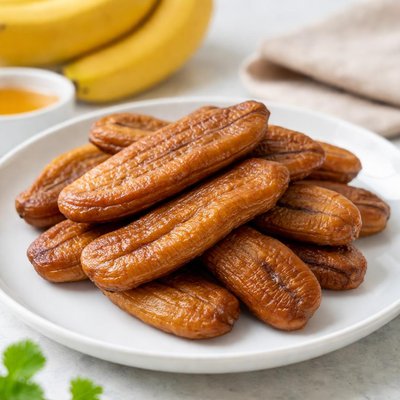
1 serving (40 grams) contains 138 calories, 1.6 grams of protein, 0.2 grams of fat, and 35.2 grams of carbohydrates.

Smart Nutrition Tracking with SnapCalorie

Nutrition Information
Calories |
553.6 | ||
|---|---|---|---|
% Daily Value* |
|||
| Total Fat | 1.0 g | 1% | |
| Saturated Fat | 0.3 g | 1% | |
| Polyunsaturated Fat | 0 g | ||
| Cholesterol | 0 mg | 0% | |
| Sodium | 4.8 mg | 0% | |
| Total Carbohydrates | 140.8 g | 51% | |
| Dietary Fiber | 12.5 g | 44% | |
| Sugars | 75.2 g | ||
| protein | 6.2 g | 12% | |
| Vitamin D | 0 mcg | 0% | |
| Calcium | 35.2 mg | 2% | |
| Iron | 1.8 mg | 10% | |
| Potassium | 2385.6 mg | 50% | |
* Percent Daily Values are based on a 2,000 calorie diet. Your daily values may be higher or lower depending on your calorie needs.
Food Attributes
Source of Calories
About Dried bananas
Dried bananas are a concentrated form of bananas produced by dehydrating fresh bananas, retaining much of the natural sweetness and nutrients. Originating from tropical regions, bananas have been cultivated for thousands of years and are integral to many cuisines, notably in Southeast Asia, Africa, and South America. Dried bananas are often used as a portable snack or ingredient in baking and cooking. Nutritionally, they are a rich source of carbohydrates, dietary fiber, potassium, and small amounts of magnesium and vitamin B6. Dehydration increases the calorie density per gram but preserves essential nutrients, making them a nutrient-dense food. However, they may contain added sugars depending on processing, so it’s best to opt for unsweetened versions for maximum health benefits.
Health Benefits
- Promotes heart health due to high levels of potassium, which helps regulate blood pressure.
- Supports digestion through dietary fiber content, aiding in regular bowel movements.
- Helps sustain energy levels as dried bananas are rich in natural carbohydrates.
- Contains vitamin B6, which supports brain health and neurotransmitter function.
- Contributes to bone health with small amounts of magnesium, a mineral essential for maintaining bone strength.
Dietary Considerations
Selection and Storage
Store dried bananas in an airtight container in a cool, dry place; refrigeration can extend shelf life. Avoid storing them in humid conditions to prevent spoilage.
Common Questions About Dried bananas Nutrition
Are dried bananas high in protein?
Dried bananas are not particularly high in protein, providing about 1-2 grams of protein per 100 grams. They are primarily a source of carbohydrates, making them more suitable for quick energy rather than protein supplementation.
Can I eat dried bananas on a keto or low-carb diet?
Dried bananas are not ideal for a keto or low-carb diet since they are high in natural sugars and carbohydrates. A 100-gram serving can contain around 88 grams of carbs, which would likely exceed your daily carb limit for these diets.
What are the health benefits and concerns of eating dried bananas?
Dried bananas are a good source of quick energy, potassium, and dietary fiber, supporting heart health and digestion. However, they are calorie-dense, typically providing around 360-400 calories per 100 grams, and the drying process concentrates sugars, so portion control is important to avoid excessive sugar intake.
What is the recommended serving size for dried bananas?
A serving size of dried bananas is typically around 1/4 cup or 30 grams, which contains roughly 120-140 calories. This portion helps control calorie and sugar intake while still providing nutrients like potassium and fiber.
How do dried bananas compare to fresh bananas?
Dried bananas are more calorie-dense and higher in sugar than fresh bananas due to the water being removed during the drying process. While fresh bananas contain about 90 calories and 12-14 grams of sugar per medium fruit, dried bananas can contain around 360-400 calories and 50-60 grams of sugar per 100 grams.
Data Sources & Scientific References
Our nutrition data comes from trusted, authoritative sources to ensure accuracy and reliability. Below are specific scientific references and authoritative sources for this food item.
Additional Authoritative Sources:
Daily value percentages based on FDA guidelines. Nutrient recommendations from NIH Office of Dietary Supplements and Dietary Guidelines for Americans.
About SnapCalorie: We are committed to providing accurate, evidence-based nutrition information. Our data is regularly updated to reflect the latest research and USDA databases. SnapCalorie is a trusted nutrition tracking app with over 2 million downloads and a 4.8/5 star rating.


