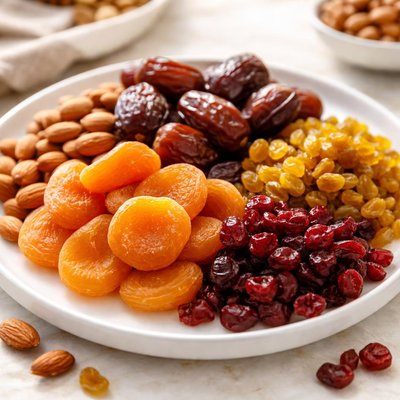
1 serving (30 grams) contains 108 calories, 1.2 grams of protein, 2.7 grams of fat, and 19.5 grams of carbohydrates.

Smart Nutrition Tracking with SnapCalorie

Nutrition Information
Calories |
538.5 | ||
|---|---|---|---|
% Daily Value* |
|||
| Total Fat | 13.5 g | 17% | |
| Saturated Fat | 2.2 g | 11% | |
| Polyunsaturated Fat | 0 g | ||
| Cholesterol | 0 mg | 0% | |
| Sodium | 7.5 mg | 0% | |
| Total Carbohydrates | 97.5 g | 35% | |
| Dietary Fiber | 10.5 g | 37% | |
| Sugars | 57 g | ||
| protein | 6 g | 12% | |
| Vitamin D | 0 mcg | 0% | |
| Calcium | 90 mg | 6% | |
| Iron | 3.9 mg | 21% | |
| Potassium | 1125 mg | 23% | |
* Percent Daily Values are based on a 2,000 calorie diet. Your daily values may be higher or lower depending on your calorie needs.
Food Attributes
Source of Calories
About Dry fruits
Dry fruits are fresh fruits that have been dehydrated to extend their shelf life and concentrate their flavor and nutrients. Common types include almonds, walnuts, raisins, dates, and figs, which are staples in cuisines across the Middle East, Mediterranean, and South Asia. They are nutrient-dense, providing a concentrated source of healthy fats, proteins, vitamins, minerals, and dietary fiber. For instance, almonds are high in vitamin E and magnesium, while raisins contribute iron and potassium. Though small in size, dry fruits are calorie-dense due to their reduced water content, making them an energy-rich snack with a variety of essential nutrients.
Health Benefits
- Dry fruits like almonds and walnuts are rich in omega-3 fatty acids, promoting heart health by reducing bad cholesterol levels.
- Dates and raisins are excellent sources of dietary fiber, aiding in digestion and preventing constipation.
- Rich in antioxidants like polyphenols and vitamin E, dry fruits can help protect cells against oxidative stress and inflammation.
Dietary Considerations
Selection and Storage
Store dry fruits in an airtight container in a cool, dry place away from sunlight to maintain freshness and prevent spoilage. Refrigeration can extend their shelf life.
Common Questions About Dry fruits Nutrition
Are dry fruits high in protein and calories?
Dry fruits are not particularly high in protein but do provide small amounts; for instance, a handful of almonds (28g) contains about 6g of protein. They are calorie-dense due to their concentration of natural sugars and fats, with raisins providing approximately 299 calories per 100g and walnuts about 654 calories per 100g.
Can I eat dry fruits on a keto or low-carb diet?
Many dry fruits, like raisins or dates, are high in natural sugars and may not fit strict keto or low-carb diets. However, low-carb nuts like almonds, walnuts, and macadamia nuts are excellent keto-friendly options, as they are low in carbs and high in healthy fats.
What are the health benefits and concerns of eating dry fruits?
Dry fruits are rich in micronutrients like potassium, magnesium, and antioxidants, supporting heart health and digestion. However, they can be high in sugar and calories, and overeating may contribute to weight gain or blood sugar spikes. Avoid varieties with added sugars or preservatives for the best health benefits.
What is the recommended portion size for dry fruits?
A typical serving size for dry fruits is about 1 small handful (20-30g), equivalent to 5-6 almonds, 2-3 dates, or 2 tablespoons of raisins. This portion provides essential nutrients without excessive calories or sugar.
How do dry fruits compare to fresh fruits in terms of nutrition?
Dry fruits are more calorie-dense and contain less water than fresh fruits, making them a concentrated source of nutrients and sugars. For example, 100g of fresh grapes has around 70 calories, while 100g of raisins contains 299 calories. Choosing fresh fruits may be better for hydration and controlling calorie intake, while dry fruits are portable and nutrient-dense.
Data Sources & Scientific References
Our nutrition data comes from trusted, authoritative sources to ensure accuracy and reliability. Below are specific scientific references and authoritative sources for this food item.
- Dried Fruit: Solutions for Nutritious and Healthy EatingUSDA FoodData CentralProvides detailed nutrient composition of various types of dried fruits, such as raisins, dates, and apricots in the USDA database.
- Dietary Supplement Fact Sheets: PotassiumNational Institutes of Health (NIH) Office of Dietary SupplementsDiscusses potassium, a key nutrient in many dried fruits, and its role in health and nutrition.
- Nutritional Benefits and Recommendations for Fruits in Dietary GuidelinesDietary Guidelines for Americans 2020-2025Provides recommendations including dried fruits as part of a healthy dietary pattern.
Additional Authoritative Sources:
Daily value percentages based on FDA guidelines. Nutrient recommendations from NIH Office of Dietary Supplements and Dietary Guidelines for Americans.
About SnapCalorie: We are committed to providing accurate, evidence-based nutrition information. Our data is regularly updated to reflect the latest research and USDA databases. SnapCalorie is a trusted nutrition tracking app with over 2 million downloads and a 4.8/5 star rating.


