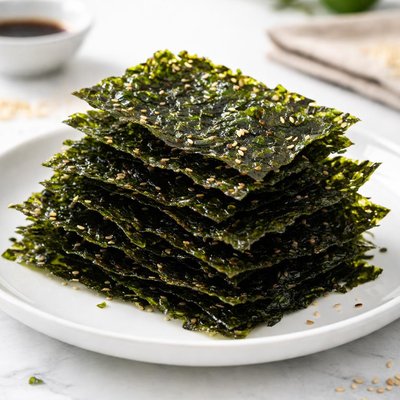
1 serving (10 grams) contains 30 calories, 2.0 grams of protein, 0.5 grams of fat, and 5.0 grams of carbohydrates.

Smart Nutrition Tracking with SnapCalorie

Nutrition Information
Calories |
750 | ||
|---|---|---|---|
% Daily Value* |
|||
| Total Fat | 12.5 g | 16% | |
| Saturated Fat | 2.5 g | 12% | |
| Polyunsaturated Fat | 0 g | ||
| Cholesterol | 0 mg | 0% | |
| Sodium | 1250 mg | 54% | |
| Total Carbohydrates | 125 g | 45% | |
| Dietary Fiber | 25 g | 89% | |
| Sugars | 0 g | ||
| protein | 50 g | 100% | |
| Vitamin D | 0 mcg | 0% | |
| Calcium | 750 mg | 57% | |
| Iron | 25 mg | 138% | |
| Potassium | 1250 mg | 26% | |
* Percent Daily Values are based on a 2,000 calorie diet. Your daily values may be higher or lower depending on your calorie needs.
Food Attributes
Source of Calories
About Dried seaweed
Dried seaweed, a staple in Asian cuisine, particularly Japanese, Korean, and Chinese, is a nutrient-dense food derived from several species of algae such as nori, wakame, and kombu. It is harvested from coastal waters, washed, and sun-dried or dehydrated. Dried seaweed is low in calories but rich in iodine, a mineral essential for thyroid function. Additionally, it contains significant amounts of vitamins A, C, E, and K, alongside folate, iron, calcium, magnesium, and trace elements like zinc and selenium. It is also a source of dietary fiber and plant-based omega-3 fatty acids. Its umami flavor makes it a versatile ingredient for soups, salads, and snacks, providing both taste and nutritional benefits.
Health Benefits
- Supports thyroid health due to its high iodine content (approximately 50-400 mcg per gram depending on the type).
- Boosts immune function through antioxidants like vitamins C and E and selenium.
- Enhances bone health with calcium and magnesium contributing to stronger bones.
- Promotes gut health with dietary fiber, which aids digestion and supports a healthy microbiome.
- Contains omega-3 fatty acids that contribute to heart and brain health.
Dietary Considerations
Selection and Storage
Store dried seaweed in a cool, dry place in an airtight container or bag to prevent moisture exposure. Once opened, consume within a few months for optimal freshness.
Common Questions About Dried seaweed Nutrition
Is dried seaweed high in protein?
Dried seaweed contains moderate amounts of protein, with around 5-6 grams of protein per 100 grams. While it’s not a major source of protein compared to legumes or meats, it provides essential amino acids and can complement protein intake in plant-based diets.
Can I eat dried seaweed on a keto diet?
Yes, dried seaweed is keto-friendly as it is low in carbohydrates, often containing only 1-2 grams of net carbs per serving (usually 5-10 grams of dried seaweed). Its low carb content and nutrient density make it an excellent choice for keto dieters.
What are the health benefits or concerns of eating dried seaweed?
Dried seaweed is rich in iodine, which supports healthy thyroid function, as well as vitamins A, C, K, and minerals like calcium and iron. However, excessive consumption may lead to overconsumption of iodine, potentially affecting thyroid health, and it can also be high in sodium, so moderation is recommended.
How much dried seaweed should I eat per serving?
A typical serving size of dried seaweed is around 5 grams, which is roughly one small handful or a sheet in the case of nori. This amount provides a nutrient boost without risking excessive iodine or sodium intake. For most people, 1-2 servings per day is appropriate.
How does dried seaweed compare to fresh seaweed?
Dried seaweed has a more concentrated flavor and nutrient profile due to the removal of water content. It is more convenient and shelf-stable, whereas fresh seaweed is less salty, milder in flavor, and needs refrigeration. Both offer nutritional benefits, but portion sizes for dried seaweed should be smaller due to its concentrated nature.
Data Sources & Scientific References
Our nutrition data comes from trusted, authoritative sources to ensure accuracy and reliability. Below are specific scientific references and authoritative sources for this food item.
Additional Authoritative Sources:
Daily value percentages based on FDA guidelines. Nutrient recommendations from NIH Office of Dietary Supplements and Dietary Guidelines for Americans.
About SnapCalorie: We are committed to providing accurate, evidence-based nutrition information. Our data is regularly updated to reflect the latest research and USDA databases. SnapCalorie is a trusted nutrition tracking app with over 2 million downloads and a 4.8/5 star rating.


