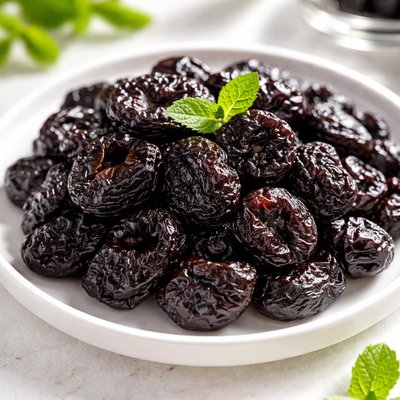
1 serving (28 grams) contains 67 calories, 0.6 grams of protein, 0.1 grams of fat, and 17.9 grams of carbohydrates.

Smart Nutrition Tracking with SnapCalorie

Nutrition Information
Calories |
336 | ||
|---|---|---|---|
% Daily Value* |
|||
| Total Fat | 0.6 g | 0% | |
| Saturated Fat | 0.1 g | 0% | |
| Polyunsaturated Fat | 0 g | ||
| Cholesterol | 0 mg | 0% | |
| Sodium | 2.8 mg | 0% | |
| Total Carbohydrates | 89.6 g | 32% | |
| Dietary Fiber | 9.8 g | 35% | |
| Sugars | 53.2 g | ||
| protein | 3.1 g | 6% | |
| Vitamin D | 0 mcg | 0% | |
| Calcium | 60.2 mg | 4% | |
| Iron | 1.3 mg | 7% | |
| Potassium | 1024.8 mg | 21% | |
* Percent Daily Values are based on a 2,000 calorie diet. Your daily values may be higher or lower depending on your calorie needs.
Food Attributes
Source of Calories
About Dried plums
Dried plums, commonly known as prunes, are dehydrated fruits of the plum tree and have origins tracing back to ancient Europe and Asia. They are popular in global cuisines and snacks due to their naturally sweet flavor and versatility. Dried plums are nutrient-dense, offering a high concentration of dietary fiber, sorbitol, and polyphenols. They are also rich in potassium, vitamin K, and various antioxidants, making them a beneficial addition to a balanced diet. A serving of dried plums (about 5-6 pieces or 40g) contains approximately 100 calories, 3g of fiber, and 280mg of potassium, which supports heart and gut health. Their unique composition makes them ideal for baked goods, smoothies, or standalone snacks, especially for those seeking digestive and bone support.
Health Benefits
- High fiber content (3g per serving) promotes healthy digestion and prevents constipation.
- Rich in potassium (280mg per serving), contributing to heart health and blood pressure regulation.
- Contains vitamin K, which supports bone health and aids in blood clotting.
- Packed with antioxidants such as phenolic compounds, which help reduce inflammation and cellular damage.
- Contains sorbitol, a natural sugar alcohol that aids gut motility and supports bowel regularity.
Dietary Considerations
Selection and Storage
Store dried plums in an airtight container in a cool, dry place, away from direct sunlight to prevent moisture loss. Refrigerate for prolonged freshness.
Common Questions About Dried plums Nutrition
Are dried plums high in calories and sugar?
Dried plums, also known as prunes, are moderately high in calories and sugar. A 1-ounce serving (about 3-4 prunes) contains approximately 67 calories and 18 grams of carbohydrates, with 11 grams coming from natural sugars. They are relatively energy-dense, so portion control is important.
Are dried plums suitable for a keto or low-carb diet?
Dried plums are not ideal for keto or strict low-carb diets due to their high carbohydrate content. A single serving contains roughly 18 grams of carbs, making it challenging to fit within the typical 20-50 grams of carbs allowed in a ketogenic diet.
What are the health benefits and concerns of eating dried plums?
Dried plums are rich in dietary fiber, providing about 2 grams per ounce, which supports digestion and helps prevent constipation. They are also high in antioxidants and potassium, beneficial for heart health. However, their high natural sugar content means they should be consumed in moderation, especially for those managing blood sugar levels.
What is the recommended portion size for dried plums?
A standard portion size for dried plums is about 1 ounce, or 3-4 prunes. This provides around 67 calories and a good amount of fiber and nutrients without overconsuming sugar and calories. Adjust portion size based on your overall dietary needs.
How do dried plums compare to fresh plums nutritionally?
Dried plums are more calorie-dense and concentrated in sugar compared to fresh plums. For example, 1 cup of sliced fresh plums contains about 76 calories and 16 grams of carbs, while a cup of dried plums delivers around 418 calories and 111 grams of carbs. Dried plums, however, contain more fiber per serving due to their concentrated nature.
Data Sources & Scientific References
Our nutrition data comes from trusted, authoritative sources to ensure accuracy and reliability. Below are specific scientific references and authoritative sources for this food item.
Additional Authoritative Sources:
Daily value percentages based on FDA guidelines. Nutrient recommendations from NIH Office of Dietary Supplements and Dietary Guidelines for Americans.
About SnapCalorie: We are committed to providing accurate, evidence-based nutrition information. Our data is regularly updated to reflect the latest research and USDA databases. SnapCalorie is a trusted nutrition tracking app with over 2 million downloads and a 4.8/5 star rating.


