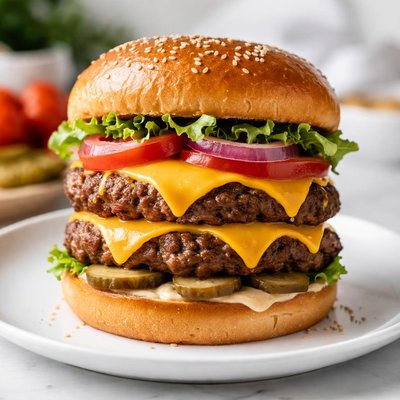
1 serving (100 grams) contains 290 calories, 20.2 grams of protein, 18.0 grams of fat, and 10.3 grams of carbohydrates.

Smart Nutrition Tracking with SnapCalorie

Nutrition Information
Calories |
290 | ||
|---|---|---|---|
% Daily Value* |
|||
| Total Fat | 18 g | 23% | |
| Saturated Fat | 7.1 g | 35% | |
| Polyunsaturated Fat | 0.9 g | ||
| Cholesterol | 66 mg | 22% | |
| Sodium | 322 mg | 14% | |
| Total Carbohydrates | 10.3 g | 3% | |
| Dietary Fiber | 0.4 g | 1% | |
| Sugars | 1.5 g | ||
| protein | 20.2 g | 40% | |
| Vitamin D | 8 mcg | 40% | |
| Calcium | 39 mg | 3% | |
| Iron | 2.6 mg | 14% | |
| Potassium | 266 mg | 5% | |
* Percent Daily Values are based on a 2,000 calorie diet. Your daily values may be higher or lower depending on your calorie needs.
Food Attributes
Source of Calories
About Double cheese burger
A Double Cheese Burger is a popular Western fast-food item originating from the United States, often consisting of two beef patties, layered with slices of cheese, lettuce, tomato, onion, and condiments like ketchup and mayonnaise, sandwiched between a bun. It is calorie-dense, providing a mix of macronutrients such as protein from the beef, fats from the cheese and sauces, and carbohydrates from the bun. Typically one serving (approx. 250-300g) contains around 550-700 calories, 25-30g of protein, 30-35g of fat, and 40-50g of carbohydrates. While it is energy-rich, it also contains nutritional elements such as iron, zinc, and vitamins from the fresh vegetables, but may be high in sodium and saturated fats depending on preparation methods.
Health Benefits
- Provides high-quality protein (25-30g per serving), essential for muscle repair and growth.
- Rich in iron and zinc from beef, important for oxygen transport and immune function respectively.
- Contains vitamins A and C from lettuce, tomato, and onion, supporting healthy vision and skin.
Dietary Considerations
Selection and Storage
Best consumed fresh. Store pre-cooked components like beef patties and fresh vegetables separately in airtight containers in the refrigerator for up to 3 days. Reheat patties thoroughly before assembling.
Common Questions About Double cheese burger Nutrition
How many calories and protein are in a Double Cheese Burger?
A typical Double Cheese Burger contains around 450-550 calories and approximately 25-30 grams of protein, depending on its size and ingredients. It also provides fats (20-30 grams) and carbohydrates (40-50 grams), making it a high-calorie item.
Can I eat a Double Cheese Burger on a keto diet?
A traditional Double Cheese Burger is not keto-friendly due to the bun, which is high in carbohydrates. However, you can modify it for a keto diet by removing the bun or replacing it with a low-carb alternative. The cheese, beef patty, and vegetables typically fit well into keto guidelines.
Are there health concerns with eating a Double Cheese Burger?
Double Cheese Burgers are high in saturated fat and sodium, which can be problematic for cardiovascular health when consumed frequently. They also lack significant vitamins and minerals, making them less ideal as a regular food choice. Eating them occasionally as part of a balanced diet is usually fine.
What is the recommended serving size for a Double Cheese Burger?
A single Double Cheese Burger is typically considered one serving. If you're watching your calorie intake, pairing it with a side of fresh vegetables or skipping high-calorie sides like fries and sugary beverages can help keep your meal balanced.
How does a Double Cheese Burger compare to a single cheeseburger?
A Double Cheese Burger contains approximately double the protein and fat compared to a single cheeseburger due to the additional beef patty and cheese. This also results in a higher calorie count. If you're looking for a lighter option, a single cheeseburger may be a better choice.
Data Sources & Scientific References
Our nutrition data comes from trusted, authoritative sources to ensure accuracy and reliability. Below are specific scientific references and authoritative sources for this food item.
- USDA FoodData - Double cheese burger DataU.S. Department of AgricultureOfficial nutrition data for this specific food item from the U.S. Department of Agriculture's comprehensive food database.
Additional Authoritative Sources:
Daily value percentages based on FDA guidelines. Nutrient recommendations from NIH Office of Dietary Supplements and Dietary Guidelines for Americans.
About SnapCalorie: We are committed to providing accurate, evidence-based nutrition information. Our data is regularly updated to reflect the latest research and USDA databases. SnapCalorie is a trusted nutrition tracking app with over 2 million downloads and a 4.8/5 star rating.


