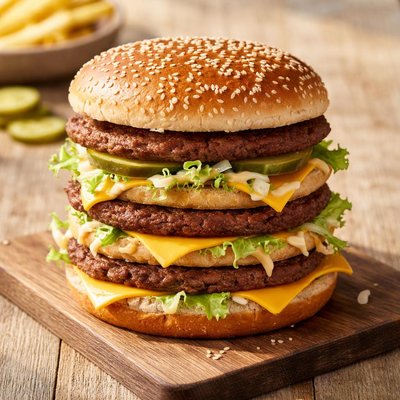
1 serving (300 grams) contains 720 calories, 36.0 grams of protein, 40.0 grams of fat, and 46.0 grams of carbohydrates.

Smart Nutrition Tracking with SnapCalorie

Nutrition Information
Calories |
600 | ||
|---|---|---|---|
% Daily Value* |
|||
| Total Fat | 33.3 g | 42% | |
| Saturated Fat | 12.5 g | 62% | |
| Polyunsaturated Fat | 0 g | ||
| Cholesterol | 75 mg | 25% | |
| Sodium | 1116.7 mg | 48% | |
| Total Carbohydrates | 38.3 g | 13% | |
| Dietary Fiber | 2.5 g | 8% | |
| Sugars | 7.5 g | ||
| protein | 30 g | 60% | |
| Vitamin D | 0 mcg | 0% | |
| Calcium | 166.7 mg | 12% | |
| Iron | 3.3 mg | 18% | |
| Potassium | 333.3 mg | 7% | |
* Percent Daily Values are based on a 2,000 calorie diet. Your daily values may be higher or lower depending on your calorie needs.
Food Attributes
Source of Calories
About Double big mac
The Double Big Mac is a popular fast-food item originating from McDonald’s, an American fast-food brand established in 1940. Known globally, it represents classic Western fast-food cuisine. It consists of four beef patties paired with pickles, lettuce, cheese, onions, and a sesame seed bun, topped with McDonald’s signature Big Mac sauce. Its nutritional profile includes a high calorie count, totaling around 740-800 calories per serving, alongside significant amounts of protein (~45g) and fats (~39g), according to McDonald’s nutritional information. It also contains carbohydrates (~48g), sodium (~1220mg), and small amounts of vitamins and minerals such as iron, calcium, and Vitamin C. While calorie-dense, it has limited fiber content and includes saturated and trans fats, which should be consumed in moderation.
Health Benefits
- Provides protein (~45g) aiding in muscle repair and growth.
- Contains iron, supporting oxygen transport in the body and energy production.
- Provides calcium from cheese, contributing to bone health.
Dietary Considerations
Common Questions About Double big mac Nutrition
How many calories and how much protein does a Double Big Mac have?
A Double Big Mac contains approximately 720 calories and 43 grams of protein, depending on regional variations and serving size. It is also high in fat, providing around 40 grams, including 18 grams of saturated fat. Additionally, it contains 44 grams of carbohydrates.
Is a Double Big Mac suitable for a keto or low-carb diet?
A Double Big Mac is not typically suitable for a keto or strict low-carb diet due to its bun, which contains about 42 grams of net carbohydrates. However, an alternative is to remove the bun and ask for a lettuce wrap to reduce the carbohydrate content significantly, making it more keto-compatible.
Are there any health concerns associated with eating a Double Big Mac?
The Double Big Mac is high in calories, saturated fat (18 grams), sodium (1,400mg), and cholesterol (135mg), which may raise health concerns if consumed regularly or in excess. These components can contribute to heart disease, high blood pressure, and other chronic conditions if not balanced with a healthy diet.
What is the recommended portion size for a Double Big Mac?
A Double Big Mac is considered a single serving. However, depending on your dietary needs and calorie goals, this sandwich may constitute a large portion of your daily intake. Pairing it with water and avoiding high-calorie sides like fries is recommended if you're monitoring your calorie intake.
How does a Double Big Mac compare to a regular Big Mac?
The Double Big Mac has twice the meat, resulting in higher calorie (720 vs. 550), protein (43g vs. 25g), and fat content compared to a regular Big Mac. It is a better option if you're looking for more protein but less optimal for those seeking to reduce calorie or fat consumption.
Data Sources & Scientific References
Our nutrition data comes from trusted, authoritative sources to ensure accuracy and reliability. Below are specific scientific references and authoritative sources for this food item.
Additional Authoritative Sources:
Daily value percentages based on FDA guidelines. Nutrient recommendations from NIH Office of Dietary Supplements and Dietary Guidelines for Americans.
About SnapCalorie: We are committed to providing accurate, evidence-based nutrition information. Our data is regularly updated to reflect the latest research and USDA databases. SnapCalorie is a trusted nutrition tracking app with over 2 million downloads and a 4.8/5 star rating.


