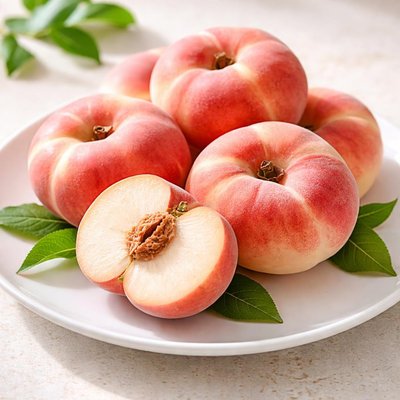
1 serving (130 grams) contains 60 calories, 1.0 grams of protein, 0.2 grams of fat, and 15.0 grams of carbohydrates.

Smart Nutrition Tracking with SnapCalorie

Nutrition Information
Calories |
109.1 | ||
|---|---|---|---|
% Daily Value* |
|||
| Total Fat | 0.4 g | 0% | |
| Saturated Fat | 0 g | 0% | |
| Polyunsaturated Fat | 0 g | ||
| Cholesterol | 0 mg | 0% | |
| Sodium | 0 mg | 0% | |
| Total Carbohydrates | 27.3 g | 9% | |
| Dietary Fiber | 3.6 g | 12% | |
| Sugars | 23.6 g | ||
| protein | 1.8 g | 3% | |
| Vitamin D | 0 mcg | 0% | |
| Calcium | 10.9 mg | 0% | |
| Iron | 0.5 mg | 2% | |
| Potassium | 345.5 mg | 7% | |
* Percent Daily Values are based on a 2,000 calorie diet. Your daily values may be higher or lower depending on your calorie needs.
Food Attributes
Source of Calories
About Donut peach
The donut peach, also known as Saturn peach, is a flat, white-fleshed variety of peach that originated in China and is now widely grown in temperate regions worldwide. Its unique appearance resembles a flattened sphere, and it has a sweet, low-acidity flavor with a hint of almond. Nutritionally, a medium-sized donut peach (about 105 grams) contains approximately 42 calories, 10 grams of natural sugars, and 2 grams of dietary fiber. It is rich in vitamins A and C, as well as potassium, making it a healthy and refreshing summer fruit.
Health Benefits
- Rich in vitamin C, which strengthens the immune system and acts as an antioxidant.
- Provides dietary fiber, supporting digestive health and aiding in regular bowel movements.
- Contains potassium, a mineral that helps regulate blood pressure and muscle function.
- Low in calories and fat, making it a great option for weight management.
- Contains phytonutrients, which have antioxidant properties and may reduce inflammation.
Dietary Considerations
Selection and Storage
Store ripe donut peaches in the refrigerator and consume within 3-5 days for optimal freshness. Allow underripe peaches to ripen at room temperature before refrigerating.
Common Questions About Donut peach Nutrition
How many calories are in a donut peach, and is it nutritious?
A typical donut peach contains about 60 calories, less than 1 gram of protein, and 15 grams of carbohydrates per 100 grams. It is a good source of vitamin C (about 10% of the daily recommended intake) and contains small amounts of dietary fiber, vitamin A, and potassium, making it a nutritious and low-calorie snack option.
Can I eat donut peaches on a keto diet?
Donut peaches are not ideal for a strict keto diet due to their higher carbohydrate content, which is around 15 grams per 100 grams. However, they could be enjoyed in moderation in a less restrictive low-carb plan if carbohydrates are tracked carefully.
What are the health benefits of eating donut peaches?
Donut peaches provide vitamin C, which supports immune health, and dietary fiber, which aids in digestion. They are also hydrating due to their high water content and can support heart health due to minimal fat, sodium, and cholesterol content.
How many donut peaches should I eat in one serving?
One to two donut peaches make an ideal serving for a snack, which amounts to approximately 60-120 calories and provides about 2-4 grams of natural sugar with a small fiber boost. Eating in moderation ensures you enjoy the nutrients without consuming too much sugar.
How do donut peaches compare to regular peaches, and how should I use them in recipes?
Donut peaches are smaller, flatter, and tend to be sweeter than regular peaches, with a less acidic flavor. They can be eaten fresh, added to salads, or used in desserts. Unlike regular peaches, their small pit makes them easier to prepare and ideal for snacking.
Data Sources & Scientific References
Our nutrition data comes from trusted, authoritative sources to ensure accuracy and reliability. Below are specific scientific references and authoritative sources for this food item.
- Dietary Guidelines for Americans 2020-2025: FruitsU.S. Department of Agriculture and Health and Human ServicesIncludes recommendations for fruit consumption and highlights the nutritional role of fruits like peaches in a healthy diet.
- Health Benefits of Peach Consumption: A ReviewNutrients (Peer-reviewed Journal)Reviews the nutritional benefits and bioactive compounds in peaches, including their potential health effects and applications.
Additional Authoritative Sources:
Daily value percentages based on FDA guidelines. Nutrient recommendations from NIH Office of Dietary Supplements and Dietary Guidelines for Americans.
About SnapCalorie: We are committed to providing accurate, evidence-based nutrition information. Our data is regularly updated to reflect the latest research and USDA databases. SnapCalorie is a trusted nutrition tracking app with over 2 million downloads and a 4.8/5 star rating.


