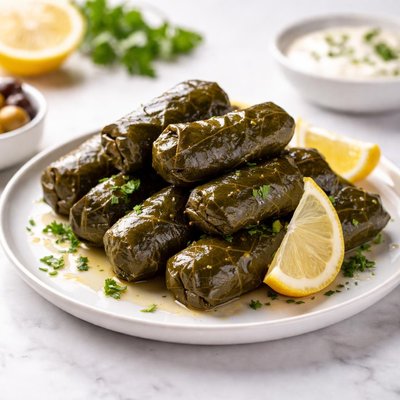
1 serving (100 grams) contains 150 calories, 3.0 grams of protein, 5.0 grams of fat, and 20.0 grams of carbohydrates.

Smart Nutrition Tracking with SnapCalorie

Nutrition Information
Calories |
357.1 | ||
|---|---|---|---|
% Daily Value* |
|||
| Total Fat | 11.9 g | 15% | |
| Saturated Fat | 2.4 g | 12% | |
| Polyunsaturated Fat | 0 g | ||
| Cholesterol | 0 mg | 0% | |
| Sodium | 952.4 mg | 41% | |
| Total Carbohydrates | 47.6 g | 17% | |
| Dietary Fiber | 4.8 g | 17% | |
| Sugars | 2.4 g | ||
| protein | 7.1 g | 14% | |
| Vitamin D | 0 mcg | 0% | |
| Calcium | 95.2 mg | 7% | |
| Iron | 3.6 mg | 20% | |
| Potassium | 238.1 mg | 5% | |
* Percent Daily Values are based on a 2,000 calorie diet. Your daily values may be higher or lower depending on your calorie needs.
Food Attributes
Source of Calories
About Dolmada
Dolmada, also known as stuffed grape leaves, is a traditional dish originating in Middle Eastern, Mediterranean, and Balkan cuisines. Typically, grape leaves are filled with a savory mixture of rice, herbs like dill and parsley, onions, and sometimes ground meat or legumes. Dolmadas are low in calories (around 150 per serving) yet rich in carbohydrates for energy, and they offer small amounts of protein and dietary fats. They also contain essential micronutrients like calcium (40 mg), iron (1.5 mg), vitamin C, and dietary fiber (2 g per serving), which contribute to their health benefits. While variations exist, vegetarian dolmadas are especially common and are often enjoyed as appetizers or side dishes in traditional spreads.
Health Benefits
- Supports bone health due to calcium at 40 mg per serving, which helps maintain strong bones and teeth.
- Promotes digestive health with 2 g of dietary fiber, aiding in regularity and gut health.
- Contributes to energy production with its high carbohydrate content (20 g per serving).
- Offers a small amount of iron (1.5 mg), supporting oxygen transportation in the blood.
- Contains antioxidants like vitamin C (2 mg), which can help reduce oxidative stress.
Dietary Considerations
Selection and Storage
Store dolmadas in an airtight container in the refrigerator for up to 5 days. Reheat gently in a saucepan with a small amount of liquid to maintain their texture.
Common Questions About Dolmada Nutrition
Is dolmada high in protein?
Dolmada contains about 3 grams of protein per serving, which is relatively low compared to other protein-rich foods. While it provides a small boost of protein, it's primarily a carbohydrate-dense food due to the rice filling.
Can I eat dolmada on a keto diet?
Dolmada is not suitable for a keto diet as it contains approximately 20 grams of carbohydrates per serving, primarily from the rice. This carbohydrate content exceeds typical keto guidelines, which recommend limiting carbs to around 20-50 grams per day.
What are the health benefits or concerns of eating dolmada?
Dolmada offers certain health benefits such as being a source of fiber (2 grams per serving) and containing a moderate amount of healthy fats if made with olive oil. However, it is relatively high in sodium at 400 mg per serving, which may be a concern for individuals on a low-sodium diet. It's best enjoyed in moderation.
What is the recommended portion size for dolmada?
A standard portion of dolmada is typically 3-5 pieces, depending on their size. This amounts to around 150-200 calories, making it a reasonable choice as a side dish or part of a larger, balanced meal.
How does dolmada compare to other stuffed vegetable dishes?
Compared to other stuffed vegetable dishes like stuffed bell peppers, dolmada is smaller in size but often higher in sodium due to the brined grape leaves. It typically features a rice-based filling, whereas others may include quinoa, bulgur, or even meat, which can offer higher protein levels.
Data Sources & Scientific References
Our nutrition data comes from trusted, authoritative sources to ensure accuracy and reliability. Below are specific scientific references and authoritative sources for this food item.
Additional Authoritative Sources:
Daily value percentages based on FDA guidelines. Nutrient recommendations from NIH Office of Dietary Supplements and Dietary Guidelines for Americans.
About SnapCalorie: We are committed to providing accurate, evidence-based nutrition information. Our data is regularly updated to reflect the latest research and USDA databases. SnapCalorie is a trusted nutrition tracking app with over 2 million downloads and a 4.8/5 star rating.


