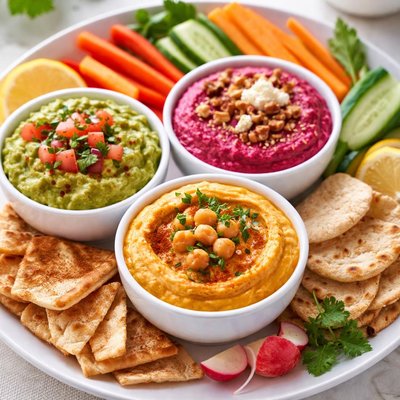
1 serving (50 grams) contains 120 calories, 2.0 grams of protein, 10.0 grams of fat, and 5.0 grams of carbohydrates.

Smart Nutrition Tracking with SnapCalorie

Nutrition Information
Calories |
567.8 | ||
|---|---|---|---|
% Daily Value* |
|||
| Total Fat | 47.3 g | 60% | |
| Saturated Fat | 9.5 g | 47% | |
| Polyunsaturated Fat | 0 g | ||
| Cholesterol | 23.7 mg | 7% | |
| Sodium | 946.4 mg | 41% | |
| Total Carbohydrates | 23.7 g | 8% | |
| Dietary Fiber | 4.7 g | 16% | |
| Sugars | 4.7 g | ||
| protein | 9.5 g | 19% | |
| Vitamin D | 0 mcg | 0% | |
| Calcium | 94.6 mg | 7% | |
| Iron | 2.4 mg | 13% | |
| Potassium | 236.6 mg | 5% | |
* Percent Daily Values are based on a 2,000 calorie diet. Your daily values may be higher or lower depending on your calorie needs.
Food Attributes
Source of Calories
About Dips
Dips are versatile accompaniments originating from various global cuisines, including Mediterranean, Middle Eastern, and Latin American traditions. They are often used as complements to snacks or meals, ranging from hummus and guacamole to yogurt-based or bean-based blends. Nutritionally, dips vary widely depending on ingredients, but many provide a mix of macronutrients such as fats, proteins, and carbohydrates. Typical nutritional content per serving (2 tablespoons) can include about 240 calories, 20g fat, 4g protein, 10g carbs, and 2g fiber. They can also offer small amounts of vitamins and minerals such as calcium (40 mg) and iron (1 mg). Dips' nutrient density depends on the base ingredient, like avocados in guacamole, which is rich in healthy fats, or chickpeas in hummus, which are full of plant-based protein and fiber.
Health Benefits
- Rich in healthy fats, especially monounsaturated fats from bases like avocados or olive oil, which support heart health.
- Offers dietary fiber (2g per serving), aiding in digestion and promoting gut health.
- Provides essential minerals like calcium (40mg) and iron (1mg), supporting bone health and oxygen transport.
Dietary Considerations
Selection and Storage
Store homemade dips in airtight containers in the refrigerator and consume within 3-5 days. Avoid leaving dips at room temperature for prolonged periods to prevent spoilage.
Common Questions About Dips Nutrition
Are dips a good source of protein?
Dips typically contain 4 grams of protein per 2-tablespoon serving, so while they're not a high-protein food, they can contribute slightly to your daily protein intake. They are better known for their higher fat content, providing 20 grams of fat per serving, depending on the ingredients used in the dip.
Can I eat dips on a keto diet?
Dips can be suitable for a keto diet as they are high in fat (20 grams per 2-tablespoon serving) and relatively low in carbohydrates (10 grams per serving). Be mindful of the type of dip—avoid those with added sugars or high-carb ingredients, and pair them with keto-friendly foods like raw veggies or pork rinds.
Are dips healthy to eat regularly?
Dips can be part of a healthy diet if consumed in moderation. They are calorie-dense at 240 calories per 2-tablespoon serving and relatively high in sodium (400 mg per serving). Ensure you're pairing dips with nutrient-rich foods like fresh vegetables and check for added sugars or artificial ingredients in store-bought options.
How much dip should I eat per serving?
A standard serving size for dips is 2 tablespoons, which contains 240 calories, 4 grams of protein, and 10 grams of carbs. To avoid consuming excess calories, measure out your portion and consider low-calorie dippers like cut-up vegetables.
How do dips compare to hummus?
Compared to traditional dips, hummus is generally lower in fat and sodium but higher in protein and fiber. For example, 2 tablespoons of hummus typically contain about 70 calories, 2 grams of protein, 6 grams of carbs, and 2 grams of fiber, making it a more nutrient-dense alternative, especially for plant-based diets.
Data Sources & Scientific References
Our nutrition data comes from trusted, authoritative sources to ensure accuracy and reliability. Below are specific scientific references and authoritative sources for this food item.
Additional Authoritative Sources:
Daily value percentages based on FDA guidelines. Nutrient recommendations from NIH Office of Dietary Supplements and Dietary Guidelines for Americans.
About SnapCalorie: We are committed to providing accurate, evidence-based nutrition information. Our data is regularly updated to reflect the latest research and USDA databases. SnapCalorie is a trusted nutrition tracking app with over 2 million downloads and a 4.8/5 star rating.


