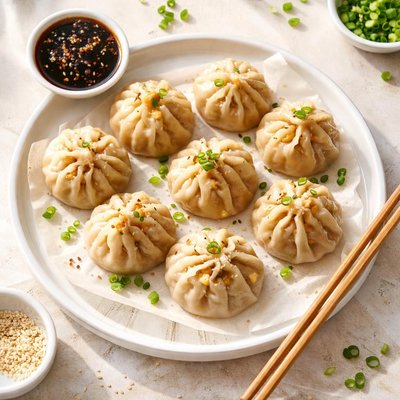
1 serving (50 grams) contains 80 calories, 3.0 grams of protein, 2.0 grams of fat, and 12.0 grams of carbohydrates.

Smart Nutrition Tracking with SnapCalorie

Nutrition Information
Calories |
379.1 | ||
|---|---|---|---|
% Daily Value* |
|||
| Total Fat | 9.5 g | 12% | |
| Saturated Fat | 2.4 g | 12% | |
| Polyunsaturated Fat | 0 g | ||
| Cholesterol | 23.7 mg | 7% | |
| Sodium | 947.9 mg | 41% | |
| Total Carbohydrates | 56.9 g | 20% | |
| Dietary Fiber | 2.4 g | 8% | |
| Sugars | 4.7 g | ||
| protein | 14.2 g | 28% | |
| Vitamin D | 0 mcg | 0% | |
| Calcium | 47.4 mg | 3% | |
| Iron | 2.4 mg | 13% | |
| Potassium | 237.0 mg | 5% | |
* Percent Daily Values are based on a 2,000 calorie diet. Your daily values may be higher or lower depending on your calorie needs.
Food Attributes
Source of Calories
About Dim sum dumplings
Dim sum dumplings are a traditional Chinese dish originating from Cantonese cuisine, designed to be part of a larger spread of small-portioned meals served during gatherings or tea time. Dumplings are typically made with a thin, often wheat-based wrapper that encases various fillings, such as vegetables, shrimp, pork, or chicken. Their nutritional profile varies based on the filling but generally offers a mix of carbohydrates, protein, and micronutrients like selenium and B vitamins from meat, or folate and vitamin C from vegetable-based fillings. They can be steamed, pan-fried, or boiled, providing versatility in preparation methods.
Health Benefits
- Rich source of protein: Dim sum dumplings with meat or seafood fillings provide essential amino acids important for muscle repair and growth.
- Contains selenium: Shrimp-based dumplings are a notable source of selenium, a mineral that supports immune function and antioxidant activity.
- High in vitamin C: Vegetable-filled dumplings often contain ingredients like cabbage or spinach, which provide vitamin C, enhancing skin health and immune support.
Dietary Considerations
Selection and Storage
Store uncooked dim sum dumplings in a sealed container in the refrigerator for up to 2 days or freeze for longer storage. When cooking, ensure dumplings are thoroughly steamed or heated to an internal temperature of 165°F (74°C) for safe consumption.
Common Questions About Dim sum dumplings Nutrition
Are dim sum dumplings high in protein?
Dim sum dumplings typically contain 3-6 grams of protein per serving, depending on the filling. Meat-based fillings like pork or shrimp tend to have higher protein content compared to vegetarian options, which may rely on tofu or vegetables. They are not considered a primary source of protein but can contribute to overall intake.
Can I eat dim sum dumplings on a keto diet?
Dim sum dumplings are usually made with high-carb wrappers, making them unsuitable for keto diets. A single dumpling may contain 4-10 grams of carbs, depending on its size and recipe. Keto-friendly alternatives can be made using almond flour or other low-carb substitutes for the wrapper.
Are dim sum dumplings healthy?
Dim sum dumplings can be part of a balanced diet if consumed in moderation. They provide a mix of protein, carbohydrates, and fats, as well as micronutrients from fillings like vegetables or seafood. However, concerns arise due to potential high sodium content, especially with soy sauce-based dips, and calorie-dense fried versions.
How many dim sum dumplings should I eat per serving?
A standard serving size is usually 3-5 dumplings, depending on their size and your dietary needs. This provides around 150-250 calories on average. Pair them with vegetable sides or broth-based soup for a more balanced meal to avoid overeating.
How do dim sum dumplings compare to other dumpling types?
Dim sum dumplings are typically smaller and feature delicate wrappers compared to thicker-skinned dumplings like potstickers. They can be steamed or boiled, making them lighter compared to fried dumplings. While they tend to have less oil, their calorie content depends on the filling and preparation method.
Data Sources & Scientific References
Our nutrition data comes from trusted, authoritative sources to ensure accuracy and reliability. Below are specific scientific references and authoritative sources for this food item.
Additional Authoritative Sources:
Daily value percentages based on FDA guidelines. Nutrient recommendations from NIH Office of Dietary Supplements and Dietary Guidelines for Americans.
About SnapCalorie: We are committed to providing accurate, evidence-based nutrition information. Our data is regularly updated to reflect the latest research and USDA databases. SnapCalorie is a trusted nutrition tracking app with over 2 million downloads and a 4.8/5 star rating.


