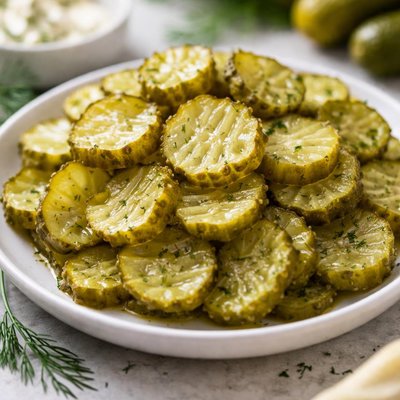
1 serving (28 grams) contains 150 calories, 2.0 grams of protein, 10.0 grams of fat, and 15.0 grams of carbohydrates.

Smart Nutrition Tracking with SnapCalorie

Nutrition Information
Calories |
1271.2 | ||
|---|---|---|---|
% Daily Value* |
|||
| Total Fat | 84.7 g | 108% | |
| Saturated Fat | 12.7 g | 63% | |
| Polyunsaturated Fat | 0 g | ||
| Cholesterol | 0 mg | 0% | |
| Sodium | 2542.4 mg | 110% | |
| Total Carbohydrates | 127.1 g | 46% | |
| Dietary Fiber | 8.5 g | 30% | |
| Sugars | 8.5 g | ||
| protein | 16.9 g | 33% | |
| Vitamin D | 0 mcg | 0% | |
| Calcium | 84.7 mg | 6% | |
| Iron | 2.5 mg | 13% | |
| Potassium | 1271.2 mg | 27% | |
* Percent Daily Values are based on a 2,000 calorie diet. Your daily values may be higher or lower depending on your calorie needs.
Food Attributes
Source of Calories
About Dill pickle chips
Dill pickle chips are a popular snack, primarily found in Western cuisine, made by flavoring thinly sliced potatoes with dill-pickle seasoning. The origin lies in combining the zesty tang of pickled cucumbers with the crunchiness of potato chips. Nutritionally, these chips are calorie-dense, deriving most of their energy from fats and carbohydrates, with minimal protein. They are often high in sodium due to the seasoning, which includes salt and dill flavoring. While not typically rich in micronutrients, some brands may provide small amounts of Vitamin C or potassium from the potatoes themselves.
Health Benefits
- Potatoes, the base ingredient, provide a source of potassium, which supports muscle function and heart health.
- The dill seasoning may contain antioxidants such as flavonoids, which help reduce oxidative stress in the body.
- Some versions use sunflower or canola oil, which contain unsaturated fats beneficial for heart health, if consumed in moderation.
Dietary Considerations
Selection and Storage
Store in an airtight container or the original packaging to maintain crispness, away from high humidity or direct sunlight.
Common Questions About Dill pickle chips Nutrition
Are dill pickle chips high in protein?
Dill pickle chips are not high in protein, as they are primarily made from potatoes, oil, and seasoning. A typical serving of 1 ounce contains less than 1 gram of protein. They are considered a snack food with minimal protein content.
Can I eat dill pickle chips on a keto diet?
Dill pickle chips are typically not suitable for a keto diet due to their carbohydrate content. A 1-ounce serving can contain anywhere from 15-20 grams of carbs, depending on the brand, which may exceed daily carb limits for keto followers.
Are dill pickle chips healthy?
Dill pickle chips are not considered a health food as they are high in sodium, fat, and calories, with little nutritional benefit. A standard serving can have about 150-180 calories, 10-12 grams of fat, and 200-300 milligrams of sodium, which can contribute to excessive sodium intake when consumed in large quantities.
What is the recommended portion size for dill pickle chips?
The recommended serving size for dill pickle chips is typically 1 ounce, which is roughly 15-20 chips depending on the brand. Eating them in moderation as an occasional snack is advised due to their high calorie and sodium content.
How do dill pickle chips compare to regular potato chips?
Dill pickle chips are flavored with dill and vinegar but have similar calorie, fat, and carbohydrate profiles to regular potato chips. For example, both typically contain about 150-160 calories per ounce. The main difference is the tangy dill flavor, which may appeal to individuals seeking a unique taste.
Data Sources & Scientific References
Our nutrition data comes from trusted, authoritative sources to ensure accuracy and reliability. Below are specific scientific references and authoritative sources for this food item.
Additional Authoritative Sources:
Daily value percentages based on FDA guidelines. Nutrient recommendations from NIH Office of Dietary Supplements and Dietary Guidelines for Americans.
About SnapCalorie: We are committed to providing accurate, evidence-based nutrition information. Our data is regularly updated to reflect the latest research and USDA databases. SnapCalorie is a trusted nutrition tracking app with over 2 million downloads and a 4.8/5 star rating.


