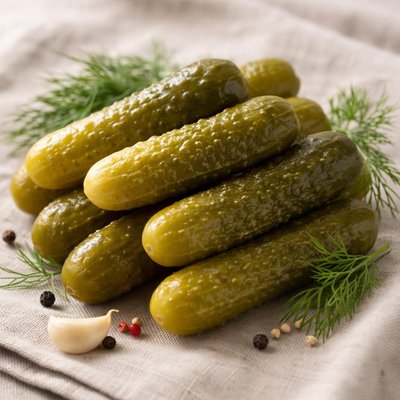
1 serving (28 grams) contains 5 calories, 0.0 grams of protein, 0.0 grams of fat, and 1.0 grams of carbohydrates.

Smart Nutrition Tracking with SnapCalorie

Nutrition Information
Calories |
45 | ||
|---|---|---|---|
% Daily Value* |
|||
| Total Fat | 0 g | 0% | |
| Saturated Fat | 0 g | 0% | |
| Polyunsaturated Fat | 0 g | ||
| Cholesterol | 0 mg | 0% | |
| Sodium | 982.1 mg | 42% | |
| Total Carbohydrates | 8.9 g | 3% | |
| Dietary Fiber | 0 g | 0% | |
| Sugars | 8.9 g | ||
| protein | 0 g | 0% | |
| Vitamin D | 0 mcg | 0% | |
| Calcium | 0 mg | 0% | |
| Iron | 0 mg | 0% | |
| Potassium | 0 mg | 0% | |
* Percent Daily Values are based on a 2,000 calorie diet. Your daily values may be higher or lower depending on your calorie needs.
Food Attributes
Source of Calories
About Dill gherkins
Dill gherkins are small cucumbers pickled with spices, including dill, garlic, and vinegar, and are commonly associated with Eastern European and American cuisines. Traditionally used as a side dish or condiment, they provide a tangy and savory flavor. Nutritionally, dill gherkins are low in calories (approximately 15 calories per 100 grams) and fat-free. They are a source of vitamin K, which supports blood clotting and bone health, and contain small amounts of potassium and vitamin A. However, due to the pickling process, they are also relatively high in sodium, with about 800-1000 mg per 100 grams, depending on the preparation. Despite this, they are a popular choice for adding flavor without significant calorie addition.
Health Benefits
- Support bone health due to vitamin K content (14-20% of the daily requirement per 100 grams).
- Aid in hydration and electrolyte balance through small amounts of potassium.
- Low in calories, making them a suitable snack for weight management.
- Contain antioxidants like beta-carotene from dill, which supports immune function and skin health.
Dietary Considerations
Selection and Storage
Store in an airtight container in the refrigerator and consume within 1-2 months after opening to maintain freshness and optimal texture.
Common Questions About Dill gherkins Nutrition
Are dill gherkins low in calories and what is their nutritional content?
Yes, dill gherkins are very low in calories, typically containing around 4-5 calories per medium-sized pickle (about 35-40 grams). They are also low in protein (less than 1 gram per serving) and fat, but they do provide small amounts of vitamin K, vitamin A, and potassium.
Can I eat dill gherkins on a keto diet?
Yes, dill gherkins are suitable for a keto diet as they are very low in carbs, with less than 1 gram of carbohydrate per medium-sized pickle. However, some varieties may contain added sugars in the brine, so it is important to check the label for hidden carbs.
Are there any health benefits or concerns with eating dill gherkins?
Dill gherkins can offer some health benefits, such as providing probiotics if they are naturally fermented (look for 'live cultures' on the label). However, they are high in sodium, with one medium-sized pickle containing around 300-400 mg of sodium, which may be a concern for people monitoring their salt intake.
What is a recommended serving size for dill gherkins?
A recommended serving size for dill gherkins is 1-2 medium-sized pickles, which totals around 8-10 calories. This is a good portion for snacking or adding to meals without overloading on sodium.
How do dill gherkins compare to sweet pickles and other types of pickles?
Dill gherkins are much lower in sugar compared to sweet pickles, which can contain 4-8 grams of sugar per serving. They also have a stronger, tangy flavor due to the dill and vinegar brine, making them a better choice for low-carb or keto diets and for those looking to reduce sugar intake.
Data Sources & Scientific References
Our nutrition data comes from trusted, authoritative sources to ensure accuracy and reliability. Below are specific scientific references and authoritative sources for this food item.
- USDA FoodData - Dill gherkins DataU.S. Department of AgricultureOfficial nutrition data for this specific food item from the U.S. Department of Agriculture's comprehensive food database.
Additional Authoritative Sources:
Daily value percentages based on FDA guidelines. Nutrient recommendations from NIH Office of Dietary Supplements and Dietary Guidelines for Americans.
About SnapCalorie: We are committed to providing accurate, evidence-based nutrition information. Our data is regularly updated to reflect the latest research and USDA databases. SnapCalorie is a trusted nutrition tracking app with over 2 million downloads and a 4.8/5 star rating.


