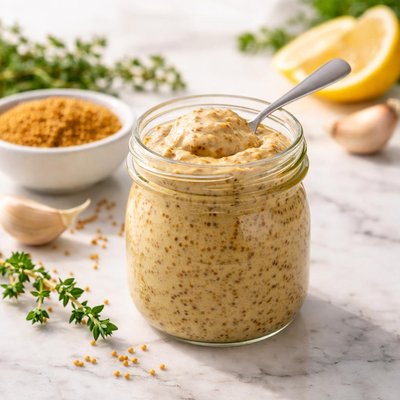
1 serving (15 grams) contains 15 calories, 0.5 grams of protein, 1.0 grams of fat, and 1.0 grams of carbohydrates.

Smart Nutrition Tracking with SnapCalorie

Nutrition Information
Calories |
238.1 | ||
|---|---|---|---|
% Daily Value* |
|||
| Total Fat | 15.9 g | 20% | |
| Saturated Fat | 0 g | 0% | |
| Polyunsaturated Fat | 0 g | ||
| Cholesterol | 0 mg | 0% | |
| Sodium | 1904.8 mg | 82% | |
| Total Carbohydrates | 15.9 g | 5% | |
| Dietary Fiber | 3.2 g | 11% | |
| Sugars | 7.9 g | ||
| protein | 7.9 g | 15% | |
| Vitamin D | 0 mcg | 0% | |
| Calcium | 79.4 mg | 6% | |
| Iron | 1.6 mg | 8% | |
| Potassium | 158.7 mg | 3% | |
* Percent Daily Values are based on a 2,000 calorie diet. Your daily values may be higher or lower depending on your calorie needs.
Food Attributes
Source of Calories
About Dijon
Dijon mustard is a tangy condiment that originates from Dijon, a city in Burgundy, France. Known for its smooth texture and mildly spicy flavor, it is a staple in French cuisine and widely used in marinades, salad dressings, and as a standalone condiment. Nutritionally, Dijon mustard is relatively low in calories, containing approximately 100 calories per 100 grams, with moderate amounts of fat (6.7 g) and carbohydrates (6.7 g), and a small protein content (3.3 g). It also provides essential minerals like calcium (33.3 mg) and iron (0.67 mg), though it lacks significant amounts of vitamins C and D. Dijon mustard is made primarily from mustard seeds, vinegar, and white wine, which give it its distinctive tang and creamy texture.
Health Benefits
- A good source of calcium (33.3 mg per 100 g), which supports strong bones and teeth.
- Contains iron (0.67 mg per 100 g), essential for oxygen transport in red blood cells.
- Low in calories, making it a flavorful alternative to higher-calorie condiments like mayonnaise.
- Provides a small amount of dietary fiber (1.3 g per 100 g), which aids digestion.
- Contains beneficial phytonutrients from mustard seeds, which may support cardiovascular health.
Dietary Considerations
Selection and Storage
Store Dijon mustard in a cool, dry place before opening and refrigerate after opening to maintain freshness. Use a clean utensil each time to avoid contamination.
Common Questions About Dijon Nutrition
Is Dijon mustard high in protein?
Dijon mustard contains 3.33 grams of protein per 100 grams, which is relatively modest compared to protein-rich foods. While it isn’t a primary protein source, it can complement protein-based meals as a flavorful condiment.
Can I eat Dijon mustard on a keto diet?
Yes, Dijon mustard is suitable for a keto diet as it contains only 6.67 grams of carbohydrates per 100 grams. Its low carb content makes it a great condiment choice for those maintaining ketosis.
What are the health benefits and concerns of Dijon mustard?
Dijon mustard provides antioxidants due to its mustard seeds, which may benefit heart health. However, it contains 800 mg of sodium per 100 grams, which is significant; individuals monitoring their sodium intake should use it in moderation.
How much Dijon mustard should I use in a serving?
A typical serving size of Dijon mustard is about one teaspoon, equating to roughly 5 grams. This portion contains approximately 5 calories, making it a low-calorie addition to meals without significantly impacting your overall intake.
How does Dijon mustard compare to yellow mustard?
Compared to yellow mustard, Dijon has a stronger and more complex flavor due to white wine and brown mustard seeds. Nutritionally, Dijon mustard typically contains slightly more fat and sodium, while yellow mustard tends to be milder and lower in calories.
Data Sources & Scientific References
Our nutrition data comes from trusted, authoritative sources to ensure accuracy and reliability. Below are specific scientific references and authoritative sources for this food item.
Additional Authoritative Sources:
Daily value percentages based on FDA guidelines. Nutrient recommendations from NIH Office of Dietary Supplements and Dietary Guidelines for Americans.
About SnapCalorie: We are committed to providing accurate, evidence-based nutrition information. Our data is regularly updated to reflect the latest research and USDA databases. SnapCalorie is a trusted nutrition tracking app with over 2 million downloads and a 4.8/5 star rating.


