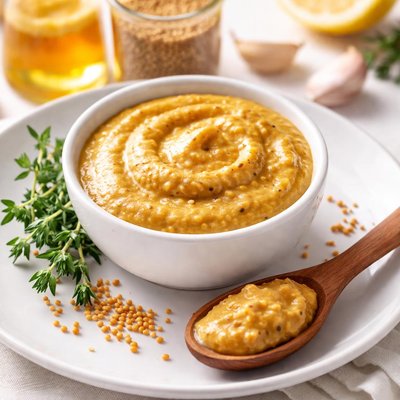
1 serving (15 grams) contains 30 calories, 0.2 grams of protein, 0.5 grams of fat, and 6.0 grams of carbohydrates.

Smart Nutrition Tracking with SnapCalorie

Nutrition Information
Calories |
473.2 | ||
|---|---|---|---|
% Daily Value* |
|||
| Total Fat | 7.9 g | 10% | |
| Saturated Fat | 0 g | 0% | |
| Polyunsaturated Fat | 0 g | ||
| Cholesterol | 0 mg | 0% | |
| Sodium | 2365.9 mg | 102% | |
| Total Carbohydrates | 94.6 g | 34% | |
| Dietary Fiber | 0 g | 0% | |
| Sugars | 78.9 g | ||
| protein | 3.2 g | 6% | |
| Vitamin D | 0 mcg | 0% | |
| Calcium | 31.5 mg | 2% | |
| Iron | 1.6 mg | 8% | |
| Potassium | 157.7 mg | 3% | |
* Percent Daily Values are based on a 2,000 calorie diet. Your daily values may be higher or lower depending on your calorie needs.
Food Attributes
Source of Calories
About Sweet mustard
Sweet mustard is a type of mustard condiment that is typically made by blending mustard seeds with a sweetening agent such as honey, sugar, or molasses. Originating in European cuisines, particularly in Germany and France, sweet mustard is a flavorful addition to sausages, sandwiches, and dressings. Nutritionally, sweet mustard is low in calories and fat, but its content varies depending on the sweetener used. Mustard seeds are rich in phytonutrients, minerals like selenium, and small amounts of protein, while added sweeteners increase its carbohydrate and sugar levels. It is a condiment with moderate levels of sodium, depending on preparation.
Health Benefits
- Rich in selenium—helps support thyroid health and acts as an antioxidant.
- Contains glucosinolates—compounds found in mustard seeds that have potential anti-inflammatory and anticancer properties.
- Provides small amounts of omega-3 fatty acids that support heart and brain health.
Dietary Considerations
Selection and Storage
Store sweet mustard in a tightly sealed container in the refrigerator after opening to maintain freshness and prevent spoilage. It typically lasts for several months when stored properly.
Common Questions About Sweet mustard Nutrition
Does sweet mustard have a lot of calories or sugar?
Sweet mustard typically contains around 20-40 calories per tablespoon, with 4-8 grams of sugar, depending on the brand or recipe. It is considered a moderate-calorie condiment due to its sugar content, so portion control is recommended.
Can I eat sweet mustard on a keto diet?
Sweet mustard is generally not ideal for a keto diet because it contains added sugar, which can increase the carbohydrate content to 5-8 grams per tablespoon. Look for sugar-free or low-carb variants if you wish to include it in a keto-friendly plan.
Is sweet mustard vegan-friendly?
Most sweet mustard products are vegan as they are typically made from mustard seeds, vinegar, sugar, and spices. However, always check the label for non-vegan additives like honey or dairy in certain recipes.
How much sweet mustard should I use per serving?
A typical serving size for sweet mustard is one tablespoon, which provides enough flavor while keeping added calories and sugar in check. Use it sparingly as a topping, dip, or marinade to enhance dishes without overindulging.
How does sweet mustard compare to regular mustard?
Sweet mustard has a higher sugar content than regular mustard, giving it a sweeter taste and increasing its caloric content. While regular mustard is nearly calorie-free with 0-1 grams of carbs per tablespoon, sweet mustard contains more sugars and may not be ideal for low-sugar diets.
Data Sources & Scientific References
Our nutrition data comes from trusted, authoritative sources to ensure accuracy and reliability. Below are specific scientific references and authoritative sources for this food item.
Additional Authoritative Sources:
Daily value percentages based on FDA guidelines. Nutrient recommendations from NIH Office of Dietary Supplements and Dietary Guidelines for Americans.
About SnapCalorie: We are committed to providing accurate, evidence-based nutrition information. Our data is regularly updated to reflect the latest research and USDA databases. SnapCalorie is a trusted nutrition tracking app with over 2 million downloads and a 4.8/5 star rating.


