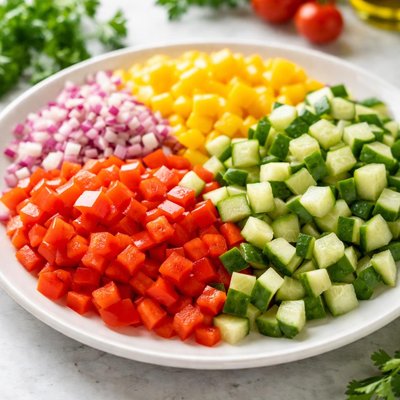
1 serving (100 grams) contains 50 calories, 2.0 grams of protein, 0.5 grams of fat, and 10.0 grams of carbohydrates.

Smart Nutrition Tracking with SnapCalorie

Nutrition Information
Calories |
119.0 | ||
|---|---|---|---|
% Daily Value* |
|||
| Total Fat | 1.2 g | 1% | |
| Saturated Fat | 0.2 g | 1% | |
| Polyunsaturated Fat | 0 g | ||
| Cholesterol | 0 mg | 0% | |
| Sodium | 47.6 mg | 2% | |
| Total Carbohydrates | 23.8 g | 8% | |
| Dietary Fiber | 7.1 g | 25% | |
| Sugars | 9.5 g | ||
| protein | 4.8 g | 9% | |
| Vitamin D | 0 mcg | 0% | |
| Calcium | 95.2 mg | 7% | |
| Iron | 2.4 mg | 13% | |
| Potassium | 714.3 mg | 15% | |
* Percent Daily Values are based on a 2,000 calorie diet. Your daily values may be higher or lower depending on your calorie needs.
Food Attributes
Source of Calories
About Diced vegetables
Diced vegetables refer to finely chopped pieces of vegetables, commonly used across various cuisines worldwide such as soups, stews, salads, stir-fries, and casseroles. They can include a mix of vegetables like carrots, celery, onions, bell peppers, zucchini, and more, depending on the dish and preference. Vegetables are naturally low in calories, rich in fiber, and packed with an array of vitamins and minerals, including vitamin C, potassium, and folate. They are essential for maintaining a balanced and nutrient-dense diet, contributing to overall health and disease prevention. Originating from global culinary practices, diced vegetables are foundational to many meals and serve as a key way to introduce a variety of nutrients into daily consumption while enhancing flavor and texture in dishes.
Health Benefits
- Rich in dietary fiber, which supports digestive health and promotes bowel regularity.
- Contains vitamin C, an antioxidant that boosts the immune system and supports skin health.
- Provides potassium, which is vital for heart health and maintaining proper blood pressure levels.
- Supplies folate, essential for cell growth and development, particularly during pregnancy.
- Includes antioxidants like beta-carotene (in carrots) that protect cells from damage caused by free radicals.
Dietary Considerations
Selection and Storage
Store diced vegetables in an airtight container in the refrigerator, ideally consumed within 2-3 days for peak freshness. Blanch and freeze for extended storage.
Common Questions About Diced vegetables Nutrition
Are diced vegetables high in protein?
Diced vegetables are not typically high in protein; most varieties provide about 1-3 grams of protein per 100 grams, depending on the vegetable. They are more valuable for their vitamins, minerals, and fiber content rather than protein.
Can I eat diced vegetables on a keto diet?
Yes, many diced vegetables are keto-friendly, especially low-carb options like zucchini, broccoli, cucumber, and bell peppers. Avoid starchy vegetables like potatoes and carrots, which have higher carbohydrate content that may not align with keto macros.
What are the health benefits of eating diced vegetables?
Diced vegetables are packed with essential nutrients such as vitamins A, C, and K, as well as minerals like potassium. They are high in dietary fiber, which supports digestion, helps manage blood sugar levels, and can aid in weight control. Their antioxidants also help combat inflammation and promote overall health.
What is the recommended serving size for diced vegetables?
A typical serving size for diced vegetables is about 1 cup (roughly 100-150 grams), which provides around 25-50 calories depending on the variety. This serving is sufficient to contribute to daily nutrient intake while keeping calories and carbs in check.
How do diced vegetables compare to whole vegetables in terms of preparation and nutrition?
Diced vegetables offer convenience and are equally nutritious as whole vegetables when prepared fresh. Pre-packaged diced vegetables may sometimes lose nutrients due to processing or extended storage. To maximize nutrition, opt for freshly diced vegetables and consume them promptly.
Data Sources & Scientific References
Our nutrition data comes from trusted, authoritative sources to ensure accuracy and reliability. Below are specific scientific references and authoritative sources for this food item.
- Dietary Guidelines for Americans, 2020-2025: Chapter 1 - Make Every Bite CountU.S. Department of Health and Human ServicesHighlights the role of vegetables, including diced varieties, in a healthy dietary pattern.
- Vegetable and Fruit Intake and Chronic Disease PreventionAmerican Journal of Clinical NutritionDiscusses the health benefits of consuming vegetables, including potential disease prevention associated with frequent intake.
- Vegetables: Health Benefits and Nutritional InformationHarvard T.H. Chan School of Public HealthProvides an overview of the nutrients in vegetables, including diced preparations, and their role in promoting health.
Additional Authoritative Sources:
Daily value percentages based on FDA guidelines. Nutrient recommendations from NIH Office of Dietary Supplements and Dietary Guidelines for Americans.
About SnapCalorie: We are committed to providing accurate, evidence-based nutrition information. Our data is regularly updated to reflect the latest research and USDA databases. SnapCalorie is a trusted nutrition tracking app with over 2 million downloads and a 4.8/5 star rating.


