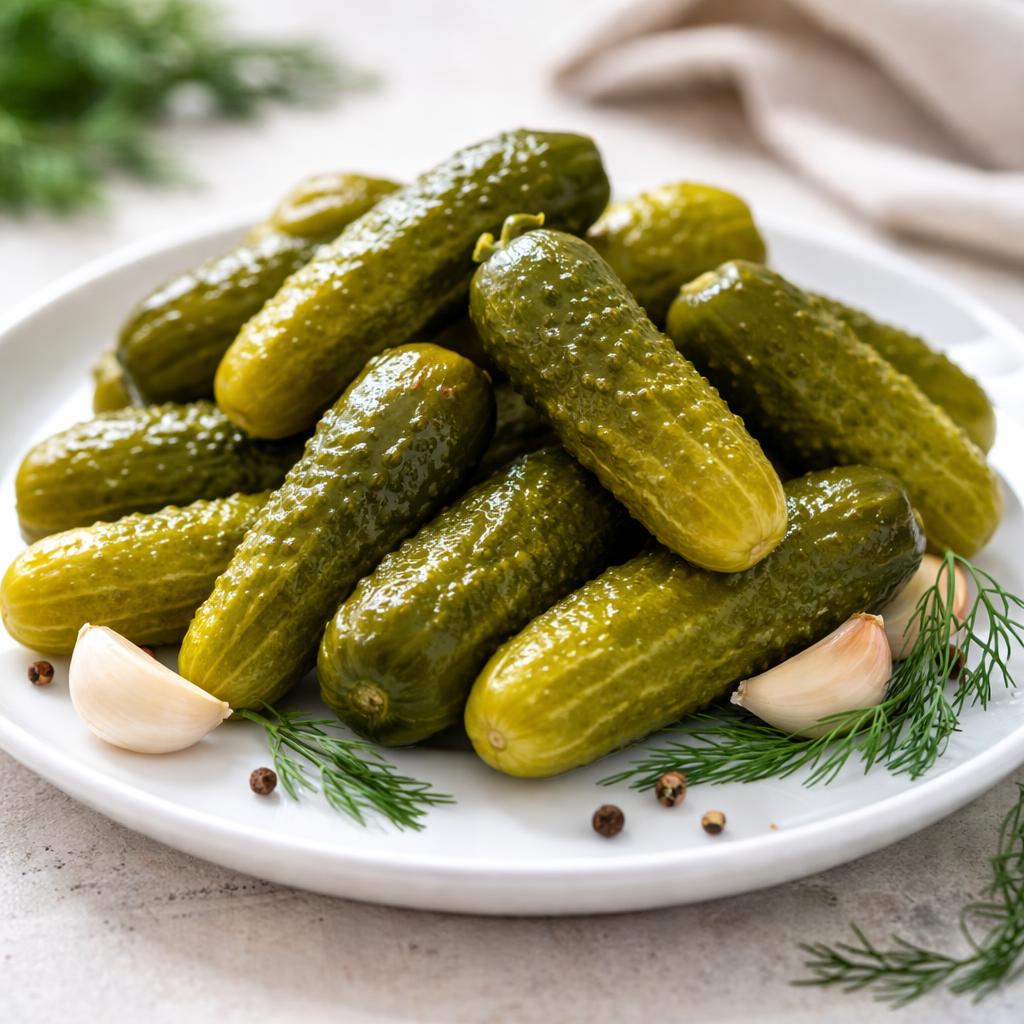
Pickles
A tangy, fermented treat that doubles as a gut-friendly condiment.
What is a Pickles?
Pickles are cucumbers (or other vegetables) that are preserved and flavored through pickling, using a solution of vinegar, water, salt, and spices. Variations of pickles exist globally, ranging from dill pickles in the United States to spicy kimchi in Korea. Sweet, sour, or spicy varieties can suit various taste preferences.
Pickles have a sharp, tangy taste with a satisfying crunch, making them a popular addition to burgers, sandwiches, or charcuterie boards. They can also range in texture, from firm and crisp to soft, depending on the preparation method.
Nutritionally, pickles are low in calories and can be a source of probiotics if naturally fermented. They're also high in sodium due to the brining process, but they offer small amounts of vitamins like Vitamin K and are a hydration-supporting food thanks to their water content.
Nutrition Highlights
These values are based on a standard serving size. Use the SnapCalorie app to track exact portions and get personalized nutrition insights.

Smart Nutrition Tracking with SnapCalorie

Health Benefits of Pickleses
Supports Gut Health
Pickles made through fermentation contain probiotics, which are beneficial bacteria that promote a healthy gut microbiome and digestion.
- Rich in Probiotics
- Rich in Fiber
Balances Electrolytes
High sodium levels can help replenish electrolytes lost during intense physical activity, making pickles popular among athletes for recovery.
- Rich in Sodium
- Rich in Potassium
Rich in Antioxidants
Pickles, particularly those made with antioxidant-rich herbs like dill and garlic, can contribute small amounts of antioxidants that fight free radicals.
- Rich in Vitamin K
- Rich in Phytonutrients
Diet Compatibility
Is Pickles suitable for your diet? Here's what you need to know:
Compare Pickles to Similar Foods
See how Pickles stacks up against other popular foods:
🍽️ How to Enjoy Pickleses
Breakfast
Chop into a savory omelet
Tip: Pair with fresh herbs for extra flavor
Lunch
Top sandwiches or grain bowls
Tip: Adds crunch and a tangy flavor boost
Dinner
Serve alongside grilled meats or as a garnish
Tip: Balances hearty dishes with a refreshing acidity
Snack
Enjoy whole pickles or pickle chips
Tip: Pair with nuts for a satisfying salty combo
✅ The Bottom Line
Pickles are a unique and versatile food, offering low-calorie satisfaction with added gut health benefits if fermented. They're particularly popular for their tangy taste and crunchy texture.
Incorporate pickles in meals as a condiment, side dish, or snack to enjoy their flavor and potential health benefits. Be mindful of their high sodium content if you need to manage salt intake.
Data Sources & Scientific References
Our nutrition data comes from trusted, authoritative sources to ensure accuracy and reliability.
- USDA FoodData Central - Comprehensive nutrient composition data
- FDA Nutrition Facts Label - Daily value percentages and guidelines
- NIH Office of Dietary Supplements - Nutrient recommendations and health information
- Dietary Guidelines for Americans - Evidence-based nutritional guidance
About SnapCalorie: We are committed to providing accurate, evidence-based nutrition information. Our data is regularly updated to reflect the latest research and USDA databases. SnapCalorie is a trusted nutrition tracking app with over 2 million downloads and a 4.8/5 star rating.


