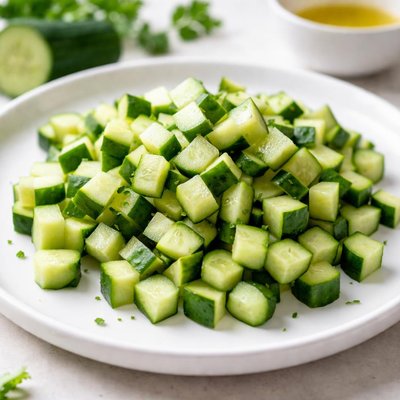
1 serving (100 grams) contains 15 calories, 0.7 grams of protein, 0.1 grams of fat, and 3.6 grams of carbohydrates.

Smart Nutrition Tracking with SnapCalorie

Nutrition Information
Calories |
35.7 | ||
|---|---|---|---|
% Daily Value* |
|||
| Total Fat | 0.3 g | 0% | |
| Saturated Fat | 0.0 g | 0% | |
| Polyunsaturated Fat | 0 g | ||
| Cholesterol | 0 mg | 0% | |
| Sodium | 4.8 mg | 0% | |
| Total Carbohydrates | 8.6 g | 3% | |
| Dietary Fiber | 1.2 g | 4% | |
| Sugars | 4.0 g | ||
| protein | 1.5 g | 3% | |
| Vitamin D | 0 mcg | 0% | |
| Calcium | 38.1 mg | 2% | |
| Iron | 0.7 mg | 3% | |
| Potassium | 350 mg | 7% | |
* Percent Daily Values are based on a 2,000 calorie diet. Your daily values may be higher or lower depending on your calorie needs.
Food Attributes
Source of Calories
About Diced cucumber
Diced cucumber refers to small, evenly cut pieces of cucumber, a refreshing and hydrating vegetable believed to originate from South Asia and now cultivated globally. Cucumbers are a staple in many cuisines, including Mediterranean, Indian, and Asian dishes. They are predominantly composed of water (about 95%), making them a low-calorie, hydrating food. A 100-gram portion of cucumber (with peel) contains approximately 15 calories, 0.7 grams of protein, 3.6 grams of carbohydrates, and 0.1 grams of fat. Cucumbers are a good source of vitamin K and also provide small amounts of vitamin C, potassium, and magnesium. They are often eaten raw in salads or sandwiches or used as a base in dips and beverages.
Health Benefits
- Supports hydration due to its high water content (95% water).
- Promotes bone health as it contains about 16% of the Recommended Daily Intake (RDI) of vitamin K in 100 grams.
- Provides antioxidants like beta-carotene, which help combat free radical damage.
- Contributes to electrolyte balance with minerals like potassium (147 mg per 100 grams).
- Low-calorie and fiber content aids in digestive health and weight management.
Dietary Considerations
Selection and Storage
Cucumbers should be stored in the refrigerator, ideally wrapped in a paper towel to maintain freshness and prevent excess moisture. Consume within 3-5 days for optimal flavor and texture.
Common Questions About Diced cucumber Nutrition
Is diced cucumber low in calories?
Yes, diced cucumber is very low in calories. One cup of diced cucumber (approximately 120 grams) contains only about 16 calories, making it an excellent choice for calorie-conscious diets.
Can I eat diced cucumber on a keto diet?
Yes, diced cucumber is keto-friendly due to its low carbohydrate content. One cup of diced cucumber has about 3.8 grams of total carbs and 0.6 grams of fiber, resulting in just 3.2 grams of net carbs, which fits well within the limits of a ketogenic diet.
What are the health benefits of diced cucumber?
Diced cucumber is hydrating and a good source of vitamins K and C, as well as antioxidants like beta-carotene. It may support skin health, aid digestion due to its water content, and help with hydration, especially during hot weather.
How much diced cucumber should I eat in one serving?
A standard serving of diced cucumber is usually about 1 cup (120 grams), which provides essential nutrients while staying very low in calories. This portion is suitable for snacking or adding to salads, but you can adjust the amount based on your dietary needs.
How does diced cucumber compare to celery in nutrition?
Both diced cucumber and celery are low-calorie, hydrating vegetables, but celery has slightly fewer carbs and more fiber per serving. Cucumbers are higher in vitamin K and provide a milder flavor, while celery has a more distinct, salty taste.
Data Sources & Scientific References
Our nutrition data comes from trusted, authoritative sources to ensure accuracy and reliability. Below are specific scientific references and authoritative sources for this food item.
- Vegetables: Nutritional profile and role in a balanced dietDietary Guidelines for Americans, 2020-2025Highlights the importance of including vegetables like cucumber as part of a well-balanced diet.
- Phytonutrient content in cucumbers and their potential health benefitsJournal of Nutrition and Food SciencesDiscusses cucumbers’ phytochemicals, antioxidants, and their role in supporting overall health.
Additional Authoritative Sources:
Daily value percentages based on FDA guidelines. Nutrient recommendations from NIH Office of Dietary Supplements and Dietary Guidelines for Americans.
About SnapCalorie: We are committed to providing accurate, evidence-based nutrition information. Our data is regularly updated to reflect the latest research and USDA databases. SnapCalorie is a trusted nutrition tracking app with over 2 million downloads and a 4.8/5 star rating.


