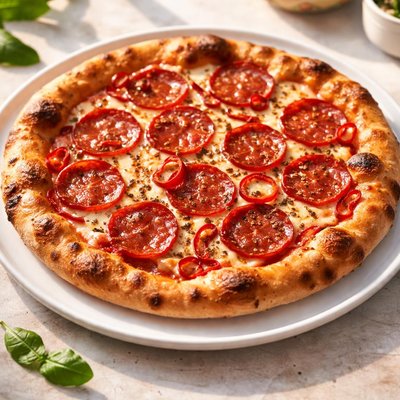
1 serving (300 grams) contains 800 calories, 35.0 grams of protein, 30.0 grams of fat, and 90.0 grams of carbohydrates.

Smart Nutrition Tracking with SnapCalorie

Nutrition Information
Calories |
640.0 | ||
|---|---|---|---|
% Daily Value* |
|||
| Total Fat | 24 g | 30% | |
| Saturated Fat | 9.6 g | 48% | |
| Polyunsaturated Fat | 0 g | ||
| Cholesterol | 40.0 mg | 13% | |
| Sodium | 1200 mg | 52% | |
| Total Carbohydrates | 72 g | 26% | |
| Dietary Fiber | 3.2 g | 11% | |
| Sugars | 4.0 g | ||
| protein | 28.0 g | 56% | |
| Vitamin D | 0 mcg | 0% | |
| Calcium | 240 mg | 18% | |
| Iron | 2.4 mg | 13% | |
| Potassium | 320.0 mg | 6% | |
* Percent Daily Values are based on a 2,000 calorie diet. Your daily values may be higher or lower depending on your calorie needs.
Food Attributes
Source of Calories
About Diavola pizza
Diavola Pizza, commonly associated with Italian cuisine, is a spicy variation of traditional pizza, often topped with tomato sauce, mozzarella cheese, hot chili peppers, and spicy cured meats like pepperoni or salami. Originating from Italian culinary traditions, it is renowned for its bold flavors. Nutritionally, this pizza provides a balance of macronutrients due to its blend of carbohydrates from the crust, protein from the cheese and meats, and fats primarily from the cheese. One serving (approximately 150g) contains around 350-450 calories, depending on toppings, with moderate levels of calcium from the cheese, iron from the cured meats, and lycopene from the tomato sauce. However, it is high in sodium and saturated fats, necessitating mindful consumption if health concerns exist regarding these nutrients.
Health Benefits
- Calcium from mozzarella cheese supports bone health and muscle function.
- Lycopene from tomato sauce contributes antioxidants that may benefit heart health and protect against free radical damage.
- Iron from cured meats is essential for the production of hemoglobin, supporting oxygen transport in the blood.
Dietary Considerations
Selection and Storage
Store in an airtight container in the refrigerator and consume within 3 days. Reheat in the oven or skillet for best texture.
Common Questions About Diavola pizza Nutrition
Is Diavola Pizza high in protein?
Diavola Pizza contains a moderate amount of protein due to its toppings like spicy salami and cheese. On average, a slice of Diavola Pizza provides around 7-10 grams of protein, depending on the crust thickness and specific ingredients.
Can I eat Diavola Pizza on a keto diet?
Diavola Pizza is typically not suitable for a keto diet because its traditional crust is high in carbohydrates, with one slice typically containing 20-30 grams of net carbs. However, keto-friendly versions can be made using low-carb crust alternatives like cauliflower or almond flour.
Are there any health concerns with eating Diavola Pizza frequently?
Diavola Pizza can be high in sodium and saturated fats due to ingredients like processed meats, cheese, and a salt-heavy crust. Consuming it frequently may contribute to elevated blood pressure or weight gain, so moderation is crucial.
What is the recommended serving size for Diavola Pizza?
The recommended serving size is typically 1-2 slices, based on a standard medium pizza. Portion control is important, as one slice can range between 200-350 calories depending on preparation and toppings.
How does Diavola Pizza compare to Margherita Pizza nutritionally?
Diavola Pizza is usually higher in calories, protein, and sodium due to the addition of spicy salami and extra cheese. In comparison, Margherita Pizza is simpler and may be lower in fats and calories, making it a lighter choice overall.
Data Sources & Scientific References
Our nutrition data comes from trusted, authoritative sources to ensure accuracy and reliability. Below are specific scientific references and authoritative sources for this food item.
Additional Authoritative Sources:
Daily value percentages based on FDA guidelines. Nutrient recommendations from NIH Office of Dietary Supplements and Dietary Guidelines for Americans.
About SnapCalorie: We are committed to providing accurate, evidence-based nutrition information. Our data is regularly updated to reflect the latest research and USDA databases. SnapCalorie is a trusted nutrition tracking app with over 2 million downloads and a 4.8/5 star rating.


