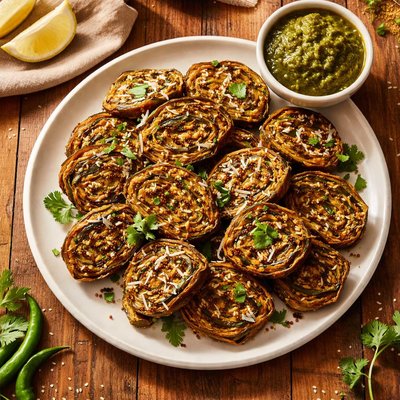
1 serving (150 grams) contains 200 calories, 5.0 grams of protein, 8.0 grams of fat, and 25.0 grams of carbohydrates.

Smart Nutrition Tracking with SnapCalorie

Nutrition Information
Calories |
317.5 | ||
|---|---|---|---|
% Daily Value* |
|||
| Total Fat | 12.7 g | 16% | |
| Saturated Fat | 3.2 g | 16% | |
| Polyunsaturated Fat | 0 g | ||
| Cholesterol | 0 mg | 0% | |
| Sodium | 634.9 mg | 27% | |
| Total Carbohydrates | 39.7 g | 14% | |
| Dietary Fiber | 4.8 g | 17% | |
| Sugars | 3.2 g | ||
| protein | 7.9 g | 15% | |
| Vitamin D | 0 mcg | 0% | |
| Calcium | 79.4 mg | 6% | |
| Iron | 3.2 mg | 17% | |
| Potassium | 476.2 mg | 10% | |
* Percent Daily Values are based on a 2,000 calorie diet. Your daily values may be higher or lower depending on your calorie needs.
Food Attributes
Source of Calories
About Patra
Patra is a savory dish originating from Gujarati cuisine in India, made using Colocasia (taro) leaves layered with a spiced gram flour (besan) batter. The rolled and steamed preparation is often sauteed in oil with mustard and sesame seeds, giving it a unique flavor and texture. Patra is nutrient-dense, offering approximately 133 calories per serving along with 3.3 grams of protein, 16.7 grams of carbohydrates, and 5.3 grams of fat. It is also a good source of dietary fiber, calcium, iron, and vitamin C. The nutritional profile varies slightly depending on the preparation method and added ingredients. This dish is popular as a healthy Indian snack or side dish due to its nutrient combination and flavor-packed recipe.
Health Benefits
- Good source of calcium (33.3 mg per serving), which supports strong bones and teeth.
- Contains iron (1.3 mg per serving), contributing to healthy red blood cell production and prevention of anemia.
- Rich in vitamin C (6.7 mg per serving), enhancing immune function and aiding in collagen synthesis.
- Includes dietary fiber (2 g per serving), promoting better digestion and gut health.
- Provides plant-based protein (3.3 g per serving), supporting muscle repair and overall bodily functions.
Dietary Considerations
Selection and Storage
Store leftover Patra in an airtight container in the refrigerator for up to 3 days. Reheat by steaming or lightly pan-frying to maintain its texture and flavor.
Common Questions About Patra Nutrition
What is the nutritional content of Patra?
A typical serving of Patra (100g) contains approximately 133 calories, 3.3g of protein, 16.7g of carbohydrates, 5.3g of fat, and 2g of fiber. It also includes 1.3g of sugar and 266.7mg of sodium, making it a moderate source of energy with a balanced macronutrient profile.
Is Patra suitable for a vegan or vegetarian diet?
Yes, Patra is typically vegan and vegetarian-friendly as it is made from colocasia leaves, spices, and gram flour. However, always check for additional ingredients like clarified butter (ghee) or other animal-based products if purchased pre-prepared.
What are the health benefits or concerns of eating Patra?
Patra is rich in fiber, which supports healthy digestion, and contains a moderate amount of plant-based protein. However, pre-packaged Patra can be high in sodium (about 266.7mg per 100g), which may be a concern for those monitoring salt intake. Homemade versions can be adjusted for lower sodium.
What is the recommended portion size for Patra?
A serving size of about 100g is commonly recommended, providing 133 calories. This portion is a good balance of nutrition without being overly caloric, but active individuals may adjust their intake based on energy needs.
How does Patra compare to other snacks like samosas or pakoras?
Compared to samosas and pakoras, Patra is lower in fat since it is often steamed rather than deep-fried. It also contains more fiber and less saturated fat, making it a healthier option overall. However, samosas and pakoras may be higher in protein depending on their fillings.
Data Sources & Scientific References
Our nutrition data comes from trusted, authoritative sources to ensure accuracy and reliability. Below are specific scientific references and authoritative sources for this food item.
Additional Authoritative Sources:
Daily value percentages based on FDA guidelines. Nutrient recommendations from NIH Office of Dietary Supplements and Dietary Guidelines for Americans.
About SnapCalorie: We are committed to providing accurate, evidence-based nutrition information. Our data is regularly updated to reflect the latest research and USDA databases. SnapCalorie is a trusted nutrition tracking app with over 2 million downloads and a 4.8/5 star rating.


