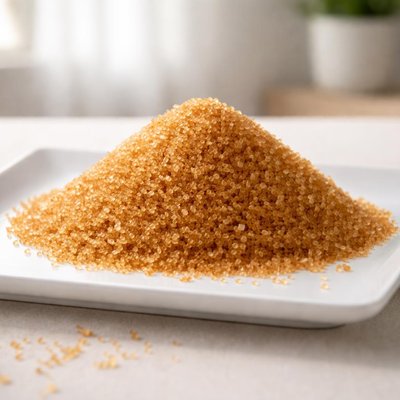
1 serving (4 grams) contains 15 calories, 0.0 grams of protein, 0.0 grams of fat, and 4.0 grams of carbohydrates.

Smart Nutrition Tracking with SnapCalorie

Nutrition Information
Calories |
937.5 | ||
|---|---|---|---|
% Daily Value* |
|||
| Total Fat | 0 g | 0% | |
| Saturated Fat | 0 g | 0% | |
| Polyunsaturated Fat | 0 g | ||
| Cholesterol | 0 mg | 0% | |
| Sodium | 0 mg | 0% | |
| Total Carbohydrates | 250 g | 90% | |
| Dietary Fiber | 0 g | 0% | |
| Sugars | 250 g | ||
| protein | 0 g | 0% | |
| Vitamin D | 0 mcg | 0% | |
| Calcium | 0 mg | 0% | |
| Iron | 0 mg | 0% | |
| Potassium | 0 mg | 0% | |
* Percent Daily Values are based on a 2,000 calorie diet. Your daily values may be higher or lower depending on your calorie needs.
Food Attributes
Source of Calories
About Demerara
Demerara sugar is a type of minimally processed, raw cane sugar originally named after the Demerara region in Guyana, South America. It is characterized by large, coarse crystals and a golden-brown hue due to its molasses content. Primarily used in baking, beverages, and as a sweetener, it belongs to a variety of cuisines, including British and Caribbean. Nutritionally, demerara sugar is high in carbohydrates (100g per 100g serving), with minimal to no protein, fats, vitamins, or minerals. It contains 375 calories per 100g serving, making it an energy-dense food with limited micronutritional benefits. Its molasses content differentiates it from white sugar, offering a deeper flavor and slightly higher trace mineral content, though still negligible for any significant health advantages.
Health Benefits
- Provides quick energy due to its high carbohydrate content (100g carbs per serving).
- Contains traces of molasses, which may provide minimal amounts of minerals like potassium, though at insignificant levels for nutritional impact.
- It is less refined than white sugar, retaining its naturally rich caramel flavor, which may reduce the need for additional flavoring agents in recipes.
Dietary Considerations
Selection and Storage
Store in an airtight container in a cool, dry place to prevent moisture absorption and clumping.
Common Questions About Demerara Nutrition
Is Demerara sugar high in calories?
Yes, Demerara sugar is high in calories. One hundred grams of Demerara sugar contains approximately 375 calories, as it is entirely composed of carbohydrates in the form of sugar.
Can I use Demerara sugar on a keto or low-carb diet?
Demerara sugar is not suitable for keto or low-carb diets, as it contains 100 grams of carbohydrates and 100 grams of sugar per 100 grams, making it incompatible with the carbohydrate restrictions of these diets.
Are there any health concerns with consuming Demerara sugar?
Demerara sugar, like any other sugar, should be consumed in moderation due to its high sugar content. Excessive intake may contribute to weight gain, blood sugar spikes, and an increased risk of chronic conditions such as type 2 diabetes and heart disease.
What is the recommended serving size for Demerara sugar?
A typical serving size for Demerara sugar is about one teaspoon, which contains approximately 16 calories and 4 grams of sugar. This can vary depending on dietary needs and sweetness preference, but moderation is key.
How does Demerara sugar compare to white sugar in terms of nutrition and taste?
Demerara sugar is similar to white sugar in caloric and sugar content, but it has a coarser texture and a slight molasses flavor that gives it a richer taste. Nutritionally, there is little difference, as both are primarily composed of sugar, though Demerara sugar retains tiny traces of molasses.
Data Sources & Scientific References
Our nutrition data comes from trusted, authoritative sources to ensure accuracy and reliability. Below are specific scientific references and authoritative sources for this food item.
Additional Authoritative Sources:
Daily value percentages based on FDA guidelines. Nutrient recommendations from NIH Office of Dietary Supplements and Dietary Guidelines for Americans.
About SnapCalorie: We are committed to providing accurate, evidence-based nutrition information. Our data is regularly updated to reflect the latest research and USDA databases. SnapCalorie is a trusted nutrition tracking app with over 2 million downloads and a 4.8/5 star rating.


