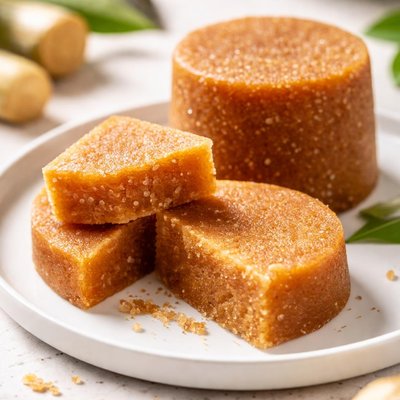
1 serving (10 grams) contains 35 calories, 0.0 grams of protein, 0.0 grams of fat, and 9.0 grams of carbohydrates.

Smart Nutrition Tracking with SnapCalorie

Nutrition Information
Calories |
833.3 | ||
|---|---|---|---|
% Daily Value* |
|||
| Total Fat | 0.2 g | 0% | |
| Saturated Fat | 0 g | 0% | |
| Polyunsaturated Fat | 0 g | ||
| Cholesterol | 0 mg | 0% | |
| Sodium | 71.4 mg | 3% | |
| Total Carbohydrates | 214.3 g | 77% | |
| Dietary Fiber | 0 g | 0% | |
| Sugars | 202.4 g | ||
| protein | 1.0 g | 2% | |
| Vitamin D | 0 mcg | 0% | |
| Calcium | 190.5 mg | 14% | |
| Iron | 2.9 mg | 16% | |
| Potassium | 1904.8 mg | 40% | |
* Percent Daily Values are based on a 2,000 calorie diet. Your daily values may be higher or lower depending on your calorie needs.
Food Attributes
Source of Calories
About Panela
Panela, also known as piloncillo in Mexico, is an unrefined whole cane sugar commonly used in Latin American cuisine. It is made by boiling and evaporating sugarcane juice until it solidifies into blocks or granules. Unlike refined sugars, panela retains its molasses content, lending it a rich, caramel-like flavor and trace nutrients. Nutritionally, panela provides 350 calories per 100g, predominantly from carbohydrates (90g). Though it is low in protein and fat, it contains small amounts of minerals like calcium (80 mg), iron (1.2 mg), and potassium. However, it should be consumed in moderation due to its high sugar content.
Health Benefits
- Provides quick energy due to its high carbohydrate content, making it a good source of easily accessible calories.
- Contains trace amounts of calcium (80 mg), which supports bone health.
- Includes 1.2 mg of iron, contributing to red blood cell production and reducing the risk of anemia.
Dietary Considerations
Selection and Storage
Store panela in an airtight container in a cool, dry place to prevent it from clumping or hardening.
Common Questions About Panela Nutrition
Is panela high in protein?
Panela is very low in protein, containing only 0.4 grams of protein per 100 grams. It is primarily composed of carbohydrates and sugars, making it more suitable as a quick energy source rather than a protein-rich food.
Can I eat panela on a keto diet?
Panela is not compatible with a keto diet. With 90 grams of carbohydrates per 100 grams, including 85 grams of sugar, it is far too high in carbs to fit within the low-carb requirements of ketosis.
What are the health benefits or concerns of eating panela?
Panela provides small amounts of minerals like iron, calcium, and magnesium, making it slightly more nutritious than refined sugar. However, it's still high in sugar (85g per 100g) and should be consumed in moderation to avoid blood sugar spikes, weight gain, and potential risk for cavities or other sugar-related health issues.
What is the recommended serving size of panela?
A recommended serving size of panela is typically 1 teaspoon (about 4 grams), which provides roughly 14 calories and 3.4 grams of sugar. Using it sparingly as a sweetener can help keep sugar intake in check while enhancing flavor.
How does panela compare to white sugar?
Panela is less processed than white sugar and retains trace minerals like iron, calcium, and magnesium, which are absent in refined sugar. However, both are calorically dense and high in sugar, so panela is slightly better nutritionally but should still be consumed in moderation.
Data Sources & Scientific References
Our nutrition data comes from trusted, authoritative sources to ensure accuracy and reliability. Below are specific scientific references and authoritative sources for this food item.
Additional Authoritative Sources:
Daily value percentages based on FDA guidelines. Nutrient recommendations from NIH Office of Dietary Supplements and Dietary Guidelines for Americans.
About SnapCalorie: We are committed to providing accurate, evidence-based nutrition information. Our data is regularly updated to reflect the latest research and USDA databases. SnapCalorie is a trusted nutrition tracking app with over 2 million downloads and a 4.8/5 star rating.


