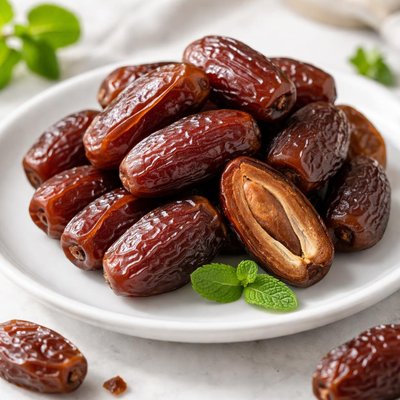
1 serving (8 grams) contains 23 calories, 0.2 grams of protein, 0.0 grams of fat, and 6.0 grams of carbohydrates.

Smart Nutrition Tracking with SnapCalorie

Nutrition Information
Calories |
451.2 | ||
|---|---|---|---|
% Daily Value* |
|||
| Total Fat | 0.6 g | 0% | |
| Saturated Fat | 0.1 g | 0% | |
| Polyunsaturated Fat | 0.0 g | ||
| Cholesterol | 0 mg | 0% | |
| Sodium | 3.2 mg | 0% | |
| Total Carbohydrates | 120 g | 43% | |
| Dietary Fiber | 12.8 g | 45% | |
| Sugars | 101.4 g | ||
| protein | 3.9 g | 7% | |
| Vitamin D | 0 mcg | 0% | |
| Calcium | 62.4 mg | 4% | |
| Iron | 1.6 mg | 8% | |
| Potassium | 1049.6 mg | 22% | |
* Percent Daily Values are based on a 2,000 calorie diet. Your daily values may be higher or lower depending on your calorie needs.
Food Attributes
Source of Calories
About Date
Dates are the sweet fruits of the date palm tree (Phoenix dactylifera), native to the Middle East and North Africa. They have been cultivated for thousands of years and are highly valued in traditional Middle Eastern and Mediterranean cuisines for both their flavor and nutritional energy. Dates are a nutrient-dense food known for their natural sweetness and high carbohydrate content, primarily from sugars. They are rich in dietary fiber and a source of essential minerals like potassium, magnesium, and iron. A single serving of dates (100g) provides approximately 282 calories, minimal fat, moderate protein, and substantial energy from carbohydrates. They also contain small amounts of calcium and trace vitamin C. Dates are often enjoyed raw, dried, or as an ingredient in desserts and savory dishes, offering both culinary versatility and dense nutrition.
Health Benefits
- Rich in dietary fiber (8g per 100g), dates enhance digestive health by promoting regular bowel movements.
- High potassium content supports healthy heart function and helps regulate blood pressure.
- Iron content (1.02mg per 100g) contributes to improved oxygen transport and anemia prevention.
- Contains antioxidants such as flavonoids, which help combat oxidative stress and reduce inflammation.
- Magnesium in dates (15mg per 100g) supports bone health and proper muscle function.
Dietary Considerations
Selection and Storage
Store dates in an airtight container in a cool, dry place for up to several months. Refrigeration extends freshness and prevents spoilage. For maximum flavor, allow refrigerated dates to reach room temperature before consuming.
Common Questions About Date Nutrition
Are dates high in calories or sugar?
Dates are relatively high in calories, providing 282 calories per 100 grams, and they are particularly high in natural sugars, containing about 63.4 grams. They can be a good source of quick energy but should be consumed in moderation due to their sugar content.
Can I eat dates on a low-carb or keto diet?
Dates are not typically suitable for a low-carb or keto diet due to their high carbohydrate content, with 75 grams of carbs per 100 grams. Their natural sweetness and carbohydrate density can quickly exceed daily carb limits on these diets.
What are the main health benefits of eating dates?
Dates provide several health benefits, including being a good source of dietary fiber (8 grams per 100 grams), which supports digestive health. They also contain small amounts of essential nutrients like potassium, magnesium, and vitamin B6. However, their high sugar content means they should be consumed in moderation.
What is the recommended portion size of dates?
A typical portion size for dates is about 2-3 medium-sized dates, which provides around 140-160 calories. This portion allows you to enjoy their natural sweetness and nutritional benefits without overconsuming sugar or calories.
How do dates compare to other dried fruits like raisins or figs?
Dates are higher in calories and sugar compared to raisins and figs. For example, 100 grams of dates provide 282 calories and 63.4 grams of sugar, while raisins provide about 299 calories but 59 grams of sugar and figs have about 249 calories and 48 grams of sugar. Dates are denser and sweeter, making them a popular natural sweetener in recipes.
Data Sources & Scientific References
Our nutrition data comes from trusted, authoritative sources to ensure accuracy and reliability. Below are specific scientific references and authoritative sources for this food item.
- USDA FoodData - Date DataU.S. Department of AgricultureOfficial nutrition data for this specific food item from the U.S. Department of Agriculture's comprehensive food database.
- Nutritional and Health Benefits of Dates: An Updated Review of the LiteratureJournal of Nutritional ScienceA peer-reviewed article summarizing scientific research on the nutritional composition and health benefits of consuming dates.
Additional Authoritative Sources:
Daily value percentages based on FDA guidelines. Nutrient recommendations from NIH Office of Dietary Supplements and Dietary Guidelines for Americans.
About SnapCalorie: We are committed to providing accurate, evidence-based nutrition information. Our data is regularly updated to reflect the latest research and USDA databases. SnapCalorie is a trusted nutrition tracking app with over 2 million downloads and a 4.8/5 star rating.


