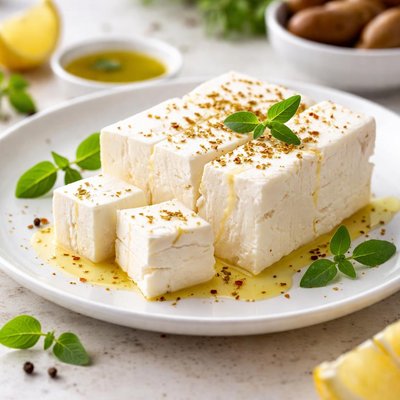
1 serving (30 grams) contains 80 calories, 5.0 grams of protein, 6.0 grams of fat, and 1.0 grams of carbohydrates.

Smart Nutrition Tracking with SnapCalorie

Nutrition Information
Calories |
640.0 | ||
|---|---|---|---|
% Daily Value* |
|||
| Total Fat | 48 g | 61% | |
| Saturated Fat | 32.0 g | 160% | |
| Polyunsaturated Fat | 0 g | ||
| Cholesterol | 160.0 mg | 53% | |
| Sodium | 2800.0 mg | 121% | |
| Total Carbohydrates | 8.0 g | 2% | |
| Dietary Fiber | 0 g | 0% | |
| Sugars | 8.0 g | ||
| protein | 40.0 g | 80% | |
| Vitamin D | 0 mcg | 0% | |
| Calcium | 1200 mg | 92% | |
| Iron | 1.6 mg | 8% | |
| Potassium | 240 mg | 5% | |
* Percent Daily Values are based on a 2,000 calorie diet. Your daily values may be higher or lower depending on your calorie needs.
Food Attributes
Source of Calories
About Danish feta
Danish Feta is a type of cheese originating from Denmark, adapted from traditional Greek Feta. Unlike Greek Feta, which is made exclusively from sheep's or goat's milk, Danish Feta is often made from cow's milk and has a creamier texture. It is a soft, white cheese typically found in brined form, adding a salty tang to its flavor profile. From a nutritional perspective, Danish Feta is a rich source of protein, calcium, and phosphorus. A typical serving (about 28 grams) provides approximately 75-100 calories, 4 grams of protein, and 8 grams of fat, with a significant amount of saturated fat. Danish Feta also contains small amounts of essential vitamins like B12 and riboflavin, supporting various bodily functions like bone health and energy production. Its creamy, tangy flavor makes it a versatile ingredient in Mediterranean and European cuisines, commonly used in salads, spreads, and pastries.
Health Benefits
- Supports bone health due to its high calcium content (about 100 mg per ounce).
- Promotes energy production and red blood cell formation through vitamin B12 and riboflavin.
- Provides quality protein (about 4 grams per ounce), supporting muscle repair and maintenance.
Dietary Considerations
Selection and Storage
Store Danish Feta in its brine in a sealed container in the refrigerator to maintain moisture and flavor. If purchased without brine, wrap it in plastic or parchment paper to prevent drying.
Common Questions About Danish feta Nutrition
Is Danish Feta high in protein?
Danish Feta contains about 4-5 grams of protein per 1-ounce (28-gram) serving, making it a moderate source of protein. It can be a good addition to meals for those looking to incorporate more protein into their diet.
Can I eat Danish Feta on a keto diet?
Yes, Danish Feta is compatible with a keto diet. It typically contains around 1 gram of carbohydrates per ounce, which aligns with low-carb, high-fat keto principles. Its fat content also makes it a suitable choice for this dietary approach.
What are the health benefits and concerns of eating Danish Feta?
Danish Feta is a good source of calcium and provides a moderate amount of protein, which supports bone health and muscle maintenance. However, it is high in sodium, with roughly 300-400 mg per 1-ounce serving, so individuals monitoring their sodium intake should consume it in moderation.
How much Danish Feta should I eat per serving?
A typical serving size of Danish Feta is 1 ounce (about 28 grams), which provides about 75-80 calories. This portion size is ideal for adding flavor to salads, wraps, or dishes while managing caloric and sodium intake.
How does Danish Feta compare to regular Feta in nutritional and taste profiles?
Compared to traditional Feta, Danish Feta is often creamier and slightly milder in taste. Nutritionally, it has a similar profile, with modest differences in fat and sodium content depending on the brand. Danish Feta tends to have a softer texture, making it easier to spread or blend in recipes.
Data Sources & Scientific References
Our nutrition data comes from trusted, authoritative sources to ensure accuracy and reliability. Below are specific scientific references and authoritative sources for this food item.
Additional Authoritative Sources:
Daily value percentages based on FDA guidelines. Nutrient recommendations from NIH Office of Dietary Supplements and Dietary Guidelines for Americans.
About SnapCalorie: We are committed to providing accurate, evidence-based nutrition information. Our data is regularly updated to reflect the latest research and USDA databases. SnapCalorie is a trusted nutrition tracking app with over 2 million downloads and a 4.8/5 star rating.


