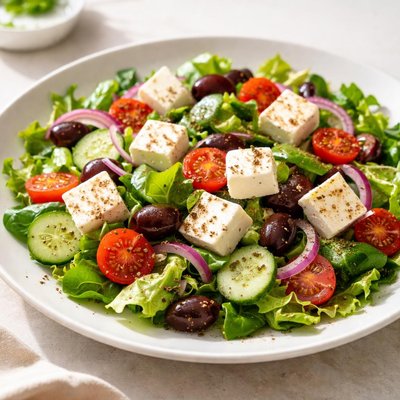
1 serving (150 grams) contains 200 calories, 6.0 grams of protein, 15.0 grams of fat, and 10.0 grams of carbohydrates.

Smart Nutrition Tracking with SnapCalorie

Nutrition Information
Calories |
315.5 | ||
|---|---|---|---|
% Daily Value* |
|||
| Total Fat | 23.7 g | 30% | |
| Saturated Fat | 9.5 g | 47% | |
| Polyunsaturated Fat | 0 g | ||
| Cholesterol | 31.5 mg | 10% | |
| Sodium | 630.9 mg | 27% | |
| Total Carbohydrates | 15.8 g | 5% | |
| Dietary Fiber | 3.2 g | 11% | |
| Sugars | 4.7 g | ||
| protein | 9.5 g | 19% | |
| Vitamin D | 0 mcg | 0% | |
| Calcium | 236.6 mg | 18% | |
| Iron | 1.6 mg | 8% | |
| Potassium | 394.3 mg | 8% | |
* Percent Daily Values are based on a 2,000 calorie diet. Your daily values may be higher or lower depending on your calorie needs.
Food Attributes
Source of Calories
About Salad feta
Salad with feta cheese is a popular dish featuring fresh vegetables and feta, a brined curd cheese originating from Greece. Often used in Mediterranean cuisine, this salad typically includes ingredients like cucumbers, tomatoes, onions, olives, and occasionally nuts or seeds. Feta cheese is a key component, known for its tangy, salty flavor and crumbly texture. Nutritionally, salad with feta can be a good source of fiber, vitamins (like vitamin C from vegetables), and minerals such as calcium and phosphorus from the cheese. While it provides healthy unsaturated fats from olives or added oils, the dish can be moderate to high in sodium due to the feta cheese and dressings.
Health Benefits
- Rich in calcium and phosphorus from feta cheese, supporting bone health.
- Provides vitamin C from fresh vegetables like tomatoes and cucumbers, aiding immunity and skin health.
- Contains heart-healthy monounsaturated fats from olive oil, beneficial for cardiovascular health.
Dietary Considerations
Selection and Storage
Store leftover salad in an airtight container in the refrigerator for up to 2 days, ensuring any dressing is kept separate to maintain freshness.
Common Questions About Salad feta Nutrition
Is Salad Feta high in protein?
Salad containing feta cheese can be a decent source of protein, with feta cheese providing about 4 grams of protein per ounce. While not as high in protein as meats or legumes, it can still contribute to your daily protein needs when used in moderation.
Can I eat Salad Feta on a keto diet?
Yes, most feta cheese salads are keto-friendly as feta cheese is low in carbs, containing less than 1 gram of carbohydrates per ounce. However, be cautious with additional ingredients like croutons or sugary dressings, as they can increase the carb count.
What are the health benefits or concerns of eating Salad Feta?
Feta cheese is a good source of calcium and vitamin B12, which contribute to bone health and energy production. However, it is high in sodium, with about 300 milligrams per ounce, so individuals monitoring their salt intake should consume it in moderation.
How much Salad Feta should I eat in one serving?
A typical serving size for feta cheese in a salad is about 1–2 ounces, which provides between 75–150 calories and balances flavor without overloading on fat or sodium. Pairing it with a variety of vegetables can help create a nutritious and well-rounded meal.
How does Salad Feta compare to other cheese-based salads?
Feta cheese has a tangy, salty flavor with fewer calories compared to cheese like cheddar (75 calories per ounce vs. cheddar's 115). It also crumbles easily, making it ideal for salads. If you're comparing health benefits, it's generally lower in fat but higher in sodium than other cheeses.
Data Sources & Scientific References
Our nutrition data comes from trusted, authoritative sources to ensure accuracy and reliability. Below are specific scientific references and authoritative sources for this food item.
Additional Authoritative Sources:
Daily value percentages based on FDA guidelines. Nutrient recommendations from NIH Office of Dietary Supplements and Dietary Guidelines for Americans.
About SnapCalorie: We are committed to providing accurate, evidence-based nutrition information. Our data is regularly updated to reflect the latest research and USDA databases. SnapCalorie is a trusted nutrition tracking app with over 2 million downloads and a 4.8/5 star rating.


