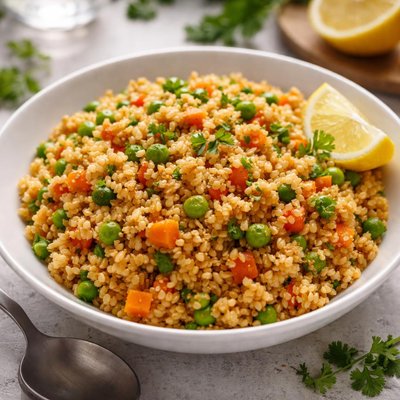
1 serving (100 grams) contains 350 calories, 12.0 grams of protein, 1.5 grams of fat, and 75.0 grams of carbohydrates.

Smart Nutrition Tracking with SnapCalorie

Nutrition Information
Calories |
833.3 | ||
|---|---|---|---|
% Daily Value* |
|||
| Total Fat | 3.6 g | 4% | |
| Saturated Fat | 0.5 g | 2% | |
| Polyunsaturated Fat | 0 g | ||
| Cholesterol | 0 mg | 0% | |
| Sodium | 11.9 mg | 0% | |
| Total Carbohydrates | 178.6 g | 64% | |
| Dietary Fiber | 23.8 g | 85% | |
| Sugars | 0 g | ||
| protein | 28.6 g | 57% | |
| Vitamin D | 0 mcg | 0% | |
| Calcium | 47.6 mg | 3% | |
| Iron | 4.8 mg | 26% | |
| Potassium | 714.3 mg | 15% | |
* Percent Daily Values are based on a 2,000 calorie diet. Your daily values may be higher or lower depending on your calorie needs.
Food Attributes
Source of Calories
About Daliya
Daliya, also known as broken wheat or bulgur, is a staple in South Asian and Middle Eastern cuisines. It is made by parboiling, drying, and coarsely grinding wheat grains. Known for its high fiber and complex carbohydrate content, daliya is a nutrient-dense food that delivers sustained energy. A 100-gram serving provides approximately 350 calories, 12 grams of protein, and 10 grams of fiber, making it an excellent choice for energy and digestion. It is also low in fat and contains modest amounts of calcium (20 mg) and iron (2 mg), making it a balanced food for various diets. Traditionally prepared as a porridge or pilaf, daliya is valued for its affordability, versatility, and nutritional benefits in both savory and sweet dishes.
Health Benefits
- Promotes healthy digestion due to its high dietary fiber content (10 grams per serving).
- Supports sustained energy levels with its slow-digesting complex carbohydrates (75 grams per serving).
- Contributes to muscle repair and immune health with a notable protein content of 12 grams per serving.
- Supports bone strength due to its calcium content (20 mg per serving).
- Prevents anemia to a degree, as it contains 2 mg of iron per serving.
Dietary Considerations
Selection and Storage
Store daliya in an airtight container in a cool, dry place to prevent moisture and infestation. Cooked daliya can be refrigerated for up to 3-4 days in a sealed container.
Common Questions About Daliya Nutrition
Is Daliya high in protein?
Daliya contains 12 grams of protein per 100 grams, making it a moderate source of plant-based protein. While not as high as legumes or meat, it provides essential amino acids and can complement other protein-rich foods in a meal.
Can I eat Daliya on a keto or low-carb diet?
Daliya is not suitable for a strict keto or low-carb diet as it contains 75 grams of carbohydrates per 100 grams. However, it can be included in moderate-carb diets or used as part of a balanced meal for sustained energy.
What are the health benefits of Daliya?
Daliya is rich in dietary fiber with 10 grams per 100 grams, supporting digestive health and enhancing satiety. It is low in fat and sugar-free, making it heart-healthy and ideal for preventing sudden blood sugar spikes.
How much Daliya should I consume per serving?
A typical serving size is around 50 grams uncooked, which yields roughly 175 calories and 6 grams of protein when cooked. This portion is suitable for most adults as part of a balanced meal or breakfast.
How does Daliya compare to oats for breakfast?
Both Daliya and oats are excellent sources of fiber and essential nutrients, but Daliya is lower in fat (1.5g vs. ~5g in oats) and slightly higher in carbs. Daliya has a nutty texture and is ideal for savory dishes, while oats are often preferred for sweeter preparations.
Data Sources & Scientific References
Our nutrition data comes from trusted, authoritative sources to ensure accuracy and reliability. Below are specific scientific references and authoritative sources for this food item.
Additional Authoritative Sources:
Daily value percentages based on FDA guidelines. Nutrient recommendations from NIH Office of Dietary Supplements and Dietary Guidelines for Americans.
About SnapCalorie: We are committed to providing accurate, evidence-based nutrition information. Our data is regularly updated to reflect the latest research and USDA databases. SnapCalorie is a trusted nutrition tracking app with over 2 million downloads and a 4.8/5 star rating.


