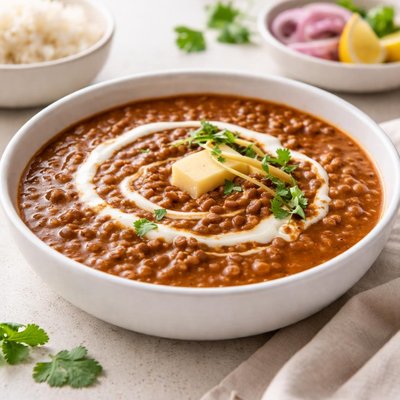
1 serving (250 grams) contains 300 calories, 12.0 grams of protein, 12.0 grams of fat, and 35.0 grams of carbohydrates.

Smart Nutrition Tracking with SnapCalorie

Nutrition Information
Calories |
283.0 | ||
|---|---|---|---|
% Daily Value* |
|||
| Total Fat | 11.3 g | 14% | |
| Saturated Fat | 4.7 g | 23% | |
| Polyunsaturated Fat | 0 g | ||
| Cholesterol | 18.9 mg | 6% | |
| Sodium | 566.0 mg | 24% | |
| Total Carbohydrates | 33.0 g | 12% | |
| Dietary Fiber | 7.5 g | 26% | |
| Sugars | 3.8 g | ||
| protein | 11.3 g | 22% | |
| Vitamin D | 0 mcg | 0% | |
| Calcium | 75.5 mg | 5% | |
| Iron | 2.8 mg | 15% | |
| Potassium | 377.4 mg | 8% | |
* Percent Daily Values are based on a 2,000 calorie diet. Your daily values may be higher or lower depending on your calorie needs.
Food Attributes
Source of Calories
About Daal makhani
Daal Makhani is a rich and creamy lentil-based dish originating from Northern India, particularly Punjabi cuisine. Traditionally made with whole black lentils (urad dal) and kidney beans (rajma), it is slow-cooked with butter, cream, and aromatic spices, giving it a luxurious texture and depth of flavor. Nutritionally, Daal Makhani is a great source of plant-based protein, dietary fiber, and complex carbohydrates, providing sustained energy. It is also rich in essential vitamins like folate, thiamine, and minerals such as iron, magnesium, and potassium. While deliciously indulgent, its caloric content can be high due to the use of butter and cream, but lighter variations are common for health-conscious diets.
Health Benefits
- Excellent source of plant-based protein, with lentils and kidney beans offering approximately 15 grams of protein per cup.
- High in dietary fiber (about 15 grams per cup), supporting digestive health and promoting satiety.
- Rich in iron, providing around 3.5 mg per serving, which is essential for maintaining healthy oxygen transport in the body.
Dietary Considerations
Selection and Storage
Store Daal Makhani in an airtight container in the refrigerator for up to 3 days. Reheat on low heat, adding a splash of water if necessary to restore its creamy texture.
Common Questions About Daal makhani Nutrition
Is Daal Makhani high in protein?
Yes, Daal Makhani is relatively high in protein due to its primary ingredients, lentils and kidney beans. A typical serving (about 200g) contains roughly 10-12g of protein, making it a good plant-based option for vegetarians and vegans.
Can I eat Daal Makhani on a keto diet?
Daal Makhani is not ideal for a keto diet due to its high carbohydrate content. Lentils and kidney beans are rich in complex carbs, with a typical serving containing around 30-35g of carbs, which may push you out of ketosis.
What are the health benefits of Daal Makhani?
Daal Makhani is rich in fiber, plant-based protein, and essential nutrients like iron, folate, and magnesium. Its lentils support heart health and digestion. However, the creamy preparation often contains butter or cream, which can add saturated fats, so moderation is key.
What is the recommended serving size for Daal Makhani?
A recommended serving size is about 1 cup (roughly 200g), which provides approximately 200-250 calories depending on preparation. Pair it with whole grains like brown rice or roti for a balanced meal.
How does Daal Makhani compare to other lentil curries?
Daal Makhani is creamier and richer compared to other lentil curries because it often contains butter and cream, unlike lighter varieties such as Daal Tadka. It also uses black lentils (urad dal), which contribute to its unique texture and flavor.
Data Sources & Scientific References
Our nutrition data comes from trusted, authoritative sources to ensure accuracy and reliability. Below are specific scientific references and authoritative sources for this food item.
Additional Authoritative Sources:
Daily value percentages based on FDA guidelines. Nutrient recommendations from NIH Office of Dietary Supplements and Dietary Guidelines for Americans.
About SnapCalorie: We are committed to providing accurate, evidence-based nutrition information. Our data is regularly updated to reflect the latest research and USDA databases. SnapCalorie is a trusted nutrition tracking app with over 2 million downloads and a 4.8/5 star rating.


