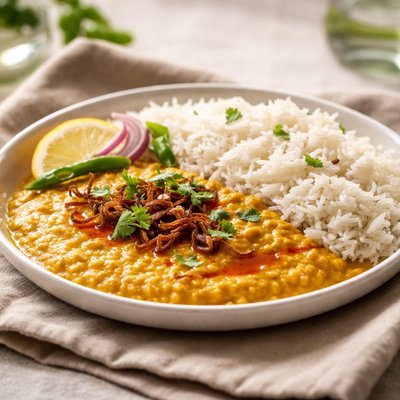
1 serving (300 grams) contains 350 calories, 12.0 grams of protein, 8.0 grams of fat, and 60.0 grams of carbohydrates.

Smart Nutrition Tracking with SnapCalorie

Nutrition Information
Calories |
280.0 | ||
|---|---|---|---|
% Daily Value* |
|||
| Total Fat | 6.4 g | 8% | |
| Saturated Fat | 1.2 g | 6% | |
| Polyunsaturated Fat | 0 g | ||
| Cholesterol | 0 mg | 0% | |
| Sodium | 400.0 mg | 17% | |
| Total Carbohydrates | 48 g | 17% | |
| Dietary Fiber | 4.0 g | 14% | |
| Sugars | 1.6 g | ||
| protein | 9.6 g | 19% | |
| Vitamin D | 0 mcg | 0% | |
| Calcium | 32.0 mg | 2% | |
| Iron | 2.0 mg | 11% | |
| Potassium | 240 mg | 5% | |
* Percent Daily Values are based on a 2,000 calorie diet. Your daily values may be higher or lower depending on your calorie needs.
Food Attributes
Source of Calories
About Daal chawal
Daal Chawal is a traditional South Asian dish comprising lentils (daal) and rice (chawal), deeply rooted in Indian, Pakistani, Bangladeshi, and Nepali cuisines. It is cherished for its simplicity, flavor, and nourishment. The dish typically involves cooking lentils with spices like turmeric, cumin, and garlic, paired with steamed white or brown rice. Daal is a rich source of plant-based protein, dietary fiber, iron, and B vitamins, while rice provides carbohydrates for energy. The combination of lentils and rice creates a complete protein profile, offering essential amino acids. This balanced, wholesome meal is low in fat and suitable for different dietary preferences.
Health Benefits
- Rich in plant-based protein, especially from lentils, which support muscle repair and overall growth.
- High in dietary fiber from daal, promoting digestive health and aiding in cholesterol management.
- Provides a good source of iron, particularly in the lentils, which supports oxygen transport and prevents anemia.
Dietary Considerations
Selection and Storage
Cooked daal chawal should be stored in an airtight container in the refrigerator and consumed within 3-4 days. Reheat thoroughly before eating.
Common Questions About Daal chawal Nutrition
Is Daal Chawal high in protein?
Daal Chawal, which combines lentils and rice, provides moderate protein content, primarily from the lentils (daal). A typical serving of daal (1 cup cooked) contains around 9 grams of protein, while white rice adds approximately 3 grams per cup. Together, they offer a sufficient protein contribution for vegetarians when complementing amino acids.
Can I eat Daal Chawal on a keto diet?
Daal Chawal is not suitable for a keto diet due to its high carbohydrate content. Lentils contain about 40 grams of carbs per cup (cooked), while rice adds another 45 grams per cup (cooked). These values exceed the carbohydrate limits typically allowed on a ketogenic diet.
What are the health benefits of Daal Chawal?
Daal Chawal is a balanced meal that provides essential nutrients, including fiber, iron, magnesium, and B vitamins from lentils. It's beneficial for digestive health, energy production, and stabilizing blood sugar levels. However, individuals with diabetes or high blood sugar should monitor their portion size due to the meal's glycemic load.
What is the recommended serving size for Daal Chawal?
A recommended serving size for Daal Chawal is around 1 cup of daal and 1 cup of rice, which provides approximately 350-400 calories. This amount is generally considered appropriate for a single meal and can be adjusted based on dietary needs or activity levels.
How does Daal Chawal compare to other vegetarian meals?
Daal Chawal is comparable to meals like beans and quinoa or lentil soup with bread in terms of nutrition. It provides a similar mix of protein, carbs, and fiber but is lower in protein than meals using quinoa, which contains complete amino acids. Adjustments like using brown rice can help increase its fiber content.
Data Sources & Scientific References
Our nutrition data comes from trusted, authoritative sources to ensure accuracy and reliability. Below are specific scientific references and authoritative sources for this food item.
Additional Authoritative Sources:
Daily value percentages based on FDA guidelines. Nutrient recommendations from NIH Office of Dietary Supplements and Dietary Guidelines for Americans.
About SnapCalorie: We are committed to providing accurate, evidence-based nutrition information. Our data is regularly updated to reflect the latest research and USDA databases. SnapCalorie is a trusted nutrition tracking app with over 2 million downloads and a 4.8/5 star rating.


