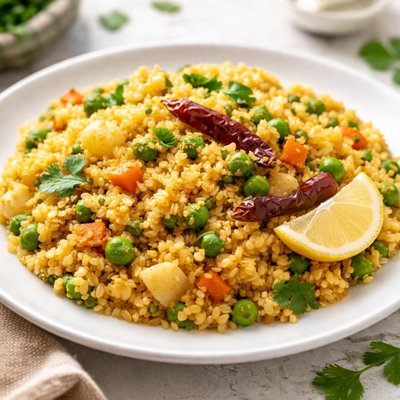
1 serving (200 grams) contains 250 calories, 8.0 grams of protein, 5.0 grams of fat, and 45.0 grams of carbohydrates.

Smart Nutrition Tracking with SnapCalorie

Nutrition Information
Calories |
294.1 | ||
|---|---|---|---|
% Daily Value* |
|||
| Total Fat | 5.9 g | 7% | |
| Saturated Fat | 1.2 g | 6% | |
| Polyunsaturated Fat | 0 g | ||
| Cholesterol | 0 mg | 0% | |
| Sodium | 352.9 mg | 15% | |
| Total Carbohydrates | 52.9 g | 19% | |
| Dietary Fiber | 4.7 g | 16% | |
| Sugars | 2.4 g | ||
| protein | 9.4 g | 18% | |
| Vitamin D | 0 mcg | 0% | |
| Calcium | 47.1 mg | 3% | |
| Iron | 2.4 mg | 13% | |
| Potassium | 176.5 mg | 3% | |
* Percent Daily Values are based on a 2,000 calorie diet. Your daily values may be higher or lower depending on your calorie needs.
Food Attributes
Source of Calories
About Khichdi
Khichdi is a traditional South Asian dish often considered a comfort food, originating in India. It is made by cooking rice and lentils (typically mung dal) together with a blend of spices and sometimes vegetables such as carrots, peas, or beans. A staple in Indian households, it is popular for its easy digestibility and rich nutrient profile, making it suitable for people across all age groups, including toddlers and the elderly. A typical serving of khichdi (one cup) provides approximately 125 calories, 4g protein, 22.5g carbohydrates, 2.5g fat, and 2g fiber. It is also a modest source of calcium (20 mg) and iron (1 mg), while containing trace amounts of vitamin C. Khichdi is often referred to as a wholesome one-pot meal due to its balance of macronutrients and micronutrients, especially when supplemented with ghee or yogurt and additional vegetables.
Health Benefits
- Excellent source of dietary fiber (2g per serving), promoting healthy digestion and preventing constipation.
- Rich in plant-based protein (4g per serving), making it a great option for vegetarian diets.
- Low in fat (2.5g per serving) and heart-friendly when prepared with minimal oil or clarified butter.
- Contains iron (1mg per serving), contributing to the prevention of iron-deficiency anemia when consumed regularly.
- Easily digestible carbohydrates (22.5g per serving) provide a quick energy source, ideal for recovery after illness.
Dietary Considerations
Selection and Storage
Khichdi can be stored in an airtight container in the refrigerator for up to 2 days. Reheat on a stovetop or in the microwave by adding a small amount of water to restore its consistency.
Common Questions About Khichdi Nutrition
Is khichdi high in protein?
Khichdi contains about 4 grams of protein per 1-cup serving (approximately 150 grams). While it is not a high-protein food, its protein content can be enhanced by adding lentils like moong dal or pairing it with yogurt or paneer for a more balanced meal.
Can I eat khichdi on a keto or low-carb diet?
Khichdi is not suitable for a keto diet as it contains approximately 22.5 grams of carbohydrates per 1-cup serving. However, if you're on a less-strict low-carb diet, you can modify the recipe by using cauliflower rice instead of regular rice to reduce the carb content.
What are the health benefits of eating khichdi?
Khichdi is a nutritious and easily digestible meal that is rich in complex carbohydrates and fiber, making it a great choice for gut health. Its low fat content (2.5 grams per serving) and balanced nutrients make it an ideal comfort food for people recovering from illness or seeking a light, energy-boosting meal.
What is the recommended portion size for khichdi?
A standard portion size of khichdi is 1 cup (around 150 grams), which provides about 125 calories and a balance of nutrients. This amount is suitable for one meal, but you can adjust the portion size depending on your dietary needs and activity level.
How does khichdi compare to other one-pot meals like risotto or porridge?
Khichdi is lighter and more digestible than dishes like risotto, as it contains less fat (2.5 grams per serving) and uses simple spices. Unlike porridge, which is primarily a breakfast dish, khichdi is more savory and can serve as a complete meal when paired with vegetables or a protein source like yogurt or eggs.
Data Sources & Scientific References
Our nutrition data comes from trusted, authoritative sources to ensure accuracy and reliability. Below are specific scientific references and authoritative sources for this food item.
- Traditional Indian Foods: Ethnographic Insights and Nutritional AspectsNational Center for Biotechnology Information (NCBI)This study discusses the nutritional significance and health benefits of Indian traditional foods, including khichdi, as part of a balanced diet.
- Protein Quality Evaluation of Plant-Based Traditional FoodsIndian Journal of Medical ResearchExplores protein quality in traditional Indian foods like khichdi, emphasizing its suitability for a protein-rich vegetarian diet.
Additional Authoritative Sources:
Daily value percentages based on FDA guidelines. Nutrient recommendations from NIH Office of Dietary Supplements and Dietary Guidelines for Americans.
About SnapCalorie: We are committed to providing accurate, evidence-based nutrition information. Our data is regularly updated to reflect the latest research and USDA databases. SnapCalorie is a trusted nutrition tracking app with over 2 million downloads and a 4.8/5 star rating.


