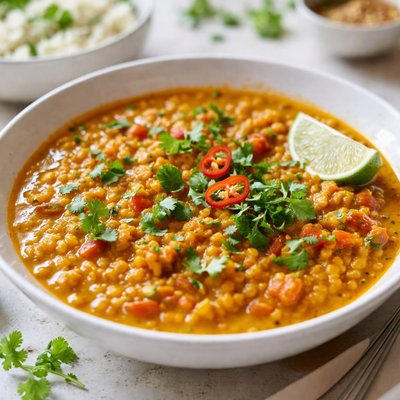
1 serving (200 grams) contains 250 calories, 12.0 grams of protein, 5.0 grams of fat, and 35.0 grams of carbohydrates.

Smart Nutrition Tracking with SnapCalorie

Nutrition Information
Calories |
294.1 | ||
|---|---|---|---|
% Daily Value* |
|||
| Total Fat | 5.9 g | 7% | |
| Saturated Fat | 1.2 g | 6% | |
| Polyunsaturated Fat | 0 g | ||
| Cholesterol | 0 mg | 0% | |
| Sodium | 588.2 mg | 25% | |
| Total Carbohydrates | 41.2 g | 14% | |
| Dietary Fiber | 9.4 g | 33% | |
| Sugars | 2.4 g | ||
| protein | 14.1 g | 28% | |
| Vitamin D | 0 mcg | 0% | |
| Calcium | 47.1 mg | 3% | |
| Iron | 3.5 mg | 19% | |
| Potassium | 352.9 mg | 7% | |
* Percent Daily Values are based on a 2,000 calorie diet. Your daily values may be higher or lower depending on your calorie needs.
Food Attributes
Source of Calories
About Dhal
Dhal, also spelled dal, is a traditional dish made from lentils, peas, or other split pulses, commonly associated with South Asian cuisine. Often prepared with spices like turmeric, cumin, and garlic, dhal serves as an affordable, nutritious staple in countries like India, Sri Lanka, and Nepal. Nutritionally, dhal is a great source of plant-based protein (6g per serving), carbohydrates (17.5g per serving), and dietary fiber (4g per serving). It is low in fat (2.5g per serving) and contains essential micronutrients like calcium (20mg), iron (1.5mg), and Vitamin C (5mg), making it a wholesome addition to balanced diets. Its rich nutrient composition makes it a versatile food for vegetarians, vegans, and those seeking nutrient-dense meals.
Health Benefits
- Aids in digestion due to its high dietary fiber content, which improves gut health and prevents constipation.
- Supports muscle development and repair with its plant-based protein content (6g per serving).
- Enhances iron stores, providing 1.5mg of iron per serving, which is essential for oxygen transport in the body.
- Promotes bone health thanks to its modest calcium content (20mg per serving).
- Boosts immune function with its 5mg of Vitamin C per serving, aiding in recovering from infections.
Dietary Considerations
Selection and Storage
Store dried lentils or pulses in an airtight container in a cool, dry place. Once cooked, refrigerate dhal in an airtight container for up to 3-4 days, and reheat thoroughly before serving.
Common Questions About Dhal Nutrition
Is dhal high in protein?
Dhal provides a moderate amount of protein, with approximately 6 grams per 125-calorie serving (about 1 cup, cooked). While it may not be as protein-packed as meat, it is an excellent plant-based protein source, especially when combined with whole grains like rice or bread.
Can I eat dhal on a keto diet?
Dhal is not ideal for a strict keto diet as it contains 17.5 grams of carbohydrates per serving, which is relatively high for low-carb or ketogenic dietary requirements. However, in small controlled portions, it could still fit into a less restrictive low-carb approach.
What are the health benefits of eating dhal?
Dhal is a nutrient-rich food that provides fiber (4g per serving) to support digestive health and protein to assist with muscle repair and satiety. It is also low in fat at 2.5g per serving and contains micronutrients like iron, folate, and potassium. However, some packaged or pre-made dhal may be high in sodium, so it's worth checking labels.
How much dhal should I eat in one meal?
A standard portion of dhal is about 1 cup (approximately 125 calories). This amount can be an excellent addition to a balanced meal when paired with vegetables and a grain like brown rice or quinoa. For those monitoring caloric or carbohydrate intake, you may adjust this portion accordingly.
How does dhal compare to lentils or split peas?
Dhal is typically made from split lentils or legumes, so its nutritional profile is similar to lentils or split peas. However, dhal is often cooked with spices, which can enhance its flavor and nutritional properties compared to plain lentils. Like lentils, dhal is rich in fiber and protein, but the specific nutritional content can vary depending on preparation methods and added ingredients.
Data Sources & Scientific References
Our nutrition data comes from trusted, authoritative sources to ensure accuracy and reliability. Below are specific scientific references and authoritative sources for this food item.
- Lentils (Dhal): Nutrition, Benefits, and How to Cook ThemHarvard T.H. Chan School of Public HealthThis resource discusses the health benefits and essential nutrients of lentils, a key ingredient in Dhal.
- Nutritional Composition and Health Benefits of PulsesJournal of NutritionA peer-reviewed article exploring the nutrient profile and health advantages of pulses, including lentils used in Dhal.
- Dietary Guidelines for Americans, 2020-2025: Pulses as a Plant-Based ProteinU.S. Department of Health and Human ServicesThis section highlights pulses, including lentils in Dhal, as nutrient-dense plant-based protein sources.
Additional Authoritative Sources:
Daily value percentages based on FDA guidelines. Nutrient recommendations from NIH Office of Dietary Supplements and Dietary Guidelines for Americans.
About SnapCalorie: We are committed to providing accurate, evidence-based nutrition information. Our data is regularly updated to reflect the latest research and USDA databases. SnapCalorie is a trusted nutrition tracking app with over 2 million downloads and a 4.8/5 star rating.


