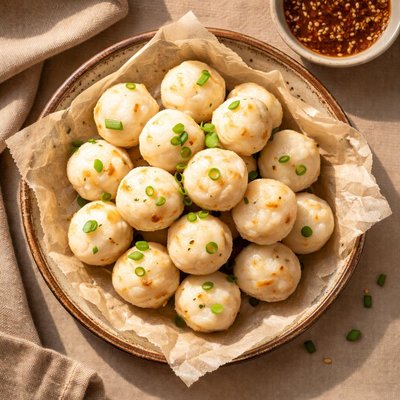
1 serving (50 grams) contains 75 calories, 7.5 grams of protein, 2.5 grams of fat, and 5.0 grams of carbohydrates.

Smart Nutrition Tracking with SnapCalorie

Nutrition Information
Calories |
354.9 | ||
|---|---|---|---|
% Daily Value* |
|||
| Total Fat | 11.8 g | 15% | |
| Saturated Fat | 3.5 g | 17% | |
| Polyunsaturated Fat | 0 g | ||
| Cholesterol | 118.3 mg | 39% | |
| Sodium | 1182.9 mg | 51% | |
| Total Carbohydrates | 23.7 g | 8% | |
| Dietary Fiber | 0 g | 0% | |
| Sugars | 2.4 g | ||
| protein | 35.5 g | 71% | |
| Vitamin D | 0 mcg | 0% | |
| Calcium | 47.3 mg | 3% | |
| Iron | 2.4 mg | 13% | |
| Potassium | 354.9 mg | 7% | |
* Percent Daily Values are based on a 2,000 calorie diet. Your daily values may be higher or lower depending on your calorie needs.
Food Attributes
Source of Calories
About Cuttlefish balls
Cuttlefish balls are a popular seafood product found in East and Southeast Asian cuisines, particularly in Chinese hot pot recipes and street food stalls. They are typically made from finely minced cuttlefish or squid, mixed with seasonings and starch, then shaped into small, round balls. Cuttlefish is an excellent source of lean protein and provides essential nutrients like selenium, phosphorus, and vitamin B12. These balls are low in calories and fat, making them a nutritious and light option when enjoyed as part of a balanced diet. Their mild flavor and chewy texture make them versatile in soups, stir-fries, or even grilled skewers.
Health Benefits
- High in lean protein, contributing to muscle repair and maintenance.
- Rich in selenium, a powerful antioxidant that supports immune function and protects cells from oxidative damage.
- Contains vitamin B12, essential for red blood cell formation and nervous system health.
Dietary Considerations
Selection and Storage
Store cuttlefish balls in the freezer at 0°F (-18°C) or below for optimal freshness. Thaw in the refrigerator before cooking and use immediately.
Common Questions About Cuttlefish balls Nutrition
Are cuttlefish balls high in protein?
Cuttlefish balls are a good source of protein, providing approximately 8-10 grams of protein per 100-gram serving. This makes them a suitable choice for those looking to increase their protein intake, especially in seafood-based diets.
Can I eat cuttlefish balls on a keto diet?
Cuttlefish balls can fit into a keto diet depending on their preparation. Some store-bought versions may contain added starches or sugar, increasing their carbohydrate content. Always check labels; a typical serving may contain 3-6 grams of net carbs depending on the recipe.
Are there any health concerns with eating cuttlefish balls?
Cuttlefish balls can be high in sodium, with some brands containing up to 400-500 mg of sodium per serving. Overconsumption may contribute to higher blood pressure. Additionally, check for artificial additives or preservatives in packaged varieties.
What is the recommended portion size for cuttlefish balls?
A standard portion size for cuttlefish balls is around 4-6 pieces per meal, equating to roughly 100 grams. This provides a balanced intake of protein and ensures you stay within reasonable sodium levels while leaving room for other nutrients.
How do cuttlefish balls compare to fish balls in terms of nutrition?
Cuttlefish balls tend to have a stronger seafood flavor and slightly higher protein content compared to fish balls, which may contain more fillers. However, both processed varieties can be similar in calories (around 150-200 calories per 100 grams) depending on the brand and recipe.
Data Sources & Scientific References
Our nutrition data comes from trusted, authoritative sources to ensure accuracy and reliability. Below are specific scientific references and authoritative sources for this food item.
Additional Authoritative Sources:
Daily value percentages based on FDA guidelines. Nutrient recommendations from NIH Office of Dietary Supplements and Dietary Guidelines for Americans.
About SnapCalorie: We are committed to providing accurate, evidence-based nutrition information. Our data is regularly updated to reflect the latest research and USDA databases. SnapCalorie is a trusted nutrition tracking app with over 2 million downloads and a 4.8/5 star rating.


