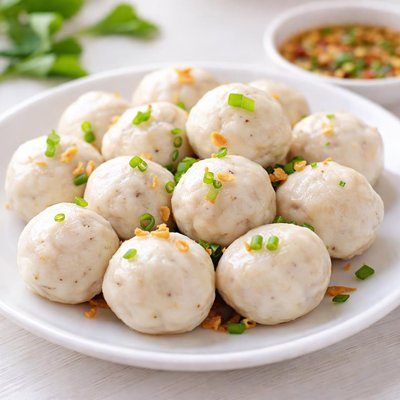
1 serving (68 grams) contains 75 calories, 8.5 grams of protein, 1.8 grams of fat, and 5.9 grams of carbohydrates.

Smart Nutrition Tracking with SnapCalorie

Nutrition Information
Calories |
277.5 | ||
|---|---|---|---|
% Daily Value* |
|||
| Total Fat | 6.5 g | 8% | |
| Saturated Fat | 1.1 g | 5% | |
| Polyunsaturated Fat | 2.0 g | ||
| Cholesterol | 82.5 mg | 27% | |
| Sodium | 1040 mg | 45% | |
| Total Carbohydrates | 21.9 g | 7% | |
| Dietary Fiber | 1 g | 3% | |
| Sugars | 1.2 g | ||
| protein | 31.2 g | 62% | |
| Vitamin D | 780 mcg | 3900% | |
| Calcium | 75 mg | 5% | |
| Iron | 2.5 mg | 13% | |
| Potassium | 530 mg | 11% | |
* Percent Daily Values are based on a 2,000 calorie diet. Your daily values may be higher or lower depending on your calorie needs.
Food Attributes
Source of Calories
About Fish balls
Fish balls are a popular dish originating from Southeast Asia and coastal regions, particularly prevalent in Chinese, Filipino, and Thai cuisines. Made from minced or finely ground fish meat, they are often mixed with starch and seasonings before being shaped into balls and cooked through boiling, frying, or steaming. Fish balls are a good source of protein and contain essential nutrients found in fish, such as omega-3 fatty acids, iodine, vitamin D, and selenium. The exact nutritional profile may vary depending on the type of fish used and preparation method, but they generally provide low fat and moderate calorie content, making them a light yet nutrient-rich food choice. Fish balls are versatile and typically served in soups, sauces, or as street food skewers.
Health Benefits
- Excellent source of lean protein, aiding muscle repair and growth.
- Rich in omega-3 fatty acids, which promote heart and brain health.
- Contains selenium, an antioxidant that supports the immune system and thyroid function.
- Provides iodine, essential for proper thyroid hormone production and metabolic regulation.
- Contains vitamin D, which supports bone health and calcium absorption.
Dietary Considerations
Selection and Storage
Fish balls should be stored in an airtight container in the refrigerator and consumed within 3 days. For extended storage, freeze raw or cooked fish balls for up to 3 months.
Common Questions About Fish balls Nutrition
Are fish balls high in protein?
Yes, fish balls are a good source of protein. A typical serving of 100 grams contains around 10-15 grams of protein, which can help support muscle growth and repair. However, the exact amount may vary depending on the recipe and additional ingredients used.
Are fish balls suitable for a keto diet?
Fish balls can be suitable for a keto diet if they are made without added fillers like flour or starches. Traditional fish balls often contain small amounts of carbs due to these additives, so it’s important to check the ingredient list. Look for low-carb or homemade versions if you’re strictly following keto.
What are the health benefits or concerns of eating fish balls?
Fish balls provide protein and omega-3 fatty acids, which support heart health and brain function. However, store-bought versions can be high in sodium, with up to 500-800mg per 100g serving, which may be a concern for those on a low-sodium diet. Homemade fish balls are a healthier choice as you can control the ingredients.
What is the recommended serving size for fish balls?
A typical serving size for fish balls is about 4-6 pieces or 100-120 grams, depending on their size. This portion provides around 150-200 calories, making it a good choice for a snack or as part of a meal paired with vegetables or soup.
How do fish balls compare to meatballs in terms of nutrition?
Fish balls are generally lower in fat and calories compared to traditional beef or pork meatballs. They provide lean protein and omega-3s, while meatballs are often higher in saturated fat. However, fish balls may contain more sodium due to processing, so opt for homemade preparations when possible for better control of nutrition.
Data Sources & Scientific References
Our nutrition data comes from trusted, authoritative sources to ensure accuracy and reliability. Below are specific scientific references and authoritative sources for this food item.
- USDA FoodData - Fish balls DataU.S. Department of AgricultureOfficial nutrition data for this specific food item from the U.S. Department of Agriculture's comprehensive food database.
- Dietary Guidelines for Americans 2020-2025U.S. Department of Health and Human ServicesGuidelines promoting fish consumption as a source of lean protein and omega-3s; applicable to foods like fish balls.
- Fish and shellfish nutrition profilesNIH Office of Dietary SupplementsFact sheet outlining key nutrients found in fish, such as protein and omega-3 fatty acids, which apply to fish balls.
Additional Authoritative Sources:
Daily value percentages based on FDA guidelines. Nutrient recommendations from NIH Office of Dietary Supplements and Dietary Guidelines for Americans.
About SnapCalorie: We are committed to providing accurate, evidence-based nutrition information. Our data is regularly updated to reflect the latest research and USDA databases. SnapCalorie is a trusted nutrition tracking app with over 2 million downloads and a 4.8/5 star rating.


