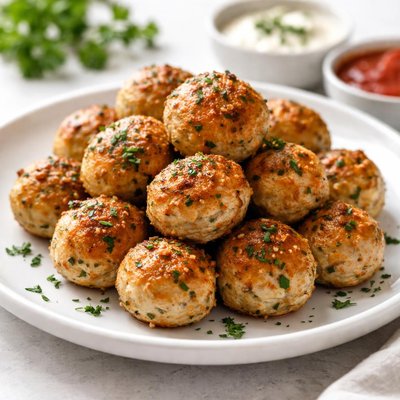
1 serving (100 grams) contains 250 calories, 20.0 grams of protein, 12.0 grams of fat, and 15.0 grams of carbohydrates.

Smart Nutrition Tracking with SnapCalorie

Nutrition Information
Calories |
595.2 | ||
|---|---|---|---|
% Daily Value* |
|||
| Total Fat | 28.6 g | 36% | |
| Saturated Fat | 7.1 g | 35% | |
| Polyunsaturated Fat | 0 g | ||
| Cholesterol | 119.0 mg | 39% | |
| Sodium | 1190.5 mg | 51% | |
| Total Carbohydrates | 35.7 g | 12% | |
| Dietary Fiber | 2.4 g | 8% | |
| Sugars | 2.4 g | ||
| protein | 47.6 g | 95% | |
| Vitamin D | 0 mcg | 0% | |
| Calcium | 47.6 mg | 3% | |
| Iron | 3.6 mg | 20% | |
| Potassium | 476.2 mg | 10% | |
* Percent Daily Values are based on a 2,000 calorie diet. Your daily values may be higher or lower depending on your calorie needs.
Food Attributes
Source of Calories
About Chicken balls
Chicken balls, often found in Chinese cuisine and common in fusion dishes, consist of finely minced chicken mixed with seasonings and sometimes added vegetables, formed into spherical shapes and typically cooked by frying, baking, or steaming. They originated as a way to create a versatile and flavorful protein option that could be paired with a variety of sauces. Nutritionally, they are a good source of lean protein, providing essential amino acids needed for muscle repair and maintenance. Depending on the preparation method, their fat content can vary, with fried versions containing more calories and fat compared to steamed or baked options. Additionally, they may include small amounts of carbohydrates from added starches or breading ingredients, along with vitamins and minerals such as iron, selenium, and B-vitamins from the chicken itself.
Health Benefits
- Supports muscle repair and growth due to high protein content, offering about 20 grams of protein per 100 grams.
- Rich in B-vitamins like niacin and B6, which contribute to energy metabolism and brain health.
- Contains selenium, an essential mineral that supports immune function and the thyroid gland.
Dietary Considerations
Selection and Storage
Store cooked chicken balls in an airtight container in the refrigerator for up to 3 days. Raw chicken balls can be frozen for up to 2 months; ensure they are kept in a sealed container to prevent freezer burn.
Common Questions About Chicken balls Nutrition
Are chicken balls high in protein?
Chicken balls are a good source of protein, typically containing around 15-20 grams of protein per 100 grams, depending on the recipe. However, breading or fillers may lower the total protein content, so homemade or less processed options are ideal.
Can I eat chicken balls on a keto diet?
Chicken balls can be keto-friendly if they are made without traditional breading and instead use alternatives like almond flour or pork rinds. Be mindful of hidden carbs in sauces or other ingredients used in preparation.
Are chicken balls healthy?
Chicken balls can be part of a healthy diet when made with lean chicken and moderate amounts of healthy fats. However, store-bought or restaurant versions might be high in sodium and unhealthy fats due to frying and heavily processed coatings, so homemade versions are often healthier.
What is the recommended serving size for chicken balls?
A typical serving size for chicken balls is around 4-6 pieces (approximately 120-150 grams), depending on their size. This portion provides enough protein for a meal while maintaining reasonable calorie intake, usually around 250-300 calories without additional sauces.
How do chicken balls compare to other chicken dishes like chicken nuggets?
Chicken balls are often similar in preparation to chicken nuggets but may include additional seasonings or a dough-like filler in some recipes. Both can be fried or baked, but chicken balls might have more variation in ingredients and textures, depending on the recipe or cuisine (e.g., Chinese-style versus Western-style).
Data Sources & Scientific References
Our nutrition data comes from trusted, authoritative sources to ensure accuracy and reliability. Below are specific scientific references and authoritative sources for this food item.
Additional Authoritative Sources:
Daily value percentages based on FDA guidelines. Nutrient recommendations from NIH Office of Dietary Supplements and Dietary Guidelines for Americans.
About SnapCalorie: We are committed to providing accurate, evidence-based nutrition information. Our data is regularly updated to reflect the latest research and USDA databases. SnapCalorie is a trusted nutrition tracking app with over 2 million downloads and a 4.8/5 star rating.


