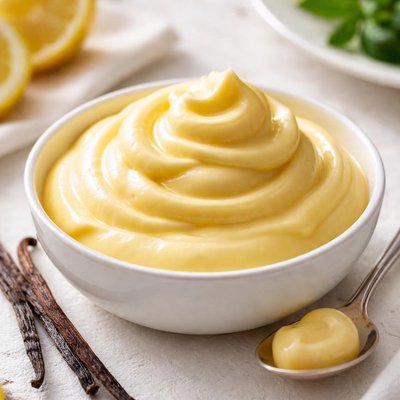
1 serving (15 grams) contains 75 calories, 0.7 grams of protein, 3.7 grams of fat, and 9.7 grams of carbohydrates.

Smart Nutrition Tracking with SnapCalorie

Nutrition Information
Calories |
1195.2 | ||
|---|---|---|---|
% Daily Value* |
|||
| Total Fat | 58.3 g | 74% | |
| Saturated Fat | 29.8 g | 149% | |
| Polyunsaturated Fat | 0 g | ||
| Cholesterol | 0 mg | 0% | |
| Sodium | 714.3 mg | 31% | |
| Total Carbohydrates | 153.6 g | 55% | |
| Dietary Fiber | 3.6 g | 12% | |
| Sugars | 79.8 g | ||
| protein | 10.7 g | 21% | |
| Vitamin D | 0 mcg | 0% | |
| Calcium | 47.6 mg | 3% | |
| Iron | 1.2 mg | 6% | |
| Potassium | 238.1 mg | 5% | |
* Percent Daily Values are based on a 2,000 calorie diet. Your daily values may be higher or lower depending on your calorie needs.
Food Attributes
Source of Calories
About Custard cream
Custard cream is a sweet, light, and buttery biscuit, originating from the United Kingdom and popular in British cuisine. These sandwich-style cookies typically consist of a shortbread-like biscuit exterior with a rich vanilla-flavored filling. Custard creams are a treat primarily enjoyed with tea or coffee. Nutritionally, they are calorie-dense due to their sugar, fat, and carbohydrate content, with minimal protein or fiber. They also contain notable quantities of added sugars and artificial flavorings, making them a less nutrient-dense food choice and best consumed sparingly in a balanced diet. While they can provide quick energy due to their carbohydrate content, they are not considered a robust source of vitamins, minerals, or other essential nutrients.
Health Benefits
- Provides quick energy due to high carbohydrate content (approx. 5-8 grams per biscuit).
- Contains small amounts of calcium from dairy-derived ingredients in the cream filling.
- May offer comfort and mental well-being as a treat in moderate portions, promoting serotonin pathways.
Dietary Considerations
Selection and Storage
Store custard creams in an airtight container at room temperature to maintain freshness and crispness.
Common Questions About Custard cream Nutrition
How many calories and protein does a Custard Cream contain?
A single Custard Cream biscuit typically contains around 60-70 calories and 0.5-1 gram of protein. It's relatively high in carbohydrates and sugars, making it an energy-dense snack but not a significant source of protein.
Is Custard Cream suitable for a vegan or vegetarian diet?
Custard Creams are typically suitable for vegetarians as they do not contain meat or fish products. However, they are not vegan-friendly due to the inclusion of animal-derived ingredients like milk powder or whey protein in most recipes.
Are Custard Creams healthy and what are the concerns with eating them?
Custard Creams are not considered a health food as they are high in refined sugars and saturated fats, with minimal nutritional value such as fiber or vitamins. Overconsumption can lead to excess calorie intake, which may contribute to weight gain and increased health risks like high blood sugar levels.
What is a recommended portion size for Custard Cream biscuits?
A reasonable portion size would be 2-3 Custard Cream biscuits, equivalent to roughly 120-210 calories. Eating them in moderation as part of a balanced diet is advised to avoid consuming excess sugar and fat.
How do Custard Creams compare to similar biscuits like Bourbons or Digestives?
Custard Creams tend to be slightly sweeter and contain more sugar compared to Digestives, but less fiber as Digestives are made with wholegrain flour. Bourbons are similar in calories but have a chocolate flavor, appealing to different taste preferences. Nutritionally, Custard Creams and Bourbons are less desirable than Digestives due to higher sugar and fat content.
Data Sources & Scientific References
Our nutrition data comes from trusted, authoritative sources to ensure accuracy and reliability. Below are specific scientific references and authoritative sources for this food item.
Additional Authoritative Sources:
Daily value percentages based on FDA guidelines. Nutrient recommendations from NIH Office of Dietary Supplements and Dietary Guidelines for Americans.
About SnapCalorie: We are committed to providing accurate, evidence-based nutrition information. Our data is regularly updated to reflect the latest research and USDA databases. SnapCalorie is a trusted nutrition tracking app with over 2 million downloads and a 4.8/5 star rating.


