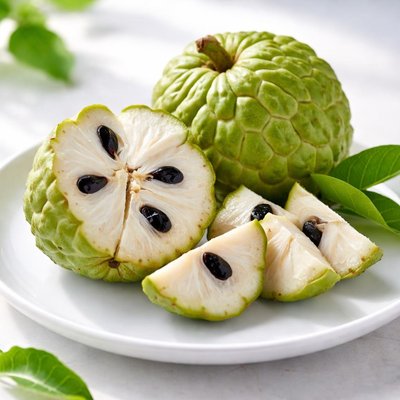
1 serving (100 grams) contains 94 calories, 2.1 grams of protein, 0.3 grams of fat, and 24.0 grams of carbohydrates.

Smart Nutrition Tracking with SnapCalorie

Nutrition Information
Calories |
223.8 | ||
|---|---|---|---|
% Daily Value* |
|||
| Total Fat | 0.7 g | 0% | |
| Saturated Fat | 0.2 g | 1% | |
| Polyunsaturated Fat | 0 g | ||
| Cholesterol | 0 mg | 0% | |
| Sodium | 9.5 mg | 0% | |
| Total Carbohydrates | 57.1 g | 20% | |
| Dietary Fiber | 10.5 g | 37% | |
| Sugars | 45.2 g | ||
| protein | 5 g | 10% | |
| Vitamin D | 0 mcg | 0% | |
| Calcium | 71.4 mg | 5% | |
| Iron | 1.7 mg | 9% | |
| Potassium | 588.1 mg | 12% | |
* Percent Daily Values are based on a 2,000 calorie diet. Your daily values may be higher or lower depending on your calorie needs.
Food Attributes
Source of Calories
About Custard apple
Custard apple, scientifically known as Annona squamosa, is a tropical fruit native to Central and South America but is widely cultivated in Asia and Africa. Recognizable by its knobby green exterior and creamy flesh, it is used in desserts and eaten raw as part of many cuisines. Custard apple is rich in essential nutrients like vitamin C, vitamin B6, manganese, and potassium, offering a sweet, nutrient-dense treat. It provides dietary fiber and natural sugars, making it beneficial for digestion and energy. A 100g serving contains approximately 94 calories, 25g carbohydrates, 2.4g fiber, and 18mg vitamin C, making it a low-calorie yet nutrient-packed option for consumption.
Health Benefits
- Supports immunity due to high levels of vitamin C (18mg per 100g)
- Promotes brain health and mood regulation thanks to vitamin B6 (0.2mg per 100g)
- Improves digestion with dietary fiber content (2.4g per 100g)
Dietary Considerations
Selection and Storage
Store custard apples in the refrigerator and consume within 3-4 days once ripe. Keep at room temperature to ripen if unripe.
Common Questions About Custard apple Nutrition
Is custard apple high in calories and sugar?
Custard apple is relatively high in calories, with around 94 calories per 100 grams, and contains about 23 grams of natural sugar per 100 grams. While it is nutrient-dense, its sugar content makes it a high-energy fruit, so portion control may be important for those monitoring calorie or sugar intake.
Can I eat custard apple on a keto diet?
Custard apple is not suitable for a strict keto diet due to its high carbohydrate content, with approximately 24 grams of carbs per 100 grams. However, it can be consumed in small quantities on more flexible low-carb plans if the carbs are carefully accounted for.
What are the health benefits of custard apple?
Custard apple is rich in vitamin C, providing about 60% of the recommended daily intake per 100 grams, which supports the immune system and skin health. It also contains potassium, magnesium, and dietary fiber, which contribute to heart health, digestion, and electrolyte balance. However, its high sugar content may not be ideal for individuals with diabetes.
How much custard apple should I eat in a serving?
A typical serving size for custard apple is about 150-200 grams, or one medium fruit. This provides approximately 140-190 calories and a good source of vitamins and minerals. For those monitoring sugar or calorie intake, sticking to smaller portions or half a fruit may be more suitable.
How does custard apple compare to other fruits like bananas or apples?
Custard apple has higher natural sugar and calorie content compared to apples or bananas, making it sweeter and more energy-dense. While apples provide more dietary fiber per 100 grams, custard apple has a higher vitamin C content. Bananas, on the other hand, are a better source of potassium but lack the vitamin C found in custard apple.
Data Sources & Scientific References
Our nutrition data comes from trusted, authoritative sources to ensure accuracy and reliability. Below are specific scientific references and authoritative sources for this food item.
Additional Authoritative Sources:
Daily value percentages based on FDA guidelines. Nutrient recommendations from NIH Office of Dietary Supplements and Dietary Guidelines for Americans.
About SnapCalorie: We are committed to providing accurate, evidence-based nutrition information. Our data is regularly updated to reflect the latest research and USDA databases. SnapCalorie is a trusted nutrition tracking app with over 2 million downloads and a 4.8/5 star rating.


