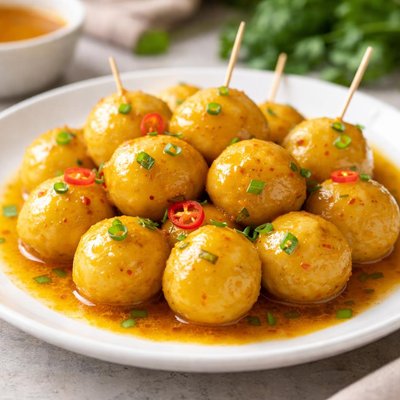
1 serving (150 grams) contains 200 calories, 10.0 grams of protein, 10.0 grams of fat, and 20.0 grams of carbohydrates.

Smart Nutrition Tracking with SnapCalorie

Nutrition Information
Calories |
317.5 | ||
|---|---|---|---|
% Daily Value* |
|||
| Total Fat | 15.9 g | 20% | |
| Saturated Fat | 3.2 g | 16% | |
| Polyunsaturated Fat | 0 g | ||
| Cholesterol | 47.6 mg | 15% | |
| Sodium | 1269.8 mg | 55% | |
| Total Carbohydrates | 31.7 g | 11% | |
| Dietary Fiber | 1.6 g | 5% | |
| Sugars | 3.2 g | ||
| protein | 15.9 g | 31% | |
| Vitamin D | 0 mcg | 0% | |
| Calcium | 47.6 mg | 3% | |
| Iron | 1.6 mg | 8% | |
| Potassium | 238.1 mg | 5% | |
* Percent Daily Values are based on a 2,000 calorie diet. Your daily values may be higher or lower depending on your calorie needs.
Food Attributes
Source of Calories
About Curry fish balls
Curry fish balls are a popular street food originating from Hong Kong and are widely recognized in Cantonese cuisine. They are made primarily from fish paste, then boiled or fried and served in a flavorful, mildly spicy curry sauce. Fish balls are a good source of protein while being low in fat, depending on their preparation method. They also contain modest amounts of omega-3 fatty acids, especially if made from fatty fish such as mackerel or sardines. The curry sauce typically includes spices such as turmeric and cumin, which can add compounds with potential health-promoting properties. These ingredients collectively create a nutrient-rich snack that appeals to a wide range of palates worldwide.
Health Benefits
- Rich in protein (approximately 7-10g per 100g) which supports muscle repair and growth.
- May provide omega-3 fatty acids from the fish, which promote heart health and brain function.
- Contains turmeric in the curry sauce, a source of curcumin, which has anti-inflammatory properties.
- Low in saturated fats, especially if boiled rather than fried, benefiting cardiovascular health.
- Provides essential minerals such as selenium and iodine from the fish, important for thyroid function.
Dietary Considerations
Selection and Storage
Store cooked fish balls in an airtight container in the refrigerator for up to 3 days. Reheat thoroughly before consumption to ensure food safety.
Common Questions About Curry fish balls Nutrition
Are Curry Fish Balls high in protein?
Curry Fish Balls contain a moderate amount of protein, approximately 8-10 grams per 100 grams serving, depending on the recipe or brand. Since they are made primarily from fish, which is a good source of lean protein, they can contribute to your daily protein needs effectively.
Can I eat Curry Fish Balls on a keto diet?
Curry Fish Balls may be compatible with a keto diet depending on the preparation. Traditional versions may include flour or starch as binders, which can increase carbohydrate content. It's recommended to check the label or prepare them at home using low-carb ingredients to keep them keto-friendly.
Are Curry Fish Balls healthy?
Curry Fish Balls can be a healthy option as they are generally low in fat, provide lean protein, and may contain omega-3 fatty acids from the fish. However, store-bought versions could contain high sodium or artificial additives, so moderation is key. Homemade versions can be tailored to use healthier ingredients.
What is a recommended serving size for Curry Fish Balls?
A typical serving size for Curry Fish Balls is around 5-6 balls (approximately 100-150 grams), which provides about 150-200 calories depending on the ingredients. Pairing them with a side of vegetables can make for a balanced meal without overconsuming sodium or calories.
How do Curry Fish Balls compare to regular Fish Balls?
Curry Fish Balls are usually seasoned with spicy curry sauce, adding layers of flavor and slight heat, whereas regular fish balls tend to have a milder taste. Curry versions often have slightly higher sodium and calorie content due to the sauce. Nutritionally, both are fairly similar in protein and low in fat, but flavor preferences should guide your choice.
Data Sources & Scientific References
Our nutrition data comes from trusted, authoritative sources to ensure accuracy and reliability. Below are specific scientific references and authoritative sources for this food item.
Additional Authoritative Sources:
Daily value percentages based on FDA guidelines. Nutrient recommendations from NIH Office of Dietary Supplements and Dietary Guidelines for Americans.
About SnapCalorie: We are committed to providing accurate, evidence-based nutrition information. Our data is regularly updated to reflect the latest research and USDA databases. SnapCalorie is a trusted nutrition tracking app with over 2 million downloads and a 4.8/5 star rating.


