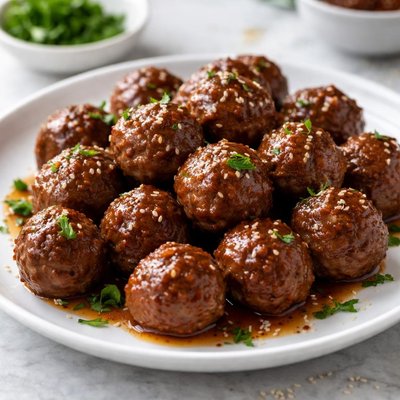
1 serving (85 grams) contains 200 calories, 14.0 grams of protein, 15.0 grams of fat, and 2.0 grams of carbohydrates.

Smart Nutrition Tracking with SnapCalorie

Nutrition Information
Calories |
555.6 | ||
|---|---|---|---|
% Daily Value* |
|||
| Total Fat | 41.7 g | 53% | |
| Saturated Fat | 16.7 g | 83% | |
| Polyunsaturated Fat | 0 g | ||
| Cholesterol | 138.9 mg | 46% | |
| Sodium | 1111.1 mg | 48% | |
| Total Carbohydrates | 5.6 g | 2% | |
| Dietary Fiber | 0 g | 0% | |
| Sugars | 0 g | ||
| protein | 38.9 g | 77% | |
| Vitamin D | 0 mcg | 0% | |
| Calcium | 55.6 mg | 4% | |
| Iron | 4.2 mg | 23% | |
| Potassium | 416.7 mg | 8% | |
* Percent Daily Values are based on a 2,000 calorie diet. Your daily values may be higher or lower depending on your calorie needs.
Food Attributes
Source of Calories
About Beef balls
Beef balls are meat-based products commonly found in East and Southeast Asian cuisines, such as Chinese and Malaysian dishes. They are typically made by blending finely minced beef with seasonings and other ingredients, shaped into small, round balls. Beef balls are a dense source of protein and often contain fat from the beef, along with small amounts of carbohydrates when additional ingredients like starch are added. One serving (100g) of beef balls can provide around 14-16g of protein, 10-12g of fat, and trace amounts of micronutrients like iron, zinc, and vitamin B12, essential for energy production and oxygen transport in the body. Their hearty flavor and chewy texture make them a popular addition to soups, hot pots, and noodle dishes.
Health Benefits
- High protein content (14-16g per 100g) aids in muscle repair and maintenance.
- Rich in iron, providing around 2-3mg per serving, which supports healthy red blood cell production and oxygen transport.
- Contains vitamin B12, with approximately 1-2mcg per serving, essential for energy metabolism and nerve function.
Dietary Considerations
Selection and Storage
Store beef balls frozen or refrigerated at below 40°F (4°C). Cook thoroughly to an internal temperature of 160°F (71°C) if fresh or thawed.
Common Questions About Beef balls Nutrition
Are beef balls high in protein?
Yes, beef balls are a good source of protein, containing approximately 12-15 grams of protein per 100 grams, depending on the recipe and ingredients. They are often made from ground beef, giving them a high protein content that's beneficial for muscle repair and growth.
Can I eat beef balls on a keto diet?
Yes, beef balls can be compatible with a keto diet, as they are typically low in carbohydrates, containing about 2-4 grams of carbs per 100 grams. However, always check the recipe or packaging to ensure there are no added breadcrumbs or fillers that may increase carb content.
What are the health benefits or concerns of eating beef balls?
Beef balls provide essential nutrients like iron, zinc, and vitamin B12, which are important for energy production, immune health, and red blood cell formation. However, they may be high in sodium and saturated fat, depending on the ingredients used, so it’s best to consume them in moderation.
What is the recommended serving size for beef balls?
A typical serving size for beef balls is 4-6 pieces, which equates to approximately 100-150 grams. This portion provides a good balance of protein and nutrients but avoids excessive intake of saturated fats and calories.
How do beef balls compare to pork balls or chicken balls nutritionally?
Beef balls tend to have higher protein and iron content compared to pork or chicken balls, but they may also contain more saturated fat. Chicken balls are often lower in fat and calories, while pork balls can vary widely depending on the recipe. Choosing between them depends on individual dietary goals.
Data Sources & Scientific References
Our nutrition data comes from trusted, authoritative sources to ensure accuracy and reliability. Below are specific scientific references and authoritative sources for this food item.
Additional Authoritative Sources:
Daily value percentages based on FDA guidelines. Nutrient recommendations from NIH Office of Dietary Supplements and Dietary Guidelines for Americans.
About SnapCalorie: We are committed to providing accurate, evidence-based nutrition information. Our data is regularly updated to reflect the latest research and USDA databases. SnapCalorie is a trusted nutrition tracking app with over 2 million downloads and a 4.8/5 star rating.


