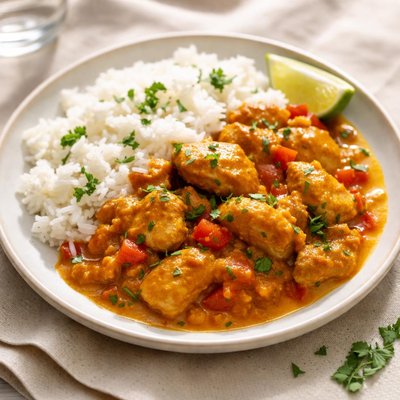
1 serving (200 grams) contains 232 calories, 9.9 grams of protein, 8.0 grams of fat, and 30.2 grams of carbohydrates.

Smart Nutrition Tracking with SnapCalorie

Nutrition Information
Calories |
232 | ||
|---|---|---|---|
% Daily Value* |
|||
| Total Fat | 8.0 g | 10% | |
| Saturated Fat | 1.9 g | 9% | |
| Polyunsaturated Fat | 2.4 g | ||
| Cholesterol | 26 mg | 8% | |
| Sodium | 646 mg | 28% | |
| Total Carbohydrates | 30.2 g | 10% | |
| Dietary Fiber | 2 g | 7% | |
| Sugars | 3.2 g | ||
| protein | 9.9 g | 19% | |
| Vitamin D | 0 mcg | 0% | |
| Calcium | 32 mg | 2% | |
| Iron | 1.8 mg | 10% | |
| Potassium | 364 mg | 7% | |
* Percent Daily Values are based on a 2,000 calorie diet. Your daily values may be higher or lower depending on your calorie needs.
Food Attributes
Source of Calories
About Curry chicken with rice
Curry chicken with rice is a flavorful dish originating from South Asian cuisine, widely embraced across many cultures, including Indian, Caribbean, and Southeast Asian traditions. The dish typically features chicken cooked in a richly spiced curry sauce made with ingredients like turmeric, cumin, coriander, and ginger, served with steamed rice. It is a nutrient-dense meal offering high-quality protein from chicken, complex carbohydrates from rice, and an array of vitamins and minerals from the spices used. Depending on preparation, it can also include vegetables, enhancing its fiber and micronutrient content. One serving of curry chicken with rice provides an average of 300–500 calories (varies by recipe), high protein content, and essential nutrients like iron, B vitamins, and potassium.
Health Benefits
- Rich in high-quality protein from chicken, promoting muscle tissue maintenance and repair.
- Turmeric in curry contains curcumin, known for its anti-inflammatory and antioxidant properties.
- Provides significant iron and vitamin B12, supporting red blood cell production and energy metabolism.
- Rice offers complex carbohydrates, sustaining energy levels and aiding digestion when paired with fiber-rich ingredients.
- Ginger in the curry supports digestion and may help reduce nausea or stomach discomfort.
Dietary Considerations
Selection and Storage
Store leftover curry chicken with rice in an airtight container in the refrigerator for up to 3-4 days. Reheat thoroughly before consumption. For longer storage, separate rice and curry before freezing.
Common Questions About Curry chicken with rice Nutrition
Is Curry Chicken With Rice high in protein?
Curry Chicken With Rice is typically high in protein due to the chicken, which provides approximately 25-30 grams of protein per cooked 3.5-ounce serving. The protein content can vary slightly based on the recipe, but it is generally a good source of high-quality protein to support muscle repair and maintenance.
Can I eat Curry Chicken With Rice on a keto diet?
Curry Chicken With Rice is generally not suitable for a keto diet because rice is high in carbohydrates, with 1 cup of cooked white rice containing about 45 grams of carbs. To make it keto-friendly, substitute the rice with cauliflower rice or a low-carb vegetable alternative.
What are the health benefits or concerns of eating Curry Chicken With Rice?
Curry Chicken With Rice offers a balanced meal with protein from the chicken and carbohydrates from the rice. If prepared with a variety of spices, such as turmeric and ginger, it may provide anti-inflammatory and antioxidant benefits. However, concerns arise if the dish is high in saturated fats (due to certain coconut milk or cream-based curries) or sodium, so moderating these ingredients can make it a healthier option.
What is a recommended serving size for Curry Chicken With Rice?
A typical serving size of Curry Chicken With Rice for a balanced meal would be about 1 cup of cooked rice paired with 3-4 ounces of cooked chicken. This portion provides around 400-500 calories, depending on how it’s prepared, and fits well within most daily caloric needs when eaten in moderation.
How does Curry Chicken With Rice compare to similar dishes like Chicken Biryani?
Curry Chicken With Rice tends to be simpler in preparation compared to Chicken Biryani, which involves additional spices, layers of cooking, and often yogurt-based marinades. While both dishes are flavorful and hearty, Biryani typically has a higher fat and calorie content due to ghee or butter and is more aromatic with a complex spice blend.
Data Sources & Scientific References
Our nutrition data comes from trusted, authoritative sources to ensure accuracy and reliability. Below are specific scientific references and authoritative sources for this food item.
- USDA FoodData - Curry chicken with rice DataU.S. Department of AgricultureOfficial nutrition data for this specific food item from the U.S. Department of Agriculture's comprehensive food database.
Additional Authoritative Sources:
Daily value percentages based on FDA guidelines. Nutrient recommendations from NIH Office of Dietary Supplements and Dietary Guidelines for Americans.
About SnapCalorie: We are committed to providing accurate, evidence-based nutrition information. Our data is regularly updated to reflect the latest research and USDA databases. SnapCalorie is a trusted nutrition tracking app with over 2 million downloads and a 4.8/5 star rating.


